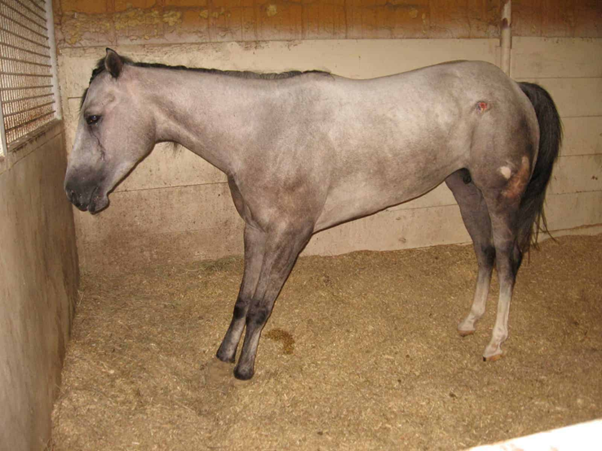
Article
Endocrinopathic Laminitis in Horses: Why Recurrence Remains a Challenge
For most equine vets, the real frustration with endocrinopathic laminitis is not the first episode — it is the second, third, or fourth one.
That is because endocrinopathic laminitis is rarely just a hoof problem. It is a metabolic disease with hoof consequences.
Today, insulin dysregulation (ID) is considered the major driver behind laminitis associated with Equine Metabolic Syndrome (EMS) and Pituitary Pars Intermedia Dysfunction (PPID)1. Unless the metabolic issue is controlled, recurrence remains a major risk.
One in Three Cases May Recur
Prospective data showed that nearly 34% of horses and ponies with endocrinopathic laminitis experienced recurrence within 2 years2. Other reports suggest recurrence rates may be even higher over longer follow-up periods3.
Clinically, that means every endocrinopathic laminitis case should be treated as a long-term management case — not a one-time emergency.
The Biggest Red Flag? Hyperinsulinemia
One of the strongest predictors of recurrence was elevated basal insulin concentration.
Interestingly, the risk curve was not linear. The biggest jump in recurrence risk happened when insulin increased just beyond the normal range (around 20–50 μIU/mL)1,2.
That is an important practical point:
Mild hyperinsulinemia still matters.
Many horses that recur are not the dramatically obese “classic EMS” cases. Some look relatively normal but remain metabolically unstable.
Also, important — normal resting insulin does not reliably rule out risk. Basal insulin testing alone can miss insulin dysregulation, which is why dynamic tests such as the Oral Sugar Test (OST) or Oral Glucose Test (OGT) are now preferred in questionable cases4.
Previous Laminitis = Higher Recurrence Risk
Horses with a prior history of laminitis were significantly more likely to recur2.
The reason is probably mechanical as much as metabolic. Chronic lamellar damage weakens the hoof interface, making future breakdown easier even if metabolic control improves later5.
This is why early intervention matters. The longer lamellar damage progresses, the harder long-term stabilization becomes.
Severe Cases Tend to Recur Faster
Nearly half of recurrent cases relapsed within 6 months of the original episode.
Cases with higher Obel grades were more likely to recur early, suggesting that more severe lamellar injury may prolong recovery and increase future instability1,2 .
For practitioners, this means:
- Severe cases need tighter follow-up
- The first 6 months are critical
- Corrective farriery and mechanical support should start early
Spring Is Not Always the Biggest Problem
Interestingly, horses whose initial laminitis episode occurred during spring had the lowest recurrence risk in the study population2.
Summer and autumn cases were more likely to recur.
The exact reason is unclear, but seasonal hormonal shifts, ACTH fluctuations, pasture NSC levels, and environmental conditions may all contribute1.
The takeaway? Do not lower your guard after spring grazing season ends.
What About Diet, Exercise, and Pergolide?
One surprising finding was that commonly recommended management strategies — including dietary restriction, exercise plans, weight loss recommendations, NSAIDs, farriery, and even pergolide treatment in PPID cases — were not statistically associated with lower recurrence rates in the study1,2
That does not mean these strategies are useless.
It more likely highlights how difficult endocrinopathic laminitis is to control consistently in the real world, where compliance, pasture exposure, metabolic variability, and chronic lamellar injury all interact.
Practical Takeaways for Equine Practice
Don’t judge risk by body condition alone
Lean horses can still be insulin dysregulated.
Treat mild insulin elevations seriously
The biggest increase in recurrence risk may occur before insulin values become dramatically high.
Previous laminitis changes the game
These horses require lifelong monitoring.
Watch severe cases closely
High Obel grade horses are more likely to recur early.
Dynamic endocrine testing matters
A normal resting insulin level does not guarantee safety.
Owner education is critical
Many owners stop management once the horse looks sound. That is often when recurrence begins.
Final Thought
Endocrinopathic laminitis is still a disease where prevention works better than treatment.
We still do not have therapies that reliably repair damaged lamellae [1]. Until that changes, the best tools remain early endocrine diagnosis, aggressive metabolic management, proper farriery, and close long-term follow-up.
Because in these cases, the horse that “looks better” may still be one grazing mistake away from another episode.
References
- Geor RJ. Metabolic predispositions to laminitis in horses and ponies: obesity, insulin resistance and metabolic syndromes. Journal of equine veterinary science. 2008 Dec 1;28(12):753-9. https://doi.org/10.1111/jvim.15497
- Bertin FR, de Laat MA. The diagnosis of equine insulin dysregulation. Equine Vet J. 2017;49:570-576. https://doi.org/10.1111/evj.12703
- Tadros EM, Fowlie JG, Refsal KR, Marteniuk J, Schott HC II. Association between hyperinsulinemia and laminitis severity at the time of pituitary pars intermedia dysfunction diagnosis. Equine Vet J. 2019; 51:52-56. https://doi.org/10.1111/evj.12963
- Frank N, Tadros EM. Insulin dysregulation. Equine Vet J. 2014;46: 103-112. https://doi.org/10.1111/evj.12169
- Coleman MC, Belknap JK, Eades SC, Galantino-Homer HL, Hunt RJ, Geor RJ, McCue ME, McIlwraith CW, Moore RM, Peroni JF, Townsend HG. Case-control study of risk factors for pasture-and endocrinopathy-associated laminitis in North American horses. Journal of the American Veterinary Medical Association. 2018 Aug 15;253(4):470-8. https://doi.org/10.2460/javma.253.4.470
Related Contents
.jpg)
Video
Transjugular Removal of Canine Heartworms: A Clinical and Surgical Overview
Transjugular removal of canine heartworms is a specialized intervention used in selected dogs with s...
Article
Feline Pregnancy Endocrinology: Hormonal Changes and Placental Function
Pregnancy in cats involves a distinctive endocrine pattern in which ovarian and placental hormones w...
Article
Hormonal Control of Pregnancy Termination in Cats
Pregnancy maintenance in cats depends strongly on coordinated hormonal support, particularly progest...
Article
Feline Embryo Implantation and Early Placental Development
Pregnancy establishment in cats involves a sequence of precisely timed events between fertilization,...
Article
Ultrasonographic Monitoring of Pregnancy in Cats: A Gestational Timeline
Ultrasonography provides a practical way to follow the progression of feline pregnancy by identifyin...
Article
Feline Mismating: Pregnancy Diagnosis and Clinical Management
Mismating or unplanned mating is a common clinical problem in sexually mature queen cats because of...
Article
Medical Termination of Pregnancy in Queens: Drugs, Timing and Treatment Protocols
Medical termination of pregnancy (MTP) in queen cats should be approached according to the timing of...
Article
Safety and Aftercare Following Pregnancy Termination in Queen Cats
Pregnancy termination in queen cats requires more than selecting an appropriate abortifacient. Once...