Article
Vaccination Strategies for Glässer's Disease: From Sow Immunization to Piglet Protection
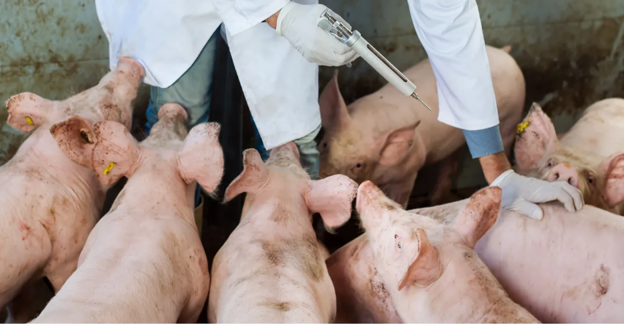
Vaccination is an important component of Glässer's disease control, but achieving consistent protection requires more than simply administering a vaccine. The diversity of Glaesserella parasuis strains, variation in maternal antibody levels, timing of piglet colonization, and herd-specific disease dynamics all influence vaccine performance. Developing an effective vaccination programme therefore requires careful assessment of herd epidemiology, serological status and the age at which disease typically occurs.
Understanding the Role of Maternal Immunity
Glässer's disease occurs most frequently in nursery piglets, making it essential to ensure that piglets remain protected during and immediately after weaning1. Piglets acquire maternally derived antibodies (MDA) through colostrum while becoming naturally colonized by G. parasuis. These antibodies gradually decline during lactation and reach low titres around weaning, typically at 3–4 weeks of age2.
This creates a relatively short window for piglet vaccination, making sow immunization an important consideration in many herds.
Sow Vaccination: Benefits and Considerations
Vaccinating breeding females can enhance passive immunity in piglets and may be particularly valuable in herds with a high incidence of disease during the nursery period. Vaccination of naïve gilts provides protection not only to their offspring but also to the gilts themselves when introduced into farms with high G. parasuis challenge. Consequently, vaccination against G. parasuis can form part of the gilt acclimation programme.
The interaction between maternally derived antibodies and piglet vaccination remains incompletely understood. While some findings indicate that two-dose piglet vaccination remains effective despite the presence of maternal antibodie3, others suggest that high maternal antibody levels following sow vaccination may reduce the effectiveness of piglet vaccination4. Differences in vaccine formulations and serological testing methods may also contribute to these contrasting observations.
Timing Piglet Vaccination
Selecting the appropriate time for piglet vaccination requires balancing declining maternal immunity with the risk of early disease exposure. Vaccinating too early may reduce vaccine effectiveness if maternal antibodies interfere with the immune response, whereas delayed vaccination may leave piglets susceptible during periods of greatest disease risk4.
Evaluating herd serology and understanding the pattern of maternal antibody decline can help veterinarians optimise vaccination schedules and maximise protection during the nursery phase.
Colonization and Vaccine Success
Early colonization with G. parasuis is considered an important factor that may help reduce the subsequent occurrence of Glässer's disease within a herd5. However, the influence of maternal antibodies on nasal colonization remains uncertain.
Earlier colonization has been reported in piglets born to primiparous sows, consistent with lower levels of maternal immunity6. In contrast, other observations identified a higher frequency of G. parasuis isolation from piglets born to multiparous sows at two weeks of age7.
Similarly, the effect of sow vaccination on colonization remains inconsistent. Some findings indicate no measurable effect on piglet colonization7, whereas others demonstrate delayed colonization, reduced bacterial load, and decreased strain heterogeneity following sow vaccination2.
Although sow vaccination can provide protection during lactation, maintaining immunity after the farrowing period may require piglet vaccination together with management practices that encourage early colonization2.
Practical Clinical Insights
Vaccination programmes should always be tailored to individual herd conditions rather than applied uniformly. Assess the herd's serological profile before establishing vaccination schedules to minimise interference from maternally derived antibodies and maximise protection during the period of greatest disease risk. Incorporating sow vaccination into gilt acclimation programmes, evaluating the timing of piglet vaccination, and considering herd-specific colonization patterns can improve vaccine performance and contribute to more effective control of Glässer's disease.
References
- Aragon V, Segalés J, Tucker AW. Glässer's disease. Diseases of swine. 2019 Jun 3:844-53. https://repositori.irta.cat/bitstream/handle/20.500.12327/3798/Aragon_Glasser_Anaporc_2024.pdf?sequence=1&isAllowed=y
- Cerdà-Cuéllar M, Naranjo JF, Verge A, Nofrarías M, Cortey M, Olvera A, Segalés J, Aragon V. Sow vaccination modulates the colonization of piglets by Haemophilus parasuis. Veterinary microbiology. 2010 Oct 26;145(3-4):315-20. https://www.academia.edu/download/41719905/Sow_vaccination_modulates_the_colonizati20160129-32224-ad1e8i.pdf
- Oh Y, Han K, Seo HW, Park C, Chae C. Program of vaccination and antibiotic treatment to control polyserositis caused by Haemophilus parasuis under field conditions. Canadian Journal of Veterinary Research. 2013 Jul 1;77(3):183-90. https://pmc.ncbi.nlm.nih.gov/articles/PMC3700443/pdf/cjvr_07_183.pdf
- Pomorska-Mól M, Markowska-Daniel I, Rachubik J, Pejsak Z. Effect of maternal antibodies and pig age on the antibody response after vaccination against Glässers disease. Veterinary research communications. 2011 Aug;35(6):337-43. https://www.academia.edu/download/47516621/s11259-011-9478-620160725-13280-1x4vra2.pdf
- Correa-Fiz F, Fraile L, Aragon V. Piglet nasal microbiota at weaning may influence the development of Glässer’s disease during the rearing period. BMC genomics. 2016 May 26;17(1):404. https://link.springer.com/content/pdf/10.1186/s12864-016-2700-8.pdf
- Brean M, Abraham S, Hebart M, Kirkwood RN. Influence of parity of birth and suckled sows on piglet nasal mucosal colonization with Haemophilus parasuis. The Canadian Veterinary Journal. 2016 Dec;57(12):1281. https://pmc.ncbi.nlm.nih.gov/articles/PMC5109632/pdf/cvj_12_1281.pdf
- Costa-Hurtado M, Barba-Vidal E, Maldonado J, Aragon V. Update on Glässer’s disease: How to control the disease under restrictive use of antimicrobials. Veterinary microbiology. 2020 Mar 1;242:108595. https://www.sciencedirect.com/science/article/pii/S0378113519314713
Related Contents

Article
When an Elephant’s Blood Report Says “Abnormal”: How Should It Be Interpreted?
A laboratory report can flag a value as abnormal even when an elephant appears clinically healthy. C...
.jpg)
Upcoming Event
World Animal Day
World Animal Day highlights the importance of protecting animal health and welfare through responsib...
Video
Rabies: Epitome of the One Health Paradigm
Rabies exemplifies the One Health approach, linking animal health, human health, veterinary services...
Video
One Health Webinar on Important Updates on Rabies for Veterinary Practitioners and Students
Rabies remains a major zoonotic disease requiring vigilance across veterinary practice and public he...
.jpg)
Video
Transjugular Removal of Canine Heartworms: A Clinical and Surgical Overview
Transjugular removal of canine heartworms is a specialized intervention used in selected dogs with s...

Article
Feline Pregnancy Endocrinology: Hormonal Changes and Placental Function
Pregnancy in cats involves a distinctive endocrine pattern in which ovarian and placental hormones w...

Article
Hormonal Control of Pregnancy Termination in Cats
Pregnancy maintenance in cats depends strongly on coordinated hormonal support, particularly progest...

Article
Feline Embryo Implantation and Early Placental Development
Pregnancy establishment in cats involves a sequence of precisely timed events between fertilization,...