Article
Bacteriophages in Poultry Practice: A Precision Tool for Salmonella Control and Antimicrobial Resistance Management
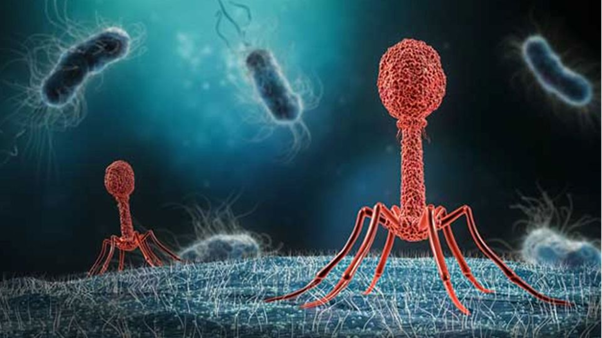
Bacteriophages (phages) are the most abundant organisms on Earth and are widely recognized as viruses of bacteria and archaea. Their global population is estimated at approximately 10³¹, nearly ten times higher than bacterial numbers. Structurally, phages consist of nucleic acids enclosed within a protein capsid, with most carrying double-stranded DNA genomes. This extreme abundance and host specificity make them highly relevant in veterinary medicine, particularly in poultry systems facing increasing antimicrobial resistance (AMR)1.
Why Phages Are Important in Poultry Systems
In modern poultry production, maintaining gut health and controlling bacterial infections is a key challenge. Unlike antibiotics, bacteriophages act with high specificity toward target bacteria, preserving beneficial gut microbiota and reducing the risk of dysbiosis and secondary infections.
From a field veterinary perspective, phages offer1:
- High bacterial specificity with minimal disruption of microbiota
- Cost-effective isolation and production compared to antibiotics
- Self-amplification at the site of infection
- Biofilm disruption capability
- Activity against multidrug-resistant (MDR) pathogens
These properties position phages as promising precision tools in poultry disease management.
Phage Applications in Salmonella Control
In poultry production, phage therapy is increasingly explored for controlling Salmonella, a major zoonotic pathogen responsible for foodborne infections worldwide. Phage-based interventions help reduce bacterial load in birds as well as contamination of poultry products.
Common field applications include:
- Oral administration via drinking water or feed
- Aerosol sprays in hatcheries
- Egg surface decontamination
- Direct application on contaminated products
These approaches are effective in reducing both horizontal and vertical transmission of Salmonella in poultry systems1,2.
Studies have shown that phage cocktails can significantly reduce intestinal colonization and environmental shedding, improving flock health and food safety outcomes.
Limitations in Field Application
Despite strong potential, several challenges limit routine field adoption:
- Narrow host range requiring precise phage selection
- Emergence of phage-resistant bacterial strains
- Environmental instability affecting phage survival
- Lack of standardized commercial formulations
- Regulatory barriers for veterinary use
These factors currently restrict widespread industrial-scale implementation.
References
- Khan MA, Rahman SR. Use of phages to treat antimicrobial-resistant Salmonella infections in poultry. Veterinary Sciences. 2022 Aug 18;9(8):438. https://www.mdpi.com/2306-7381/9/8/438
- Wernicki A, Nowaczek A, Urban-Chmiel R. Bacteriophage therapy to combat bacterial infections in poultry. Virology journal. 2017 Sep 16;14(1):179. https://link.springer.com/content/pdf/10.1186/s12985-017-0849-7.pdf
Related Contents
.jpg)
Video
Transjugular Removal of Canine Heartworms: A Clinical and Surgical Overview
Transjugular removal of canine heartworms is a specialized intervention used in selected dogs with s...

Article
Feline Pregnancy Endocrinology: Hormonal Changes and Placental Function
Pregnancy in cats involves a distinctive endocrine pattern in which ovarian and placental hormones w...

Article
Hormonal Control of Pregnancy Termination in Cats
Pregnancy maintenance in cats depends strongly on coordinated hormonal support, particularly progest...

Article
Feline Embryo Implantation and Early Placental Development
Pregnancy establishment in cats involves a sequence of precisely timed events between fertilization,...

Article
Ultrasonographic Monitoring of Pregnancy in Cats: A Gestational Timeline
Ultrasonography provides a practical way to follow the progression of feline pregnancy by identifyin...

Article
Feline Mismating: Pregnancy Diagnosis and Clinical Management
Mismating or unplanned mating is a common clinical problem in sexually mature queen cats because of...

Article
Medical Termination of Pregnancy in Queens: Drugs, Timing and Treatment Protocols
Medical termination of pregnancy (MTP) in queen cats should be approached according to the timing of...

Article
Safety and Aftercare Following Pregnancy Termination in Queen Cats
Pregnancy termination in queen cats requires more than selecting an appropriate abortifacient. Once...