Article
The Golden First Minute: Immediate Steps in Neonatal Resuscitation
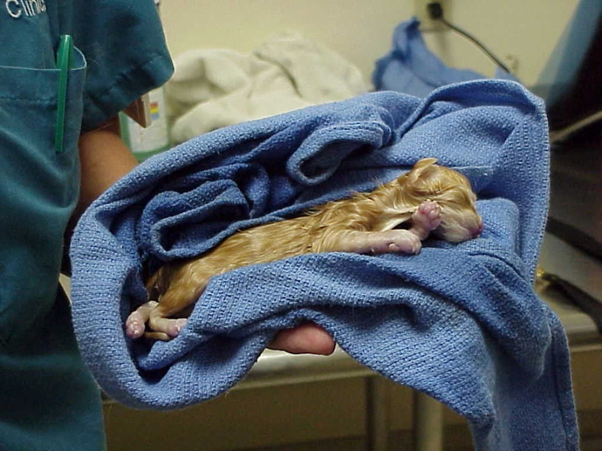
The first minute after birth represents a crucial window in neonatal resuscitation for puppies and kittens. During this period, the newborn must initiate effective respiration and begin the transition to independent circulation. Delays in providing appropriate support during this phase may adversely affect oxygenation and overall physiological stability. The RECOVER guidelines emphasize that early and coordinated interventions during this time are essential for improving outcomes1,.
Initial Priorities Immediately After Birth1
Following delivery, rapid assessment is required to determine whether the newborn is vigorous or non-vigorous. In compromised neonates, three key interventions should be initiated without delay:
- Drying and tactile stimulation
- Airway clearance
- Maintenance of normothermia
These steps are recommended to be performed simultaneously rather than sequentially to avoid delays in care2.
Drying and Tactile Stimulation1
Drying is an essential first step as it reduces evaporative heat loss and may stimulate respiratory effort. Gentle but effective rubbing using a clean towel may activate sensory pathways that encourage the initiation of breathing.
Tactile stimulation is generally considered beneficial in promoting spontaneous respiration. However, excessive or forceful stimulation is not recommended, as it may not provide additional benefit and could potentially lead to injury.
Airway Clearance: Establishing Patency1
A patent airway is necessary for effective ventilation. Residual fluid or debris in the oropharynx may interfere with airflow and should be addressed when clinically indicated.
Gentle suctioning may be performed if obstruction is suspected. However, routine or aggressive suctioning is not recommended, as it may cause mucosal trauma or vagal stimulation, potentially worsening bradycardia.
Importantly, techniques such as swinging the neonate to remove fluid are discouraged due to the associated risk of injury and lack of demonstrated benefit.
Thermoregulation During the First Minute
Newborn puppies and kittens are highly susceptible to hypothermia immediately after birth. Maintaining body temperature is therefore a critical component of early resuscitation.
Measures to support thermoregulation may include:
- Immediate drying
- Use of warm towels
- Application of external heat sources
- Minimizing exposure to cold environments
Hypothermia may impair respiratory effort and cardiovascular function, potentially complicating resuscitation efforts2.
Continuous Assessment and Decision-Making
During the first minute, continuous evaluation of heart rate (HR) and respiratory effort is essential. HR serves as a key indicator of physiological status and guides further intervention:
- HR above 120/min may indicate adequate transition
- HR below 120/min may require initiation of ventilation
- HR below 50/min may necessitate cardiopulmonary resuscitation
Accurate assessment of HR using reliable methods is therefore essential for timely decision-making1,3.
Transition to Advanced Interventions1
If initial steps do not result in adequate respiratory effort, escalation to positive pressure ventilation (PPV) should be considered promptly. PPV supports lung aeration and improves oxygenation, addressing the primary cause of neonatal compromise.
Delays in initiating ventilation may reduce the effectiveness of resuscitative efforts, underscoring the importance of early action.
Team Preparedness and Coordination
Effective management of the first minute requires preparation and coordination. Ensuring that equipment is readily available and that team members are familiar with their roles may enhance efficiency and reduce delays.
Conclusion
The first minute after birth is a critical period during which timely and coordinated interventions may significantly influence neonatal outcomes. By focusing on simultaneous implementation of drying, airway management, and thermoregulation, veterinarians may support the initiation of effective breathing and circulation. Continuous assessment and readiness to escalate care remain essential components of this process.
Reference
- Boller M, Burkitt‐Creedon JM, Fletcher DJ, Byers CG, Davidson AP, Farrell KS, Bassu G, Fausak ED, Grundy SA, Lopate C, Veronesi MC. RECOVER Guidelines: Newborn Resuscitation in Dogs and Cats. Clinical Guidelines. Journal of Veterinary Emergency and Critical Care. 2025 Aug;35:S60-85. https://onlinelibrary.wiley.com/doi/pdf/10.1111/vec.70013
- R. A. Abreu, L. L. Almeida, R. R. D. Rosa Filho, et al., “Canine Pulmonary Clearance During Feto-Neonatal Transition According to the Type of Delivery,” Theriogenology 224 (2024): 156–162. https://doi.org/10.1016/j.theriogenology.2024.05.022
- M. C. Murphy, L. De Angelis, L. K. McCarthy, and C. P. F. O’Donnell, “Comparison of Infant Heart Rate Assessment by Auscultation, ECG and Oximetry in the Delivery Room,” Archives of Disease in Childhood: Fetal and Neonatal Edition 103, no. 5 (2018): F490–F492. https://www.researchgate.net/profile/Madeleine-Murphy-2/publication/325372531_Comparison_of_infant_heart_rate_assessment_by_auscultation_ECG_and_oximetry_in_the_delivery_room/links/613bb37c01846e45ef3e328b/Comparison-of-infant-heart-rate-assessment-by-auscultation-ECG-and-oximetry-in-the-delivery-room.pdf
Related Contents
.jpg)
Video
Transjugular Removal of Canine Heartworms: A Clinical and Surgical Overview
Transjugular removal of canine heartworms is a specialized intervention used in selected dogs with s...

Article
Feline Pregnancy Endocrinology: Hormonal Changes and Placental Function
Pregnancy in cats involves a distinctive endocrine pattern in which ovarian and placental hormones w...

Article
Hormonal Control of Pregnancy Termination in Cats
Pregnancy maintenance in cats depends strongly on coordinated hormonal support, particularly progest...

Article
Feline Embryo Implantation and Early Placental Development
Pregnancy establishment in cats involves a sequence of precisely timed events between fertilization,...

Article
Ultrasonographic Monitoring of Pregnancy in Cats: A Gestational Timeline
Ultrasonography provides a practical way to follow the progression of feline pregnancy by identifyin...

Article
Feline Mismating: Pregnancy Diagnosis and Clinical Management
Mismating or unplanned mating is a common clinical problem in sexually mature queen cats because of...

Article
Medical Termination of Pregnancy in Queens: Drugs, Timing and Treatment Protocols
Medical termination of pregnancy (MTP) in queen cats should be approached according to the timing of...

Article
Safety and Aftercare Following Pregnancy Termination in Queen Cats
Pregnancy termination in queen cats requires more than selecting an appropriate abortifacient. Once...