Article
FCV Vaccination: When Protection Falls Short and How to Optimise the Protocol
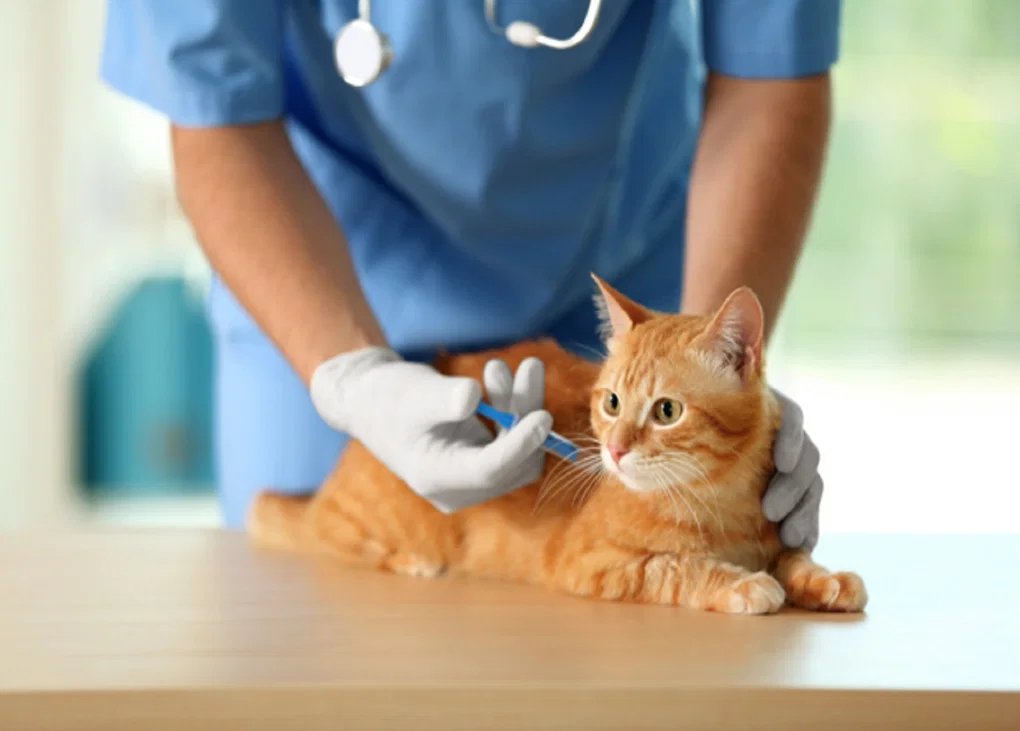
A vaccinated cat can still test positive for feline calicivirus (FCV). That does not necessarily mean vaccination has failed. FCV vaccination is primarily intended to reduce the risk and severity of FCV-associated disease, while infection and viral shedding can still occur[1].
This distinction matters when deciding how to vaccinate, when to boost and what to do when FCV-associated disease occurs despite vaccination.
Start With the Right Primary Course
Maternal-derived antibodies (MDA) can interfere with the kitten’s response to vaccination. The ABCD therefore recommends starting the primary course at approximately nine weeks of age, followed by a second vaccination two to four weeks later, but not before 12 weeks of age[1].
Some kittens may have prolonged MDA and fail to respond adequately to this schedule. A third vaccination at 16 weeks should therefore be considered when high MDA levels are expected or when FCV has caused disease in vaccinated kittens[1].
The primary course should then be followed by an additional dose at 10–16 months of age. This helps provide adequate vaccine-induced immunity in kittens that may not have responded sufficiently during the initial course[1].
For older cats with an uncertain vaccination history, two injections two to four weeks apart followed by a booster one year later are recommended. The same vaccine strains should be used during this course[1].
Booster Frequency Should Reflect Exposure[1]
The need for repeated vaccination is not identical across all cats. A mainly indoor cat with little or no contact with other cats has a different FCV exposure risk from a cat living in a crowded boarding facility.
For low-risk cats, the ABCD recommends boosters every three years. However, owners should be aware that protection against clinical disease decreases as the interval since vaccination increases.
For cats in high-risk environments such as boarding catteries, annual revaccination is recommended. For cats falling between these situations, the decision should be based on an individual risk–benefit assessment.
If the interval since the last vaccination is no more than three years, a single booster is recommended. Even when the interval exceeds three years, one vaccination will usually be sufficient, particularly when a modified live vaccine is used.
Disease Despite Vaccination? Look Beyond the Schedule[1],[2]
A cat developing FCV-associated disease despite appropriate vaccination does not automatically mean that the vaccination protocol was inadequate.
FCV exists as multiple field strains, and no vaccine provides equal protection against all of them. Common vaccine strains include F9, FCV 255, G1 and 431. Protection also involves both humoral and cellular immunity, making vaccine selection more complicated than simply comparing antibody neutralisation results.
This becomes particularly relevant when disease repeatedly occurs in a fully vaccinated population. In such circumstances, changing to a different FCV vaccine strain should be considered.
Evidence on cross-protection between vaccine strains and field strains is mixed. Some findings support effective cross-neutralisation by older vaccine strains, while other work has shown broader cross-neutralisation with newer strains. Field evidence has also shown protection from F9-based vaccination against contemporary FCV strains.
Do Not Use Antibody Testing as a Vaccination Substitute[1]
FCV antibody testing has limited value when deciding whether an individual cat is protected. Antibodies detected against one FCV strain may not necessarily protect against the strain encountered in the field, and cellular immunity also contributes to protection.
Therefore, antibody testing cannot replace routine FCV vaccination and has limited value as a pre-vaccination test.
Remember What Vaccination Can, and Cannot Do
The practical goal of FCV vaccination is not to guarantee that a cat will never encounter or shed FCV. Its major value is reducing the likelihood and severity of FCV-associated disease.
That distinction becomes especially important with virulent systemic FCV (VS-FCV). Vaccination did not protect cats in many reported VS-FCV outbreaks, although experimental work has demonstrated some protection and milder disease following prior vaccination.
For the clinician, vaccination should therefore be viewed as one part of FCV prevention, not a reason to disregard compatible disease in a vaccinated cat. When disease persists despite appropriate vaccination, reassessing exposure risk, vaccination history and, where appropriate, the vaccine strain can be more useful than simply repeating the same protocol.
References:
- Hofmann-Lehmann R, Hosie MJ, Hartmann K, Egberink H, Truyen U, Tasker S, Belák S, Boucraut-Baralon C, Frymus T, Lloret A, Marsilio F. Calicivirus infection in cats. Viruses. 2022 Apr 29;14(5):937. https://www.mdpi.com/1999-4915/14/5/937
- Spiri AM, Novacco M, Meli ML, Stirn M, Riond B, Fogle JE, Boretti FS, Herbert I, Hosie MJ, Hofmann-Lehmann R. Modified-live feline calicivirus vaccination elicits cellular immunity against a current feline calicivirus field strain in an experimental feline challenge study. Viruses. 2021 Aug 31;13(9):1736. https://www.mdpi.com/1999-4915/13/9/1736
Related Contents
.jpg)
Upcoming Event
Emerging Zoonotic Diseases: Early Detection in Veterinary Practice
Unusual clinical presentations and unexpected disease clusters may signal an emerging zoonotic threa...
Article
FCV-Associated Acute Oral and Upper Respiratory Disease in Cats
A kitten with fever, sneezing and reduced appetite may look like it has an uncomplicated upper respi...
Article
FCV-Associated Limping Syndrome in Cats: Recognising Acute Shifting Lameness
A cat that suddenly becomes lame in one limb and then appears painful in another can present a diagn...
Article
Feline Chronic Gingivostomatitis and Its Association With FCV
A cat with severe, persistent oral inflammation may have more than gingivitis. In feline chronic gin...
Article
Virulent Systemic Feline Calicivirus: Recognising and Investigating a High-Mortality Outbreak
A cluster of cats with fever, depression and severe respiratory disease demands a different level of...
Article
FCV Transmission and Persistence in Multicat Environments
A cat may recover from the obvious signs of feline calicivirus (FCV) infection and still remain rele...
Article
Diagnosing Feline Calicivirus: Interpreting RT-PCR, Sampling and Virus Isolation
A positive feline calicivirus test does not always mean FCV is responsible for a cat’s clinica...

Article
Supportive Management of Acute Feline Calicivirus Infection
For many cats with acute feline calicivirus (FCV) infection, treatment is largely supportive. The pr...