Article
PCV2 Vaccination in Swine: Current Strategies, Challenges, and Future Directions
Porcine Circovirus type 2 (PCV2) vaccination has significantly changed the management of Porcine Circovirus-Associated Disease (PCVAD) by reducing the impact of severe clinical disease and improving herd productivity. Before vaccine availability, control strategies mainly focused on reducing stress, improving biosecurity, limiting co-infections, and supporting immune function. However, these measures alone had limited ability to prevent disease progression during severe outbreaks1.
For practicing veterinarians, selecting appropriate vaccination strategies requires an understanding of vaccine development, herd-level application, maternal immunity challenges, and the importance of integrating vaccination with overall farm management.
Evolution of PCV2 Vaccination Approaches
Early PCV2 vaccine development focused on targeting PCV2 alone or combining protection against associated pathogens such as Porcine Parvovirus (PPV), Porcine Reproductive and Respiratory Syndrome Virus (PRRSV), and Mycoplasma hyopneumoniae.
Initial approaches using inactivated and subunit vaccines provided immune responses but did not always achieve complete protection because PCV2 could persist in pig populations and the environment, particularly in the presence of maternal antibodies.
Later vaccine developments, including recombinant DNA-based vaccines and chimeric PCV1-2 vaccines, provided improved immune responses, particularly against more virulent PCV2 strains1.
Current Vaccination Strategies and Herd Benefits
Current PCV2 vaccines are formulated to provide protection against the major circulating PCV2 genotypes. These vaccines are commonly incorporated into vaccination programs for weaning pigs to reduce clinical PCVAD, improve growth performance, lower mortality, and enhance overall herd productivity2.
Vaccination has become an important component of herd health programs because it not only reduces disease severity but also contributes to improved production performance. In intensive production systems, vaccination has been associated with a reduction in PCV2-associated mortality of more than 70%, supporting improved production efficiency and economic returns1.
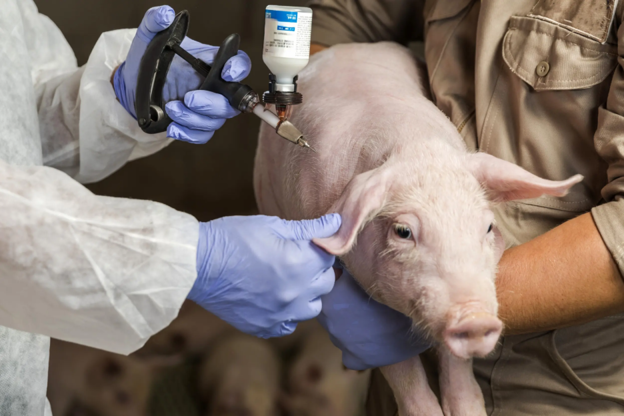
Current recommendations support a multi-layered vaccination strategy in which both breeding animals and piglets are immunized. Vaccinating sows helps provide maternal antibodies to piglets, while post-weaning vaccination promotes the development of active immunity during a period of increased disease susceptibility.
Production and Economic Benefits
The advantages of PCV2 vaccination extend beyond disease prevention. Farms implementing routine vaccination programs have reported improvements in average daily weight gain (ADG), reduced time to market, and greater herd uniformity.
Improved feed conversion and reduced need for treatments associated with secondary infections also contribute to better production efficiency, particularly in herds with high pathogen pressure and environmental PCV2 exposure1.
Challenges in Vaccination Programs
Despite the success of vaccination, several practical challenges should be considered when designing herd immunization programs.
Maternal antibodies may interfere with immune responses following early-life vaccination, potentially delaying the development of optimal immunity in piglets. In piglets born to vaccinated sows, administration of a booster dose after weaning has been shown to enhance immune responses3.
Another important consideration is the ongoing genetic evolution of PCV2. As circulating viral strains continue to diversify, continued surveillance remains important to ensure that vaccination programs remain effective against prevalent genotypes1.
Emerging Vaccine Technologies
Advances in vaccine technology continue to expand future options for PCV2 control. Nanoparticle-based and mRNA-based vaccine platforms are being explored to generate rapid and robust immune responses while minimizing adverse effects. Although these approaches remain in experimental stages, they represent promising directions for future PCV2 prevention.
Autogenous vaccines developed against herd-specific PCV2 strains are also being investigated as a potential option for farms facing unique epidemiological challenges4.
Practical Clinical Insights
When planning PCV2 vaccination programs, veterinarians should consider:
- Herd disease history and current infection pressure.
- Appropriate vaccination timing in relation to maternal antibody levels.
- The presence of co-infections that may influence vaccine outcomes.
- Integration of vaccination with biosecurity and overall herd health management.
Vaccination is a key component of PCVAD prevention, but its greatest benefit is achieved when combined with effective biosecurity, sound management practices, and ongoing herd health monitoring. Adapting vaccination strategies to individual farm conditions and monitoring changing PCV2 epidemiology can support sustained disease control and improved production outcomes.
References
- Borah D, Hazarika R, Hazarika G, Saikia DP, Mili P, Bappu HP, Islam I, Barua J, Brahma D, George S. Porcine circovirus diseases: current insights and future strategies for effective Control, with a focus on Porcine circovirus 2 (PCV2). Microbiol Res J Int. 2024 Dec 30;34(12):283-98. https://www.researchgate.net/publication/387723361
- Duong VT, Koirala P, Chen SP, Monteiro MJ, Skwarczynski M, Toth I. Multiepitope subunit Peptide-Based nanovaccine against Porcine circovirus type 2 (PCV2) elicited high antibody titers in vaccinated mice. Molecules. 2023 Feb 28;28(5):2248. https://www.mdpi.com/1420-3049/28/5/2248
- Mu Y, Jia C, Zheng X, Zhu H, Zhang X, Xu H, Liu B, Zhao Q, Zhou EM. A nanobody‐horseradish peroxidase fusion protein‐based competitive ELISA for rapid detection of antibodies against porcine circovirus type 2. Journal of Nanobiotechnology. 2021 Feb 1;19(1):34. https://link.springer.com/content/pdf/10.1186/s12951-021-00778-8.pdf
- Ren M, Abdullah SW, Pei C, Guo H, Sun S. Use of virus-like particles and nanoparticle-based vaccines for combating picornavirus infections. Veterinary Research. 2024 Sep 30;55(1):128. https://link.springer.com/content/pdf/10.1186/s13567-024-01383-x.pdf
Related Contents
.jpg)
Upcoming Event
World Animal Day
World Animal Day highlights the importance of protecting animal health and welfare through responsib...
.jpg)
Video
Transjugular Removal of Canine Heartworms: A Clinical and Surgical Overview
Transjugular removal of canine heartworms is a specialized intervention used in selected dogs with s...

Article
Feline Pregnancy Endocrinology: Hormonal Changes and Placental Function
Pregnancy in cats involves a distinctive endocrine pattern in which ovarian and placental hormones w...

Article
Hormonal Control of Pregnancy Termination in Cats
Pregnancy maintenance in cats depends strongly on coordinated hormonal support, particularly progest...

Article
Feline Embryo Implantation and Early Placental Development
Pregnancy establishment in cats involves a sequence of precisely timed events between fertilization,...

Article
Ultrasonographic Monitoring of Pregnancy in Cats: A Gestational Timeline
Ultrasonography provides a practical way to follow the progression of feline pregnancy by identifyin...

Article
Feline Mismating: Pregnancy Diagnosis and Clinical Management
Mismating or unplanned mating is a common clinical problem in sexually mature queen cats because of...

Article
Medical Termination of Pregnancy in Queens: Drugs, Timing and Treatment Protocols
Medical termination of pregnancy (MTP) in queen cats should be approached according to the timing of...