Article
Feed and Management Strategies to Prevent Gastric Ulcers in Pigs
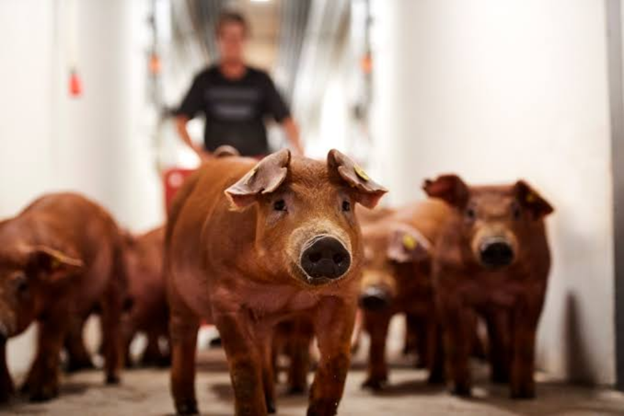
Gastric ulcers remain a significant health and production concern in modern pig farming, particularly in intensive production systems. They are associated with reduced feed intake, decreased daily weight gain, poor performance, and, in severe cases, sudden death due to gastric haemorrhage1. Although the development of gastric ulcers is multifactorial, nutrition and day-to-day management play a central role in influencing the health of the pars esophagea. Understanding how feeding practices, housing, and environmental conditions contribute to ulcer formation allows veterinarians to recommend practical preventive strategies that support both animal welfare and herd productivity.
Nutrition as a Key Preventive Factor
Feed structure has a major influence on gastric health. Finely ground diets negatively affect the integrity of the gastric mucosa, while coarser grinding is considered a practical preventive approach1. Similarly, pelleted feed has consistently been associated with an increased occurrence of gastric ulcers1,2. Very fine feed mixtures and granulated diets may further increase the risk by altering the physical characteristics of stomach contents and exposing the pars esophagea to gastric acid1,3.
Feeding practices that accelerate gastric emptying or leave the stomach empty should also be recognised as risk factors1. Ad libitum dry feeding has been linked with a higher prevalence of ulcers1. In contrast, corn-based liquid feed containing 66% water has been associated with a significantly lower incidence of gastric ulcers, possibly because dilution of gastric acid reduces irritation of the non-glandular stomach2. However, water content alone should not be considered protective, as its independent effect remains unclear1.
Diet composition also influences gastric health. Feed ingredients with higher fibre levels may slow gastric emptying and create a barrier that limits contact between stomach acid and the pars esophagea. While increased fibre may reduce feed efficiency under intensive production conditions, it remains an important consideration when balancing productivity with gastric health1.
Another nutritional consideration is mycotoxin contamination. Besides reducing feed intake, mycotoxins may intensify the damaging effects of feed structure on the gastric epithelium1. The inclusion of wheat bran and routine use of mycotoxin deactivators may help reduce ulcer-related losses in affected herds.
Management Factors That Influence Ulcer Development
Several management practices directly affect the occurrence of gastric ulcers. Starvation, restricted access to water, delayed identification of sick animals, and suboptimal thermal conditions have all been associated with an increased frequency of gastric lesions1. Maintaining consistent feed availability and promptly addressing health issues can therefore contribute to gastric health.
Stress also plays an important role. Transport, overcrowding, and mixing of pigs increase the likelihood of ulcer development1. Housing conditions further influence risk. Pigs reared on concrete or slatted floors have a substantially higher incidence of gastric ulcers compared with pigs provided with straw bedding2. Continuous access to deep straw has been associated with a significant reduction in ulcer occurrence and is considered to have a gastroprotective effect1,4,5,6.
Low birth weight has also been linked with an increased frequency of gastric lesions in weaned pigs, suggesting that individual animal factors should be considered when monitoring at-risk groups 5,4.
Practical Clinical Insights
When advising producers, veterinarians can help reduce the risk of gastric ulcers by focusing on practical herd-level management:
- Encourage coarser feed particle size where appropriate.
- Review the use of pelleted and finely ground diets.
- Minimise prolonged feed withdrawal and ensure unrestricted access to water.
- Reduce stress associated with transport, overcrowding, and regrouping.
- Evaluate housing design and consider the benefits of providing deep straw bedding where feasible.
- Monitor feed quality and implement strategies to minimise mycotoxin exposure.
Because gastric ulceration is influenced by multiple interacting factors, preventive programmes are most effective when nutrition, housing, environmental management, and herd health practices are evaluated together. A comprehensive management approach can help reduce disease occurrence while supporting productivity and animal welfare.
References
- Krepelková Z, Novotný J, Bárdová K, Link R, Csörgö A. Gastric ulcers in pigs–a review. Folia veterinaria. 2024 Jun 27;68(2):33-42. https://sciendo.com/pdf/10.2478/fv-2024-0015
- Cybulski P, Larska M, Woźniak A, Jabłoński A, Stadejek T. The dietary risk factors of gastric ulcers in finishing pigs from 16 Polish farms. Agriculture. 2021 Jul 29;11(8):719. https://www.mdpi.com/2077-0472/11/8/719
- Yamasaki L, Boselli-Grotti CC, Alfieri AA, Silva EO, Oliveira RL, Camargo PL, Bracarense AP. Alterações histológicas da pars esophagea de suínos e sua relação com Helicobacter spp. Arquivo Brasileiro de Medicina Veterinária e Zootecnia. 2009 Jun;61(3):553-60. https://www.scielo.br/j/abmvz/a/kGTTh4J4fQj5G7Fn9DYB5wv/?format=pdf&lang=pt
- Gottardo F, Scollo A, Contiero B, Bottacini M, Mazzoni C, Edwards SA. Prevalence and risk factors for gastric ulceration in pigs slaughtered at 170 kg. Animal. 2017 Nov;11(11):2010-8. https://www.sciencedirect.com/science/article/pii/S1751731117000799
- Camerlink I, Bolhuis JE, Duijvesteijn N, Van Arendonk JA, Bijma P. Growth performance and carcass traits in pigs selected for indirect genetic effects on growth rate in two environments. Journal of Animal Science. 2014 Jun 1;92(6):2612-9. https://edepot.wur.nl/307006#page=83
- Cybulski P, Woźniak A, Larska M, Jabłoński A, Stadejek T. Gastric ulcers in finishing pigs: the evaluation of selected non-dietary risk factors and impact on production performance. Porcine Health Management. 2024 Feb 26;10(1):11. https://link.springer.com/content/pdf/10.1186/s40813-024-00362-0.pdf
Related Contents

Article
The Elephant is Walking Differently: Where Should the Investigation Begin?
When an elephant begins walking differently, the first challenge is not necessarily to identify the...

Article
When an Elephant’s Blood Report Says “Abnormal”: How Should It Be Interpreted?
A laboratory report can flag a value as abnormal even when an elephant appears clinically healthy. C...
.jpg)
Upcoming Event
World Animal Day
World Animal Day highlights the importance of protecting animal health and welfare through responsib...
Video
Rabies: Epitome of the One Health Paradigm
Rabies exemplifies the One Health approach, linking animal health, human health, veterinary services...
Video
One Health Webinar on Important Updates on Rabies for Veterinary Practitioners and Students
Rabies remains a major zoonotic disease requiring vigilance across veterinary practice and public he...
.jpg)
Video
Transjugular Removal of Canine Heartworms: A Clinical and Surgical Overview
Transjugular removal of canine heartworms is a specialized intervention used in selected dogs with s...

Article
Feline Pregnancy Endocrinology: Hormonal Changes and Placental Function
Pregnancy in cats involves a distinctive endocrine pattern in which ovarian and placental hormones w...

Article
Hormonal Control of Pregnancy Termination in Cats
Pregnancy maintenance in cats depends strongly on coordinated hormonal support, particularly progest...