Article
Zoonotic Parasites in Hedgehogs: What Veterinarians Need to Recognize Beyond the Spines
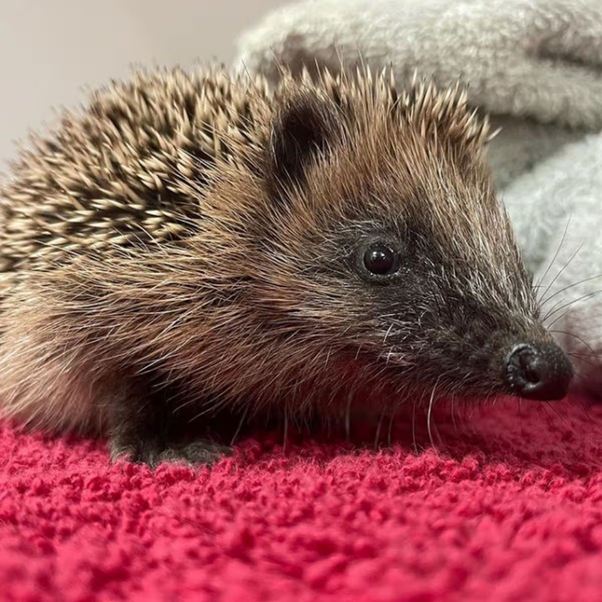
Hedgehogs are being encountered more frequently in wildlife rescue centers, rehabilitation facilities, and exotic pet practices. While trauma and malnutrition are often prioritized during clinical examination, parasitic infections in these animals deserve equal attention because of their potential zoonotic implications.
Several parasites identified in hedgehogs have direct or indirect public health relevance, making proper diagnostics, handling precautions, and preventive protocols increasingly important for veterinarians, handlers, and rescue staff1,2,3.
Cryptosporidium and Environmental Contamination
One of the most significant zoonotic organisms reported in hedgehogs is Cryptosporidium spp. Infections caused by Cryptosporidium parvum and C. erinacei have both been documented in these animals. Among these, C. parvum is especially important because of its recognized zoonotic potential 1,2,3.
Transmission occurs primarily through ingestion or inhalation of infective oocysts. Once inside the host, sporozoites colonize intestinal epithelial cells and eventually produce environmentally resistant oocysts capable of surviving for prolonged periods1,2,4.
One of the major clinical concerns associated with Cryptosporidium infection is prolonged environmental contamination. Infected hedgehogs have been reported to shed infectious oocysts for periods extending up to 70 days, increasing the risk of transmission within rescue facilities and captive housing systems2.
Clinical Signs and Diagnostic Considerations
Clinically affected hedgehogs may show:
- Diarrhea
- Anorexia
- Dehydration
- Depression
- Weight loss1,2
However, asymptomatic carriers may also occur, allowing environmental contamination to continue unnoticed.
Because of this prolonged shedding pattern, routine fecal examinations during both admission and discharge from rehabilitation facilities may help reduce disease spread and minimize post-release transmission into wild populations2.
Diagnosis commonly relies on microscopic identification of oocysts in fecal smears using Ziehl–Neelsen staining methods. In more challenging cases, PCR testing and coproantigen ELISA techniques may improve diagnostic sensitivity5,6.
Giardia and Other Enteric Parasites
Although less commonly discussed, Giardia spp. infection has also been reported in hedgehogs. Given the parasite’s broad host range and zoonotic potential, veterinarians should remain aware of possible transmission risks, particularly in mixed-animal rescue environments where multiple species are housed together1.
Fleas and Tick-Borne Pathogens
The zoonotic importance of hedgehogs extends beyond intestinal parasites. Fleas and ticks associated with these animals may carry several vector-borne pathogens relevant to both animal and human health.
Fleas such as Archaeopsylla erinacei have been associated with pathogenic organisms including Rickettsia helvetica and Bartonella henselae1.
Tick infestations present an even broader concern. Species such as Ixodes ricinus and Rhipicephalus sanguineus are capable of transmitting multiple zoonotic pathogens, including:
- Borrelia burgdorferi
- Anaplasma phagocytophilum
- Babesia species
- Coxiella burnetii1
In addition to pathogen transmission, heavy ectoparasite burdens may directly contribute to weakness, irritation, anemia, and secondary infections in affected hedgehogs1.
Sarcoptic Mange and Veterinary Biosecurity
Mite infestations also deserve attention in veterinary practice. Sarcoptes spp. infections can produce severe pruritus, crusting, spine loss, and progressive deterioration in body condition1.
Because sarcoptic mange carries zoonotic implications, veterinary teams should use gloves and appropriate barrier precautions when handling suspicious dermatological cases.
Why Vigilance Is Becoming Increasingly Important
The growing popularity of African pygmy hedgehogs as exotic pets further increases the importance of parasite awareness in clinical practice. Inexperienced owners may unknowingly expose themselves to zoonotic pathogens through direct handling, contaminated bedding, or poor enclosure hygiene.
For veterinarians, hedgehog parasitology should no longer be viewed solely as a wildlife concern. These animals may serve as reservoirs and transport hosts for multiple zoonotic organisms.
Routine fecal examinations, ectoparasite control, quarantine measures, and strict hygiene protocols remain essential for reducing both animal and public health risks in hedgehog management.
References
- Alfaia F, Jota Baptista C, Sós-Koroknai V, Hoitsy M, Sós E, Madeira de Carvalho LM. Hedgehogs’ parasitology: an updated review on diagnostic methods and treatment. Parasitologia. 2024 Mar 17;4(1):82-90. https://doi.org/10.3390/parasitologia4010007
- Hofmannová L, Hauptman K, Huclová K, Květoňová D, Sak B, Kváč M. Cryptosporidium erinacei and C. parvum in a group of overwintering hedgehogs. European Journal of Protistology. 2016 Oct 1;56:15-20. https://www.academia.edu/download/90380771/j.ejop.2016.05.00220220828-1-lc6ab5.pdf
- Kváč M, Hofmannová L, Hlásková L, Květoňová D, Vítovec J, McEvoy J, Sak B. Cryptosporidium erinacei n. sp.(Apicomplexa: Cryptosporidiidae) in hedgehogs. Veterinary Parasitology. 2014 Mar 17;201(1-2):9-17. https://www.academia.edu/download/38918046/Kvac_Cryptosporidium_erinacei.pdf
- Khan A, Shaik JS, Grigg ME. Genomics and molecular epidemiology of Cryptosporidium species. Acta Tropica. 2018 Aug 1;184:1-4. https://www.academia.edu/download/121707684/j.actatropica.2017.10.02320250308-1-5sbclm.pdf
- Gomes-Gonçalves S, Santos-Silva S, Cruz AV, Rodrigues C, Soeiro V, Barradas P, Mesquita JR. A thorny tale of parasites: Screening for enteric protozoan parasites in hedgehogs from Portugal. Animals. 2024 Jan 21;14(2):326. https://www.mdpi.com/2076-2615/14/2/326
- Marks SL. Rational approach to diagnosing and managing infectious causes of diarrhea in kittens. August's Consultations in Feline Internal Medicine, Volume 7. 2015 Dec 4:1. https://pmc.ncbi.nlm.nih.gov/articles/PMC7152495/pdf/main.pdf
Related Contents
.jpg)
Video
Transjugular Removal of Canine Heartworms: A Clinical and Surgical Overview
Transjugular removal of canine heartworms is a specialized intervention used in selected dogs with s...

Article
Feline Pregnancy Endocrinology: Hormonal Changes and Placental Function
Pregnancy in cats involves a distinctive endocrine pattern in which ovarian and placental hormones w...

Article
Hormonal Control of Pregnancy Termination in Cats
Pregnancy maintenance in cats depends strongly on coordinated hormonal support, particularly progest...

Article
Feline Embryo Implantation and Early Placental Development
Pregnancy establishment in cats involves a sequence of precisely timed events between fertilization,...

Article
Ultrasonographic Monitoring of Pregnancy in Cats: A Gestational Timeline
Ultrasonography provides a practical way to follow the progression of feline pregnancy by identifyin...

Article
Feline Mismating: Pregnancy Diagnosis and Clinical Management
Mismating or unplanned mating is a common clinical problem in sexually mature queen cats because of...

Article
Medical Termination of Pregnancy in Queens: Drugs, Timing and Treatment Protocols
Medical termination of pregnancy (MTP) in queen cats should be approached according to the timing of...

Article
Safety and Aftercare Following Pregnancy Termination in Queen Cats
Pregnancy termination in queen cats requires more than selecting an appropriate abortifacient. Once...