Article
Beyond Medication: Rehabilitation Strategies That Can Transform Outcomes in Equine Osteoarthritis
Osteoarthritis (OA) remains one of the leading causes of lameness, reduced athletic performance, and early retirement in horses. While pharmacological interventions such as NSAIDs, corticosteroids, and regenerative therapies often receive significant attention, rehabilitation plays an equally important role in restoring function, reducing pain, and supporting a horse's return to activity. A well-designed rehabilitation program can enhance tissue healing, improve joint mobility, and optimize long-term outcomes for equine athletes.
Thermal Therapy: Simple, Affordable, and Effective
Thermal therapy remains one of the most accessible rehabilitation tools available to practitioners. Cold therapy is particularly beneficial during the acute phase of injury, helping reduce pain, inflammation, and swelling. Current recommendations suggest applying cold therapy for 15–20 minutes every 2–3 hours during the first 48 hours following injury. Depending on the severity and nature of the lesion, cryotherapy may continue for up to 10–14 days post-injury1.
Heat therapy serves a different purpose. By improving local circulation and reducing tissue stiffness, it can enhance flexibility and comfort in chronic conditions. However, heat should generally be avoided during episodes of acute inflammation, where it may exacerbate swelling and tissue damage.
Hydrotherapy: Harnessing the Power of Water
Hydrotherapy has become an increasingly valuable component of equine rehabilitation programs. The therapeutic effects of water are derived from its unique physical properties, including buoyancy, pressure, viscosity, and drag forces. Together, these properties reduce the load placed on joints and soft tissues while promoting movement in a controlled environment2,3.
Benefits of hydrotherapy include:
- Pain relief
- Improved joint range of motion
- Reduced edema
- Enhanced blood circulation
- Lower mechanical stress on affected joints
Water treadmill exercise, in particular, has demonstrated encouraging results in horses recovering from osteoarthritis. In horses with experimentally induced OA, water treadmill therapy initiated 15 days after surgery improved postural control, increased stabilizing muscle activity, enhanced joint mobility, and reduced lameness compared to control animals1.
However, practitioners should exercise caution. Water treadmill exercise is generally not recommended for acute inflammatory conditions involving distal limb joints because the increased range of motion may aggravate tissue injury2.
Laser Therapy and Therapeutic Ultrasound: Non-Invasive Adjuncts
Advances in rehabilitation medicine have expanded the use of non-invasive modalities such as laser therapy and therapeutic ultrasound.
Laser therapy is commonly used to reduce joint pain, effusion, and periarticular swelling. Its anti-inflammatory effects are believed to occur through prostaglandin-mediated vasodilation, improving circulation and tissue healing3. In equine athletes, laser therapy is frequently combined with platelet-rich plasma (PRP) during the early stages of treatment and continued throughout rehabilitation to provide sustained analgesia and reduce recurrence rates.
Therapeutic ultrasound offers deeper tissue penetration and promotes increased tissue temperature, cellular metabolism, and oxygen demand. These effects encourage cellular infiltration and tissue repair. Continuous-mode ultrasound can provide thermal effects that improve joint capsule flexibility and enhance range of motion, making it particularly useful during later stages of rehabilitation1.
Manual Therapy: Restoring Movement Through Skilled Hands
Manual therapy remains a cornerstone of musculoskeletal rehabilitation. Techniques such as passive stretching, joint mobilization, and joint manipulation can significantly improve joint function and reduce discomfort.
Joint mobilization focuses on restoring tissue compliance, reducing pain, and improving mobility through controlled movements. Manipulation, by contrast, involves high-velocity impulses directed at specific joints and is often used to address localized stiffness and pain1.
These techniques are especially valuable during the early stages of disease when joint structures retain some adaptability. However, they are generally contraindicated in cases of acute osteoarthritis flare-ups or severe articular instability.
Clinical experience suggests that combining passive stretching, active stretching, mobilization, and manipulation often produces superior outcomes in terms of analgesia and restoration of joint range of motion1.
Controlled Exercise: The Foundation of Recovery
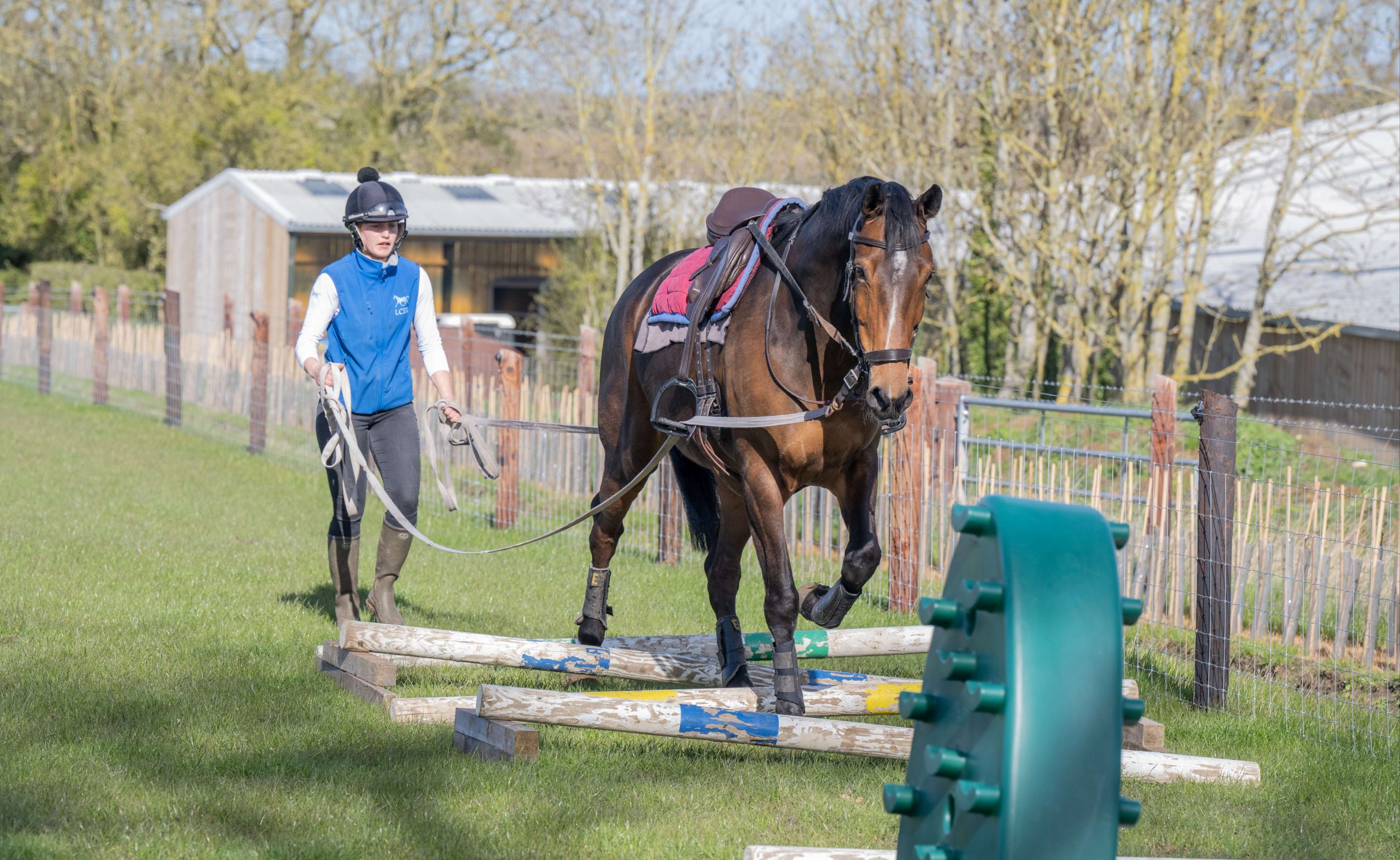
No rehabilitation program is complete without a structured exercise plan. Controlled exercise stimulates tissue healing while minimizing excessive stress on recovering structures.
The fundamental principle is to reduce strain on injured tissues while allowing normal reparative processes to occur1,4. Exercise prescriptions should be individualized and adjusted throughout recovery based on clinical response.
A typical post-arthroscopy rehabilitation program may include1:
|
Recovery Period |
Exercise |
Duration |
Frequency |
|
First 2 weeks |
Hand walking |
10–15 minutes |
Twice daily |
|
Next 4 weeks |
Hand walking + trot |
15 min walk + 5–10 min trot |
Twice daily |
|
After 3 months |
Progressive return to training |
Variable |
As tolerated |
Gradual progression remains critical. Excessive loading too early can delay healing, while prolonged inactivity can result in muscle loss, stiffness, and compromised performance.
A Multimodal Approach Delivers the Best Results
Modern equine rehabilitation extends beyond these core modalities. Electrical stimulation therapies, kinesiology taping, acupuncture, chiropractic interventions, osteopathic manipulation, and whole-body vibration platforms are increasingly incorporated into treatment plans. While evidence continues to evolve, these approaches may provide additional benefits in selected cases.
The reality is that no single rehabilitation technique is universally effective. Successful management of equine OA requires an individualized, multimodal strategy tailored to the horse's injury, stage of disease, athletic demands, and response to treatment.
For today's equine practitioner, rehabilitation is no longer an optional add-on—it is an essential component of comprehensive osteoarthritis management. By combining targeted physiotherapy with medical and regenerative treatments, veterinarians can significantly improve comfort, function, and the likelihood of a successful return to athletic performance.
References
- Baccarin RY, Seidel SR, Michelacci YM, Tokawa PK, Oliveira TM. Osteoarthritis: a common disease that should be avoided in the athletic horse’s life. Animal Frontiers. 2022 Jun 1;12(3):25-36. https://academic.oup.com/af/article/12/3/25/6608430
- Muñoz A, Saitua A, Becero M, Riber C, Satué K, de Medina AS, Argüelles D, Castejón-Riber C. The use of the water treadmill for the rehabilitation of musculoskeletal injuries in the sport horse. Journal of veterinary research. 2019 Sep 13;63(3):439-45. https://reference-global.com/download/article/10.2478/jvetres-2019-0050.pdf
- Atalaia T, Prazeres J, Abrantes J, Clayton HM. Equine rehabilitation: a scoping review of the literature. Animals. 2021 May 22;11(6):1508. https://www.mdpi.com/2076-2615/11/6/1508
- Davidson EJ. Equine Rehabilitation. Rehabilitation of the Equine Athlete, An Issue of Veterinary Clinics of North America: Equine Practice. 2016 Apr 20;32(1):159. https://books.google.com/books?hl=en&lr=&id=uBMWDAAAQBAJ&oi=fnd&pg=PA159&ots=fTGNqAVHVO&sig=WXamfF6kmh2-bbWVPP5IAnPpveQ
Related Contents
.jpg)
Video
Transjugular Removal of Canine Heartworms: A Clinical and Surgical Overview
Transjugular removal of canine heartworms is a specialized intervention used in selected dogs with s...

Article
Feline Pregnancy Endocrinology: Hormonal Changes and Placental Function
Pregnancy in cats involves a distinctive endocrine pattern in which ovarian and placental hormones w...

Article
Hormonal Control of Pregnancy Termination in Cats
Pregnancy maintenance in cats depends strongly on coordinated hormonal support, particularly progest...

Article
Feline Embryo Implantation and Early Placental Development
Pregnancy establishment in cats involves a sequence of precisely timed events between fertilization,...

Article
Ultrasonographic Monitoring of Pregnancy in Cats: A Gestational Timeline
Ultrasonography provides a practical way to follow the progression of feline pregnancy by identifyin...

Article
Feline Mismating: Pregnancy Diagnosis and Clinical Management
Mismating or unplanned mating is a common clinical problem in sexually mature queen cats because of...

Article
Medical Termination of Pregnancy in Queens: Drugs, Timing and Treatment Protocols
Medical termination of pregnancy (MTP) in queen cats should be approached according to the timing of...

Article
Safety and Aftercare Following Pregnancy Termination in Queen Cats
Pregnancy termination in queen cats requires more than selecting an appropriate abortifacient. Once...