Article
Diagnosing Ovine Footrot: Sampling, Laboratory Testing, and Molecular Diagnostics
Timely and accurate diagnosis of ovine footrot is essential for effective treatment, flock-level control, and prevention of disease spread. Although characteristic clinical lesions often raise a strong suspicion of footrot, clinical examination alone may not identify every infected animal, particularly chronic carriers. Laboratory confirmation, combined with appropriate sampling techniques and molecular diagnostics, enables veterinarians to detect infection, distinguish between benign and virulent strains of Dichelobacter nodosus, and support informed management decisions. Selecting the right diagnostic approach for the clinical situation can significantly improve disease surveillance and control.
Clinical Examination: The First Step in Diagnosis
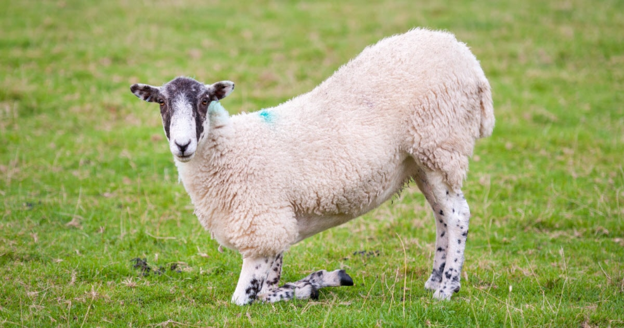
Diagnosis begins with careful observation of the flock for lameness. Affected sheep may stand on three legs, exhibit varying degrees of lameness during movement, or graze while resting on their carpi. Individual lame sheep are best identified while walking in a single line through yards, races, barns, or milking parlours, where gait abnormalities become more apparent. Locomotion scoring systems provide a structured method for identifying affected animals, while newer technologies such as sensors, computer-assisted vision systems, infrared thermography, and reaction-force measuring platforms may further support detection1.
Every sheep should undergo examination of all four feet. Clinical lesions range from mild interdigital dermatitis to extensive underrunning of the hoof horn and, in advanced cases, complete separation of the hoof capsule. Standardised lesion scoring systems help classify disease severity and monitor progression over time2,3.
Characteristic hoof changes together with the typical strong foul odour allow trained personnel to diagnose virulent footrot with good accuracy1,4. However, reliance on clinical findings alone has important limitations.
Recognising the Value of Laboratory Confirmation2
Chronically infected sheep may remain carriers despite showing little or no obvious interdigital skin changes because D. nodosus can persist within horn pockets that are difficult to identify during routine examination. Likewise, spontaneous healing may leave residual hoof deformities while infected animals continue to maintain the infection cycle.
For these reasons, laboratory diagnostics become an essential component of diagnosis, particularly during flock investigations, surveillance programmes, and control initiatives.
Sampling: Maximising Diagnostic Success
Proper sample collection has a direct impact on diagnostic accuracy. The interdigital space is sampled using either a dry cotton swab or one moistened with sterile water. Swabs may be processed directly for molecular testing or submitted for bacterial culture.
When culture is required, immediate inoculation onto hoof agar at the sampling site followed by transport under anaerobic conditions helps preserve bacterial viability. Charcoal transport media can also maintain viable organisms for extended transport when immediate culture is not possible.
For flock investigations, pooled sampling offers a practical and economical alternative. A single swab is used to sample all four feet of one sheep, and up to ten individual swabs can then be combined into one PCR pool. Three risk-based pooled samples are recommended for reliable flock-level testing5.
Culture and Molecular Diagnostics
Culturing D. nodosus remains technically demanding because the organism is fastidious and requires strict anaerobic conditions together with specialised media containing hoof powder for primary isolation. Once isolated, identification can be rapidly confirmed using MALDI-TOF MS1.
For routine veterinary practice, molecular diagnostics have become the preferred diagnostic approach. PCR provides rapid and specific detection of D. nodosus, particularly in situations where culture is difficult. Earlier PCR methods detected the organism but could not differentiate between benign and virulent strains.
The introduction of competitive real-time PCR represented a major advance by identifying the aprV2 gene associated with virulent strains and the aprB2 gene associated with benign strains6. This distinction is based on a dinucleotide variation that produces a single amino acid difference within the corresponding protease proteins2.
Recent developments also include real-time PCR capable of differentiating live from dead virulent D. nodosus, providing additional value when assessing sanitation protocols and monitoring disease-control programmes7.
Practical Clinical Insights
For day-to-day veterinary practice, diagnosis should combine careful clinical assessment with appropriate laboratory confirmation whenever possible. Clinical examination remains indispensable for identifying affected sheep and assessing lesion severity, but laboratory testing becomes particularly valuable for detecting carrier animals, confirming virulent infections, and supporting flock-level control programmes. Risk-based pooled sampling together with real-time PCR provides a practical, cost-effective approach that allows detection of infected flocks, sometimes even before clinical signs become evident, making it a valuable tool for surveillance and long-term disease management (Greber et al., 2018; Stauble et al., 2014a,b).
References
- I. Gelasakis A, I. Kalogianni A, Bossis I. Aetiology, risk factors, diagnosis and control of foot-related lameness in dairy sheep. Animals. 2019 Jul 31;9(8):509. https://www.mdpi.com/2076-2615/9/8/509
- Zanolari P, Dürr S, Jores J, Steiner A, Kuhnert P. Ovine footrot: A review of current knowledge. The Veterinary Journal. 2021 May 1;271:105647. https://www.sciencedirect.com/science/article/pii/S1090023321000423
- Kaler J, Wassink GJ, Green LE. The inter-and intra-observer reliability of a locomotion scoring scale for sheep. The Veterinary Journal. 2009 May 1;180(2):189-94. https://wrap.warwick.ac.uk/id/eprint/567/1/WRAP_Kaler_Sheep_inter_intra.pdf
- Phythian CJ, Cripps PJ, Grove-White D, Michalopoulou E, Duncan JS. Inter-observer agreement for clinical examinations of foot lesions of sheep. The Veterinary Journal. 2016 Oct 1;216:189-95. https://livrepository.liverpool.ac.uk/3003240/1/In%20Press%20accepted%20manuscript%202016.pdf
- Greber D, Locher I, Kuhnert P, Butty MA, Holdener K, Frey J, Schüpbach-Regula G, Steiner A. Pooling of interdigital swab samples for PCR detection of virulent Dichelobacter nodosus. Journal of veterinary diagnostic investigation. 2018 Mar;30(2):205-10. https://journals.sagepub.com/doi/pdf/10.1177/1040638717733508
- Stäuble A, Steiner A, Frey J, Kuhnert P. Simultaneous detection and discrimination of virulent and benign Dichelobacter nodosus in sheep of flocks affected by foot rot and in clinically healthy flocks by competitive real-time PCR. Journal of clinical microbiology. 2014 Apr;52(4):1228-31. https://journals.asm.org/doi/pdf/10.1128/jcm.03485-13
- Hidber T, Pauli U, Steiner A, Kuhnert P. In vitro and ex vivo testing of alternative disinfectants to currently used more harmful substances in footbaths against Dichelobacter nodosus. PLoS One. 2020 Feb 13;15(2):e0229066. https://journals.plos.org/plosone/article/file?id=10.1371/journal.pone.0229066&type=printable
Related Contents
.jpg)
Video
Transjugular Removal of Canine Heartworms: A Clinical and Surgical Overview
Transjugular removal of canine heartworms is a specialized intervention used in selected dogs with s...

Article
Feline Pregnancy Endocrinology: Hormonal Changes and Placental Function
Pregnancy in cats involves a distinctive endocrine pattern in which ovarian and placental hormones w...

Article
Hormonal Control of Pregnancy Termination in Cats
Pregnancy maintenance in cats depends strongly on coordinated hormonal support, particularly progest...

Article
Feline Embryo Implantation and Early Placental Development
Pregnancy establishment in cats involves a sequence of precisely timed events between fertilization,...

Article
Ultrasonographic Monitoring of Pregnancy in Cats: A Gestational Timeline
Ultrasonography provides a practical way to follow the progression of feline pregnancy by identifyin...

Article
Feline Mismating: Pregnancy Diagnosis and Clinical Management
Mismating or unplanned mating is a common clinical problem in sexually mature queen cats because of...

Article
Medical Termination of Pregnancy in Queens: Drugs, Timing and Treatment Protocols
Medical termination of pregnancy (MTP) in queen cats should be approached according to the timing of...

Article
Safety and Aftercare Following Pregnancy Termination in Queen Cats
Pregnancy termination in queen cats requires more than selecting an appropriate abortifacient. Once...