Article
Sudden Death in Goats: Recognising Peracute Infectious and Metabolic Causes
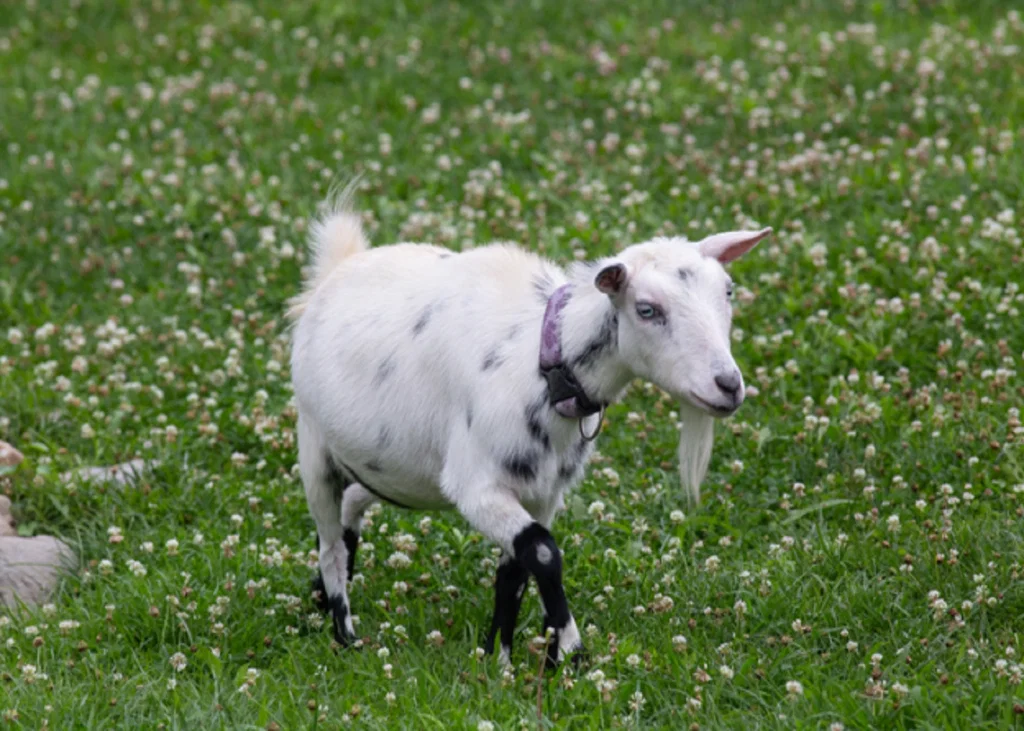
A goat found dead with little or no warning can leave very few clinical clues. In these cases, the pattern within the herd, recent feeding or management changes, and targeted postmortem findings become critical for narrowing the differential diagnosis.
Clostridial Disease Can Progress with Minimal Warning
Clostridial enterotoxaemia is an important cause of acute or peracute death in apparently healthy ruminants. Clostridium perfringens toxinotypes A–E produce potent toxins, and the resulting toxemia can cause systemic vascular injury, intravascular haemolysis, hepatic necrosis and cardiac effects.
In goats, type C and type D disease are particularly relevant. Type C is associated with acute necrohaemorrhagic enteritis involving the jejunum and ileum, while type D can be associated with pulmonary congestion and oedema, serofibrinous pericardial effusion, pulpy kidneys, and encephalomalacia.
Rapid postmortem deterioration can complicate interpretation. Hemorrhagic intestinal contents, severe intestinal lesions and rapid putrefaction with gas and a putrid odour can support clostridial involvement, but an accurate diagnosis requires correlation of clinical, epidemiological, necropsy and laboratory findings[1],[2],[3],[4].
Respiratory Disease May Present as Sudden Death
Acute respiratory infections can progress rapidly enough for death to be the first obvious sign. Mannheimia haemolytica is particularly associated with sudden death in sheep, while Histophilus spp. can cause respiratory disease in sheep and goats, with septicaemia and thromboembolic meningoencephalitis reported in severe cases.
In goats, Mycoplasma mycoides subsp. capri or subsp. mycoides can also be associated with high mortality. Therefore, when several goats die unexpectedly, respiratory disease should remain on the differential list even when obvious respiratory signs were not observed beforehand[4].
Could the Pasture Be the Risk Factor?
Hypomagnesemia is another important differential when goats or other grazing ruminants die suddenly. Risk increases when the diet is low in magnesium and high in potassium, particularly with fast-growing lush grasses. Clinical signs may be absent before abrupt mortality occurs.
Biochemical investigation can help establish the diagnosis. The source indicates that magnesium concentrations below 1 mg/dL (0.4 mmol/L) in cerebrospinal fluid within 12 hours, or vitreous humour collected within 24–48 hours, are indicative of hypomagnesemic tetany[4].
When Intestinal Disease is Not Obvious
Acute intestinal disorders should also be considered. In small ruminants, sudden death can occur with red gut, particularly in animals grazing lush pasture containing highly digestible forage such as lucerne, white clover or ryegrass. Increased intestinal mass and mobility can predispose to twisting, obstruction of mesenteric vessels, shock and death. At necropsy, the intestine may appear intensely red or dark red and form a compact mass, often positioned in the anterior abdomen[4].
The Postmortem May Hold the Answer
For peracute goat deaths, the absence of preceding clinical signs should not narrow the differential prematurely. Clostridial enterotoxaemia, acute respiratory disease, hypomagnesemia, and intestinal accidents can all progress rapidly.
The most useful approach is to interpret the death alongside flock-level circumstances, recent feeding or pasture changes and targeted necropsy findings rather than relying on a single lesion or test. In suspected infectious or toxic disease, postmortem examination is also important for collecting appropriate samples for further testing.
References:
- Lebrun M, Mainil JG, Linden A. Cattle enterotoxaemia and Clostridium perfringens: description, diagnosis and prophylaxis. Veterinary Record. 2010 Jul;167(1):13-22. https://orbi.uliege.be/bitstream/2268/74016/1/2010-Cattle%20enterotoxaemia%20and%20C%20perfringens.pdf
- Uzal FA, Freedman JC, Shrestha A, Theoret JR, Garcia J, Awad MM, Adams V, Moore RJ, Rood JI, McClane BA. Towards an understanding of the role of Clostridium perfringens toxins in human and animal disease. Future microbiology. 2014 Mar 1;9(3):361-77. https://pmc.ncbi.nlm.nih.gov/articles/PMC4155746/pdf/nihms617524.pdf
- Simpson KM, Callan RJ, Van Metre DC. Clostridial abomasitis and enteritis in ruminants. The Veterinary Clinics of North America. Food Animal Practice. 2018 Feb 1;34(1):155. https://pmc.ncbi.nlm.nih.gov/articles/PMC7127689/pdf/main.pdf
- Benchohra M, Hemida H, Ali-Nehari A, Adnane M, Boumezrag A, Chikhaoui M. Sudden death syndrome in domestic ruminants: a review. Comparative Clinical Pathology. 2024 Jun;33(3):489-502. https://www.researchgate.net/profile/Mira-Chikhaoui-3/publication/379908486
Related Contents

Article
Sudden Death in Cattle: A Practical Differential Diagnosis
A cow is found dead during the morning inspection. There were no obvious warning signs the previous...
Article
Caudal Vena Cava Thrombosis in Cattle: Recognising a Fatal Complication of Liver Abscessation
A cow may appear completely healthy until sudden respiratory distress, haemoptysis or death occurs....
Article
Sudden Death in Sheep: Key Differential Diagnoses for the Veterinarian
A sheep found dead on pasture may leave little warning. One animal may have been affected by a rapid...
Article
Necrotic Enteritis in Broilers: Identifying the Farm-Level Risk Factors
A broiler flock showing wet litter, poor performance or rising mortality may have several problems o...
Article
Necrotic Enteritis in Broilers: Linking Intestinal Lesions with Laboratory Diagnosis
A broiler may arrive for postmortem examination with a distended, fragile small intestine covered by...
Article
Controlling Necrotic Enteritis Without Antibiotic Growth Promoters: What Can Feed-Based Strategies Offer?
When antibiotic growth promoters are no longer the main option for controlling necrotic enteritis (N...
Article
Necrotic Enteritis and Antimicrobial Resistance: Implications for Poultry and Food Safety
When a broiler flock develops necrotic enteritis (NE), antimicrobial treatment may appear to be the...
Article
Poultry Coccidiosis: Diagnosis, Lesion Scoring and Identifying the Eimeria Species Involved
A broiler flock may show poor growth, deteriorating feed efficiency or increased mortality without a...