Article
Practical Challenges of FMD Control in Indian Field Conditions
Foot-and-Mouth Disease (FMD) continues to remain one of the biggest challenges in large animal practice across India. Despite regular vaccination programs and government-led disease control strategies, veterinarians still encounter outbreaks in cattle, buffaloes, pigs, sheep, and goats1.
For practicing veterinarians, controlling FMD is not only about administering vaccines. The real challenge begins at the field level.
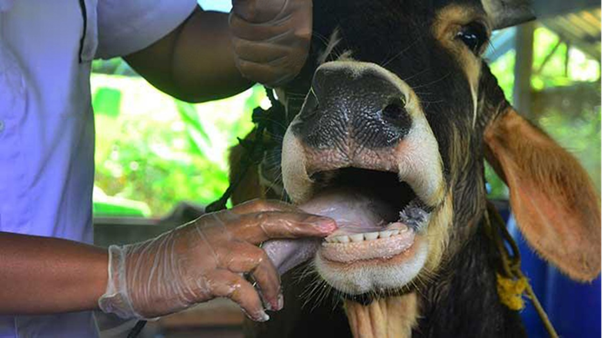
Recognizing FMD Before It Spreads1
Early diagnosis is critical because FMD spreads rapidly through close contact, aerosols, and respiratory secretions.
Common clinical signs seen in cattle and buffaloes include:
- excessive frothy salivation,
- tongue vesicles,
- lesions on teats,
- interdigital ulcers,
- fever,
- reduced feed intake,
- and sudden milk drop.
In pigs, severe lameness is often one of the most prominent signs.
Young calves can develop myocarditis, commonly referred to as “tiger heart,” which may lead to sudden death. Missing early signs in even a few animals can quickly increase village-level transmission.
Why Field-Level Outbreaks Still Occur
India currently reports circulation mainly of serotypes O, A, and Asia1. Since FMD virus contains RNA as genetic material, mutations may occur continuously during viral replication1.
This creates practical challenges for veterinarians because:
- circulating strains may differ slightly from vaccine strains,
- immunity may vary between animals,
- and outbreaks can still occur despite vaccination.
Another major issue is incomplete vaccination coverage.
Field veterinarians frequently deal with:
- missed animals during vaccination drives,
- migratory livestock,
- delayed boosters,
- and farmers refusing vaccination.
Even small groups of unvaccinated animals can help maintain viral circulation within villages2.
Cold Chain Maintenance: A Practical Concern
FMD vaccines used in India are inactivated vaccines requiring strict cold-chain maintenance1.
In rural field conditions, vaccines may travel long distances before administration. Exposure to heat during transportation or improper storage can reduce vaccine potency significantly.
During large vaccination campaigns, veterinarians should carefully monitor:
- icebox temperatures,
- vaccine handling duration,
- direct sunlight exposure,
- and repeated opening of storage containers.
Cold-chain failure can silently reduce vaccine effectiveness before the vaccine even reaches the animal.
Why Farmer Communication Matters
One major challenge in FMD control is lack of awareness among livestock owners.
Some farmers discontinue vaccination once outbreaks decrease. Others believe a single vaccination provides lifelong protection. In several regions, veterinarians still encounter livestock owners who are unaware of routine FMD vaccination schedules2.
Practicing veterinarians should repeatedly educate farmers about:
- biannual vaccination schedules,
- importance of booster doses,
- early outbreak reporting,
- and animal isolation during outbreaks.
Farmer awareness directly influences outbreak control success.
Vaccinated Animals Can Still Become Infected
Vaccination significantly reduces disease severity but may not always completely stop infection.
Vaccinated animals generally show:
- lower mortality,
- milder lesions,
- reduced milk loss,
- and fewer complications compared to unvaccinated animals2.
This is an important point during outbreak investigations because farmers often lose confidence after seeing disease in vaccinated cattle.
Practical Steps During Suspected FMD Outbreaks
Field veterinarians should immediately:
- isolate affected animals,
- stop unnecessary animal movement,
- encourage rapid reporting,
- disinfect contaminated areas,
- And monitor nearby villages closely3,4.
Ring vaccination around outbreak areas can help reduce further spread3,4.
Proper record maintenance and follow-up are equally important because FMD control depends heavily on surveillance and timely response.
The Ground Reality
India has made major progress in reducing FMD outbreaks through vaccination and surveillance programs1. However, field realities such as animal movement, underreporting, uneven vaccine coverage, and logistical limitations continue to influence disease transmission.
For practicing veterinarians, successful FMD control requires a combination of:
- early diagnosis,
- proper vaccination practices,
- farmer education,
- outbreak monitoring,
- and strong field-level surveillance.
In day-to-day veterinary practice, controlling FMD remains as much a management challenge as it is a virology challenge.
References
- Audarya SD. Foot-and-mouth disease in India: past, present and future outlook-a review. IntechOpen; 2020 Sep 14. https://www.intechopen.com/chapters/73107
- Verma AK, Tripathi AK, Neha N. Investigation of FMD outbreak in district Bulandshahr, Uttar Pradesh, India. Int J Livest Res. 2017;7(4):113-8. https://www.researchgate.net/profile/Amit-Verma-20/publication/316356043_Investigation_of_FMD_Outbreak_in_District_Bulandsahar_Uttar_Pradesh_India/links/591d74630f7e9b6428179aac/Investigation-of-FMD-Outbreak-in-District-Bulandsahar-Uttar-Pradesh-India.pdf
- Sharma GK, Mahajan S, Matura R, Subramaniam S, Ranjan R, Biswal J, Rout M, Mohapatra JK, Dash BB, Sanyal A, Pattnaik B. Diagnostic assays developed for the control of foot-and-mouth disease in India. World journal of virology. 2015 Aug 12;4(3):295. https://pmc.ncbi.nlm.nih.gov/articles/PMC4534820/pdf/WJV-4-295.pdf
- Singh A, Kumar M, Verma AK, Nirwan S. Studies on diagnosis of foot and mouth disease by ELISA and reverse transcription polymerase chain reaction in bovines. International Journal of Livestock Research. 2019;9(6):130-5. https://www.researchgate.net/profile/Amit-Verma-20/publication/333205953_Studies_on_Diagnosis_of_Foot_and_Mouth_Disease_by_ELISA_and_Reverse_Transcription_Polymerase_Chain_Reaction_in_Bovines/links/5d28b6d3a6fdcc2462da0fd2/Studies-on-Diagnosis-of-Foot-and-Mouth-Disease-by-ELISA-and-Reverse-Transcription-Polymerase-Chain-Reaction-in-Bovines.pdf
Related Contents
.jpg)
Video
Transjugular Removal of Canine Heartworms: A Clinical and Surgical Overview
Transjugular removal of canine heartworms is a specialized intervention used in selected dogs with s...

Article
Feline Pregnancy Endocrinology: Hormonal Changes and Placental Function
Pregnancy in cats involves a distinctive endocrine pattern in which ovarian and placental hormones w...

Article
Hormonal Control of Pregnancy Termination in Cats
Pregnancy maintenance in cats depends strongly on coordinated hormonal support, particularly progest...

Article
Feline Embryo Implantation and Early Placental Development
Pregnancy establishment in cats involves a sequence of precisely timed events between fertilization,...

Article
Ultrasonographic Monitoring of Pregnancy in Cats: A Gestational Timeline
Ultrasonography provides a practical way to follow the progression of feline pregnancy by identifyin...

Article
Feline Mismating: Pregnancy Diagnosis and Clinical Management
Mismating or unplanned mating is a common clinical problem in sexually mature queen cats because of...

Article
Medical Termination of Pregnancy in Queens: Drugs, Timing and Treatment Protocols
Medical termination of pregnancy (MTP) in queen cats should be approached according to the timing of...

Article
Safety and Aftercare Following Pregnancy Termination in Queen Cats
Pregnancy termination in queen cats requires more than selecting an appropriate abortifacient. Once...