Article
Herd Management Practices for Preventing Glässer's Disease in Swine Herds
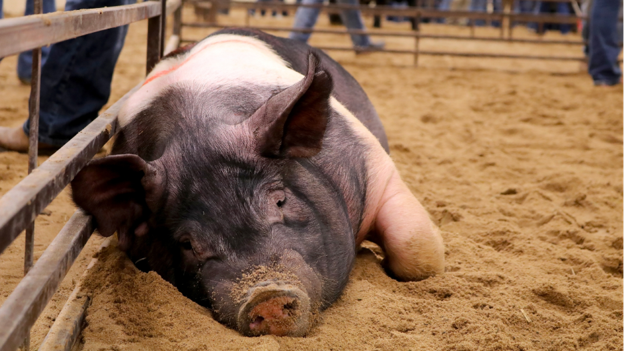
Preventing Glässer's disease requires more than vaccination or antimicrobial therapy alone. Because Glaesserella parasuis commonly colonizes the upper respiratory tract of healthy pigs, disease develops only when the balance between the host, the pathogen and environmental stressors is disrupted. Effective herd management therefore focuses on reducing stress, supporting early immunity and colonization, and minimising factors that favour systemic invasion by virulent strains.
Reduce Stress During the Weaning Period
The highest prevalence of Glässer's disease occurs in nursery piglets, making the weaning period a critical stage for disease prevention1. At this time, maternally derived antibodies decline while piglets experience multiple stressors, including dietary changes, mixing with unfamiliar pigs and environmental adaptation2.
Management practices should therefore aim to minimise unnecessary stress during this transition. Maintaining stable environmental conditions and reducing abrupt management changes can help lower the risk of disease expression.
Promote Early Protective Colonization
Early colonization with G. parasuis is considered an important component of herd protection and may help reduce the subsequent occurrence of Glässer's disease3. Since piglets become colonized while receiving protective colostrum from the sow, management practices should support both adequate colostrum intake and normal early microbial colonization.
The relationship between maternal immunity and colonization remains complex. Earlier colonization has been observed in piglets from primiparous sows, whereas other observations have reported greater bacterial isolation in piglets from multiparous sows4,5. These findings indicate that herd-specific monitoring is important when designing prevention programmes.
Strengthen Gilt and Sow Management
Gilt acclimation is an important component of herd health planning. Vaccinating naïve gilts may protect both the breeding animals and their future litters when entering farms with high G. parasuis pressure. Incorporating G. parasuis vaccination into gilt acclimation programmes can therefore contribute to improved herd immunity.
Evaluating the herd's serological profile also helps determine the most appropriate vaccination strategy while minimising interference from maternally derived antibodies6.
Base Prevention on Herd-Level Monitoring
Because multiple G. parasuis strains may circulate within the same herd, prevention programmes should be guided by diagnostic findings rather than assumptions. Molecular serotyping can identify circulating serovars, while PCR assays targeting virulence-associated genes help differentiate strains with greater pathogenic potential7,8,9.
Regular monitoring enables veterinarians to adapt vaccination strategies and identify changes in strain distribution before major outbreaks occur.
Integrate Biosecurity, Vaccination and Disease Surveillance
Long-term control of Glässer's disease requires an integrated approach. Vaccination, good husbandry, early diagnosis and responsible antimicrobial use should complement one another rather than function as independent interventions. Diagnostic investigation of clinical cases, monitoring of circulating strains and periodic evaluation of herd immunity provide valuable information for refining prevention strategies.
Rather than relying on a single control measure, combining sound management with herd-specific vaccination and surveillance improves the likelihood of maintaining stable herd health.
Practical Clinical Insights
Successful prevention begins before clinical disease appears. Focus management efforts on the nursery period, ensure adequate colostrum intake, minimise weaning-associated stress and monitor herd immunity regularly. Incorporate G. parasuis vaccination into gilt acclimation where appropriate, and use laboratory findings—including molecular serotyping and virulence-associated PCR—to guide herd-specific prevention programmes (Howell et al., 2015; Galofre-Mila et al., 2017; Howell et al., 2017). A coordinated herd management strategy that combines husbandry, surveillance and vaccination provides the strongest foundation for reducing the impact of Glässer's disease.
References
- Aragon V, Segalés J, Tucker AW. Glässer's disease. Diseases of swine. 2019 Jun 3:844-53. https://repositori.irta.cat/bitstream/handle/20.500.12327/3798/Aragon_Glasser_Anaporc_2024.pdf?sequence=1&isAllowed=y
- Cerdà-Cuéllar M, Naranjo JF, Verge A, Nofrarías M, Cortey M, Olvera A, Segalés J, Aragon V. Sow vaccination modulates the colonization of piglets by Haemophilus parasuis. Veterinary microbiology. 2010 Oct 26;145(3-4):315-20. https://www.academia.edu/download/41719905/Sow_vaccination_modulates_the_colonizati20160129-32224-ad1e8i.pdf
- Correa-Fiz F, Fraile L, Aragon V. Piglet nasal microbiota at weaning may influence the development of Glässer’s disease during the rearing period. BMC genomics. 2016 May 26;17(1):404. https://link.springer.com/content/pdf/10.1186/s12864-016-2700-8.pdf
- Brean M, Abraham S, Hebart M, Kirkwood RN. Influence of parity of birth and suckled sows on piglet nasal mucosal colonization with Haemophilus parasuis. The Canadian Veterinary Journal. 2016 Dec;57(12):1281. https://pmc.ncbi.nlm.nih.gov/articles/PMC5109632/pdf/cvj_12_1281.pdf
- Costa-Hurtado M, Barba-Vidal E, Maldonado J, Aragon V. Update on Glässer’s disease: How to control the disease under restrictive use of antimicrobials. Veterinary microbiology. 2020 Mar 1;242:108595. https://www.sciencedirect.com/science/article/pii/S0378113519314713
- Pomorska-Mól M, Markowska-Daniel I, Rachubik J, Pejsak Z. Effect of maternal antibodies and pig age on the antibody response after vaccination against Glässers disease. Veterinary research communications. 2011 Aug;35(6):337-43. https://www.academia.edu/download/47516621/s11259-011-9478-620160725-13280-1x4vra2.pdf
- Howell KJ, Peters SE, Wang J, Hernandez-Garcia J, Weinert LA, Luan SL, Chaudhuri RR, Angen Ø, Aragon V, Williamson SM, Parkhill J. Development of a multiplex PCR assay for rapid molecular serotyping of Haemophilus parasuis. Journal of clinical microbiology. 2015 Dec;53(12):3812-21. https://journals.asm.org/doi/pdf/10.1128/jcm.01991-15
- Howell KJ, Weinert LA, Peters SE, Wang J, Hernandez-Garcia J, Chaudhuri RR, Luan SL, Angen Ø, Aragon V, Williamson SM, Langford PR. “Pathotyping” multiplex PCR assay for Haemophilus parasuis: a tool for prediction of virulence. Journal of Clinical Microbiology. 2017 Sep;55(9):2617-28. https://journals.asm.org/doi/pdf/10.1128/jcm.02464-16
- Galofré-Milà N, Correa-Fiz F, Lacouture S, Gottschalk M, Strutzberg-Minder K, Bensaid A, Pina-Pedrero S, Aragon V. A robust PCR for the differentiation of potential virulent strains of Haemophilus parasuis. BMC veterinary research. 2017 May 8;13(1):124. https://link.springer.com/content/pdf/10.1186/s12917-017-1041-4.pdf
Related Contents

Article
When an Elephant’s Blood Report Says “Abnormal”: How Should It Be Interpreted?
A laboratory report can flag a value as abnormal even when an elephant appears clinically healthy. C...
.jpg)
Upcoming Event
World Animal Day
World Animal Day highlights the importance of protecting animal health and welfare through responsib...
Video
Rabies: Epitome of the One Health Paradigm
Rabies exemplifies the One Health approach, linking animal health, human health, veterinary services...
Video
One Health Webinar on Important Updates on Rabies for Veterinary Practitioners and Students
Rabies remains a major zoonotic disease requiring vigilance across veterinary practice and public he...
.jpg)
Video
Transjugular Removal of Canine Heartworms: A Clinical and Surgical Overview
Transjugular removal of canine heartworms is a specialized intervention used in selected dogs with s...

Article
Feline Pregnancy Endocrinology: Hormonal Changes and Placental Function
Pregnancy in cats involves a distinctive endocrine pattern in which ovarian and placental hormones w...

Article
Hormonal Control of Pregnancy Termination in Cats
Pregnancy maintenance in cats depends strongly on coordinated hormonal support, particularly progest...

Article
Feline Embryo Implantation and Early Placental Development
Pregnancy establishment in cats involves a sequence of precisely timed events between fertilization,...