Upcoming Event
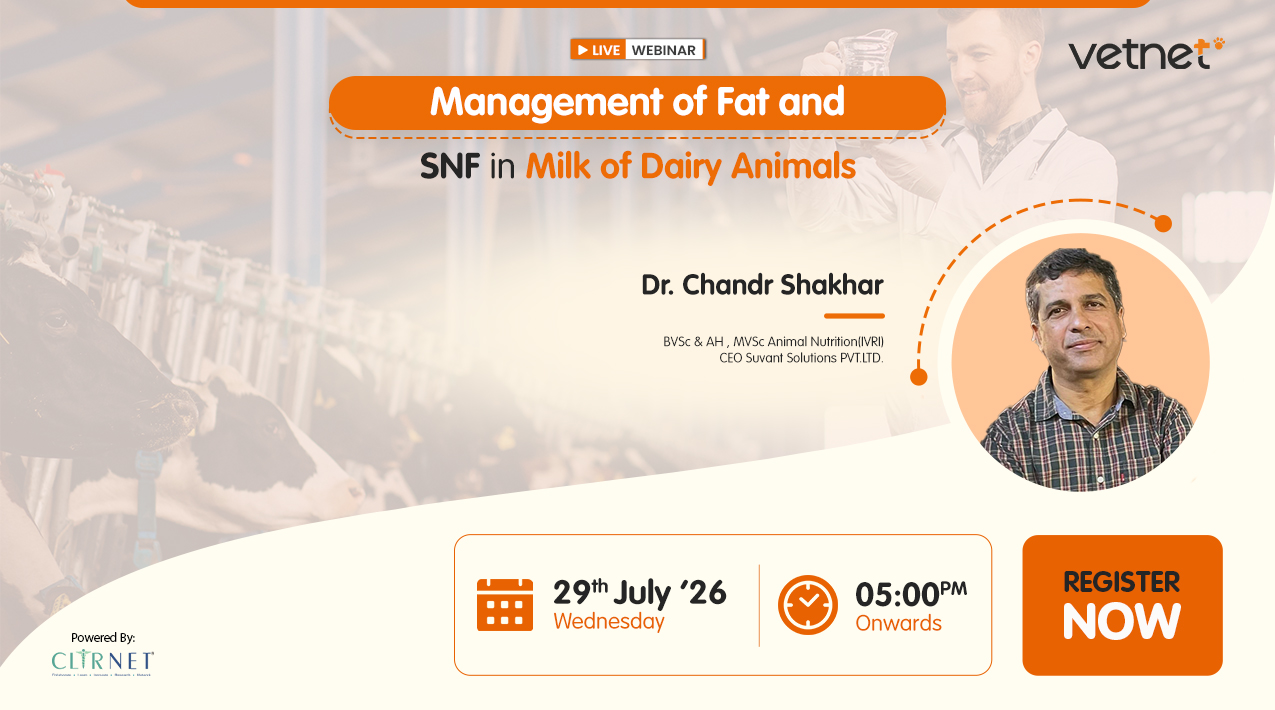
Management of Fat and SNF in Milk of Dairy Animals
Milk fat and solids-not-fat (SNF) are key indicators of milk quality, nutritional value, and economic returns in dairy farming. Their composition is influenced by multiple factors, including breed, genetics, stage of lactation, nutrition, rumen health, feeding practices, environmental conditions, and overall herd management. Imbalances in dietary fibre, energy, protein, and mineral supplementation can adversely affect milk fat and SNF levels, while metabolic disorders and poor management practices may further compromise milk quality. A comprehensive understanding of these factors is essential for maintaining optimal milk composition, meeting quality standards, and improving productivity in dairy herds.
Related Contents

Upcoming Event
ECG Interpretation Made Easy for Small Animal Practitioners
Electrocardiography (ECG) is an essential diagnostic tool in small animal practice, yet many clinici...

Upcoming Event
Diagnostic Imaging: Common Mistakes in Everyday Practice
Diagnostic imaging is an indispensable tool in veterinary practice, supporting the diagnosis of a wi...
 Subhasis Batabyal 2 (1).jpg)
Upcoming Event
Clinical Biochemistry and Veterinary Practice: Recent Trends in Veterinary Laboratory Diagnosis
Clinical biochemistry plays a pivotal role in modern veterinary diagnostics by providing objective i...

Upcoming Event
Emergency Drugs Every Veterinarian Should Know
Timely administration of the right emergency drug can make the difference between life and death in...

Upcoming Event
Obesity Management: Building Successful Weight Loss Programs in Dogs
Canine obesity is one of the most common nutritional disorders encountered in veterinary practice an...
.jpg)
Upcoming Event
Approach to Kidney and Liver Injury
Kidney and liver injuries require timely recognition and a structured diagnostic approach. Explore p...

Upcoming Event
CBC Interpretation in Small Animal Practice
A complete blood count (CBC) is one of the most valuable diagnostic tools in small animal practice....

Upcoming Event
Positive Inotropes and Their Role in Cardiology
Positive inotropic agents are commonly used in cardiology to improve myocardial contractility and su...