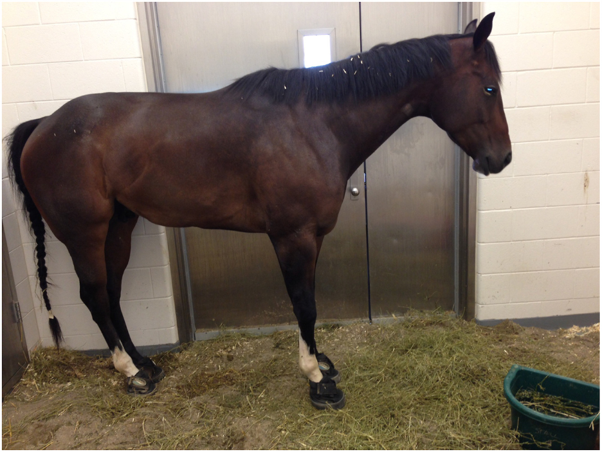
Article
Key Enteropathogens in Equine Diarrhoea: Clinical Implications for Practitioners
Although acute equine diarrhoea has multiple causes, several enteropathogens carry significant implications for prognosis, treatment, and complications such as laminitis. A recent international multicentre study provides important insights into Neorickettsia risticii, Clostridioides difficile, Equine coronavirus (ECoV), and sand enteropathy in clinical cases1.
Potomac Horse Fever and Laminitis Risk
Neorickettsia risticii remains a major cause of systemic illness requiring antimicrobial therapy.
Detection rates ranged from 0–31%, with peaks in Ontario and the US Midwest during summer and fall2,3. Blood and faecal PCR showed excellent agreement, though blood may become positive earlier in infection. Therefore, combined sampling is recommended.
Importantly, N. risticii positivity was associated with a significantly higher risk of laminitis, reinforcing the need for early recognition and aggressive supportive care1,2.
Clostridioides difficile Carries High Mortality
Clostridioides difficile-associated disease (CDAD) remains a major concern in equine diarrhoea. Prevalence ranged from 0–25% across institutions, with affected horses showing a 2.7-fold increased risk of death or euthanasia1.
Antimicrobial use was a key predisposing factor, highlighting the importance of prudent antimicrobial stewardship4.
Diagnostic interpretation remains challenging. Toxin ELISA assays are clinically preferred over PCR alone due to the risk of detecting asymptomatic carriage. However, agreement between ELISA and toxigenic culture was only fair, reflecting ongoing diagnostic limitations1.
Equine Coronavirus: Emerging but Underdiagnosed
ECoV was detected across multiple continents, confirming its global distribution1,5. However, only 23% of horses were tested.
Detection rate was 6%, consistent with previous reports. Because viral shedding may be delayed or intermittent, repeat sampling 24–48 hours after admission may improve detection1.
Co-infections were uncommon, suggesting ECoV as the primary pathogen in most positive cases.
Sand Enteropathy: Geography-Driven Disease
Sand-associated diarrhoea accounted for 5% of cases overall, but exceeded 20% in Florida and Finland1. These findings reinforce the strong influence of environmental and geographic risk factors in equine gastrointestinal disease.
Clinical Takeaways
This study highlights the importance of:
- Standardised diagnostic protocols
- Serial sampling for key pathogens
- Awareness of regional epidemiology
- Early identification of high-risk pathogens linked to laminitis and mortality
Ultimately, improved diagnostic consistency and emerging molecular tools may significantly enhance case management in equine diarrhoeal disease.
References
- Gomez DE, Arroyo LG, Schoster A, Renaud DL, Kopper JJ, Dunkel B, Byrne D, MEDS group, Toribio RE, Mykkanen A, Gilsenan WF. Diagnostic approaches, aetiological agents and their associations with short‐term survival and laminitis in horses with acute diarrhoea admitted to referral institutions. Equine veterinary journal. 2024 Sep;56(5):959-69. https://beva.onlinelibrary.wiley.com/doi/pdf/10.1111/evj.14024
- Arroyo LG, Moore A, Bedford S, Gomez DE, Teymournejad O, Xiong Q, Budachetri K, Bekebrede H, Rikihisa Y, Baird JD. Potomac horse fever in Ontario: Clinical, geographic, and diagnostic aspects. The Canadian Veterinary Journal. 2021 Jun;62(6):622. https://pmc.ncbi.nlm.nih.gov/articles/PMC8118184/
- Luethy D, Feldman R, Stefanovski D, Aitken MR. Risk factors for laminitis and nonsurvival in acute colitis: retrospective study of 85 hospitalized horses (2011-2019). Journal of veterinary internal medicine. 2021 Jul;35(4):2019-25. https://doi.org/10.1111/jvim.16147
- Nomura M, Kuroda T, Tamura N, Muranaka M, Niwa H. Mortality, clinical findings, predisposing factors and treatment of Clostridioides difficile colitis in Japanese thoroughbred racehorses. Veterinary Record. 2020 Jul;187(2):e14-. https://doi.org/10.1136/vr.105605
- Pusterla N, James K, Mapes S, Bain F. Frequency of molecular detection of equine coronavirus in faeces and nasal secretions in 277 horses with acute onset of fever. Veterinary Record. 2019 Mar;184(12):385-. https://doi.org/10.1136/vr.104919
Related Contents
.jpg)
Video
Transjugular Removal of Canine Heartworms: A Clinical and Surgical Overview
Transjugular removal of canine heartworms is a specialized intervention used in selected dogs with s...
Article
Feline Pregnancy Endocrinology: Hormonal Changes and Placental Function
Pregnancy in cats involves a distinctive endocrine pattern in which ovarian and placental hormones w...
Article
Hormonal Control of Pregnancy Termination in Cats
Pregnancy maintenance in cats depends strongly on coordinated hormonal support, particularly progest...
Article
Feline Embryo Implantation and Early Placental Development
Pregnancy establishment in cats involves a sequence of precisely timed events between fertilization,...
Article
Ultrasonographic Monitoring of Pregnancy in Cats: A Gestational Timeline
Ultrasonography provides a practical way to follow the progression of feline pregnancy by identifyin...
Article
Feline Mismating: Pregnancy Diagnosis and Clinical Management
Mismating or unplanned mating is a common clinical problem in sexually mature queen cats because of...
Article
Medical Termination of Pregnancy in Queens: Drugs, Timing and Treatment Protocols
Medical termination of pregnancy (MTP) in queen cats should be approached according to the timing of...
Article
Safety and Aftercare Following Pregnancy Termination in Queen Cats
Pregnancy termination in queen cats requires more than selecting an appropriate abortifacient. Once...