Article
Why Some Turtle Shell Infections Stop Responding to Antibiotics
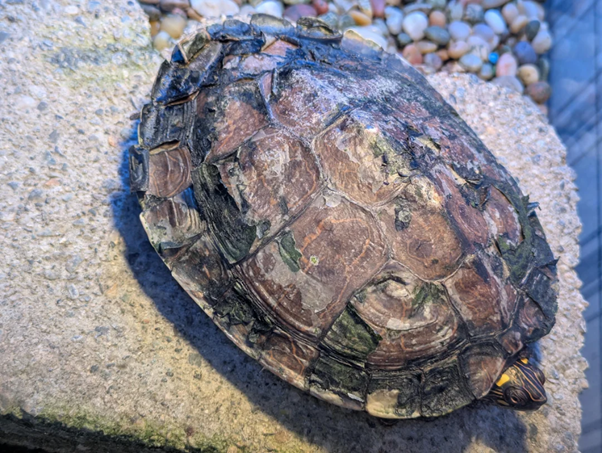
Antibiotics are often the first line of treatment for shell infections in turtles, but chronic ulcerative dermatitis in softshell species can quickly become far more complicated than a routine bacterial infection. In many cases, lesions continue progressing despite prolonged antimicrobial therapy, leaving veterinarians frustrated with poor healing responses and recurring tissue damage.
One major reason behind this challenge is the anatomy of softshell turtles themselves. Unlike hard-shelled chelonians, softshell turtles possess thin bony shell structures covered by leathery skin, allowing infections to penetrate deeper tissues rapidly1. Once infection spreads beneath the superficial layer, antimicrobial penetration becomes increasingly difficult, especially in advanced or necrotic lesions.
Previous reports have shown that infections in softshell turtles may rapidly invade underlying bone and even the coelomic cavity, sometimes progressing with acute or peracute presentations. In severe cases, the true extent of infection may remain hidden beneath the shell surface, making external lesion appearance misleading1,2.
Why Empirical Therapy Often Produces Poor Results
Severe ulcerative dermatitis or “shell rot” is frequently associated with bacterial septicemia, although fungal and viral pathogens may also contribute to disease progression1.
This creates a major problem in reptile medicine: antibiotics may target secondary bacteria while the primary disease process continues progressing unnoticed.
Chronic shell lesions may fail to respond for several reasons:
- antimicrobial resistance
- inadequate antibiotic penetration
- inappropriate drug selection
- mixed infections
- fungal involvement
- chronic environmental contamination
Environmental stress also plays a major role. Multifocal ulcerative dermatitis in captive chelonians has historically been associated with husbandry-related stressors and management issues, particularly in aquatic species maintained under human care1.
Even after treatment begins, aquatic turtles remain difficult patients because wound management itself creates additional complications. Prolonged dry docking may reduce contamination of wounds, but excessive handling and environmental disruption can negatively affect feeding behavior, immune function, and overall recovery.
Why Culture and Sensitivity Testing Matter More Than Ever
One of the strongest clinical messages emerging from reptile wound management is the importance of early diagnostics. Histopathology, bacterial culture, and fungal culture performed early in disease progression may significantly improve treatment planning and help veterinarians avoid prolonged ineffective therapy.
Hedley et al. emphasized that antibiotic treatment in reptiles should ideally be guided by culture and sensitivity testing to support responsible antimicrobial stewardship and improve clinical outcomes3.
This becomes increasingly important as antimicrobial resistance continues affecting exotic animal medicine. Chronic shell lesions treated repeatedly with empirical antibiotics may eventually become far more difficult to manage if resistant organisms establish within deeper tissues.
Could PBM Help Chronic Non-Healing Wounds?
Because antibiotics alone often fail in chronic shell disease, veterinarians are increasingly exploring supportive therapies that promote tissue healing while reducing patient stress. One therapy drawing growing interest is photobiomodulation (PBM).
The biological effects of PBM were first observed more than five decades ago when improved wound healing was noted following light exposure in experimental models1. Later research demonstrated that PBM influences mitochondrial chromophores involved in ATP production, nitric oxide release, inflammation regulation, and tissue repair mechanisms4.
Several studies have reported positive wound-healing effects associated with PBM, including improved fibroblast activity, collagen synthesis, neovascularization, and reduced inflammation1,5.
In reptiles specifically, subjective improvements in wound healing quality and healing speed have been documented in PBM-treated lesions1. Cusack et al. also reported significantly smaller wounds in iguanas treated with PBM compared to conventional topical therapy alone1.
A Growing Challenge in Exotic Animal Medicine
For veterinarians managing aquatic turtles, chronic shell disease remains one of the most frustrating conditions in reptile practice. Antibiotics alone may not be enough once infections become chronic, invasive, or associated with deeper tissue necrosis.
As research continues evolving, the future of chelonian wound management may rely less on prolonged empirical antibiotic therapy and more on multimodal approaches involving diagnostics, antimicrobial stewardship, environmental correction, and supportive therapies that actively stimulate tissue repair.
References
- DiRuzzo S, Praschag P, Miller L, Brodsky M. Successful treatment of severe ulcerative dermatitis in an Aubry's Flapshell turtle (Cycloderma aubryi). Journal of Herpetological Medicine and Surgery. 2022 Dec 1;32(4):262-70. https://turtle-island.org/wp-content/uploads/2023/02/DiRuzzo-et-al-Successful-treatment-flapshell-turtle-JHMS-2022.pdf
- Innis CJ, Conley K, Gibbons P, Stacy NI, Walden HD, Martelli P, Luz S, Krishnasamy K, Hagen C, Sykes J, Acosta D. Veterinary observations and biological specimen use after a massive confiscation of Palawan forest turtles (Siebenrockiella leytensis). Chelonian Conservation and Biology: Celebrating 25 Years as the World's Turtle and Tortoise Journal. 2022 Jun 1;21(1):46-62. https://bioone.org/journals/chelonian-conservation-and-biology/volume-21/issue-1/CCB-1510.1/Veterinary-Observations-and-Biological-Specimen-Use-after-a-Massive-Confiscation/10.2744/CCB-1510.1.pdf
- Hedley J, Whitehead ML, Munns C, Pellett S, Abou‐Zahr T, Calvo Carrasco D, Wissink‐Argilaga N. Antibiotic stewardship for reptiles. Journal of Small Animal Practice. 2021 Oct;62(10):829-39. https://doi.org/10.1111/jsap.13402
- De Freitas LF, Hamblin MR. Proposed mechanisms of photobiomodulation or low-level light therapy. IEEE Journal of selected topics in quantum electronics. 2016 Jun 9;22(3):348-64. https://pmc.ncbi.nlm.nih.gov/articles/PMC5215870/pdf/nihms797827.pdf
- Wardlaw JL, Gazzola KM, Wagoner A, Brinkman E, Burt J, Butler R, Gunter JM, Senter LH. Laser therapy for incision healing in 9 dogs. Frontiers in Veterinary Science. 2019 Jan 29;5:349. https://www.frontiersin.org/journals/veterinary-science/articles/10.3389/fvets.2018.00349/pdf
Related Contents
.jpg)
Video
Transjugular Removal of Canine Heartworms: A Clinical and Surgical Overview
Transjugular removal of canine heartworms is a specialized intervention used in selected dogs with s...

Article
Feline Pregnancy Endocrinology: Hormonal Changes and Placental Function
Pregnancy in cats involves a distinctive endocrine pattern in which ovarian and placental hormones w...

Article
Hormonal Control of Pregnancy Termination in Cats
Pregnancy maintenance in cats depends strongly on coordinated hormonal support, particularly progest...

Article
Feline Embryo Implantation and Early Placental Development
Pregnancy establishment in cats involves a sequence of precisely timed events between fertilization,...

Article
Ultrasonographic Monitoring of Pregnancy in Cats: A Gestational Timeline
Ultrasonography provides a practical way to follow the progression of feline pregnancy by identifyin...

Article
Feline Mismating: Pregnancy Diagnosis and Clinical Management
Mismating or unplanned mating is a common clinical problem in sexually mature queen cats because of...

Article
Medical Termination of Pregnancy in Queens: Drugs, Timing and Treatment Protocols
Medical termination of pregnancy (MTP) in queen cats should be approached according to the timing of...

Article
Safety and Aftercare Following Pregnancy Termination in Queen Cats
Pregnancy termination in queen cats requires more than selecting an appropriate abortifacient. Once...