Article
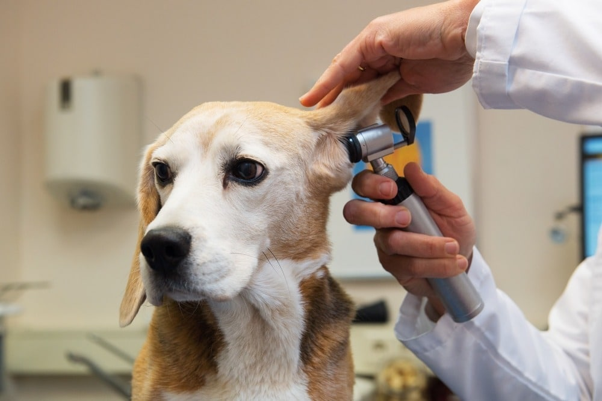
Chronic Canine Otitis: Is Culture Report Telling the Whole Story?
When a chronic otitis case doesn't respond despite selecting antibiotics based on culture and sensitivity, it's tempting to blame antimicrobial resistance. But what if the culture itself isn't showing the complete picture?
Recent research suggests that in chronic suppurative otitis, relying solely on bacterial culture may cause clinicians to overlook important pathogens.
Culture Is Still Essential—But It Has Limitations
Bacterial culture remains the gold standard for selecting antibiotics in recurrent and chronic otitis. It identifies viable bacteria and provides susceptibility testing, making it indispensable for antimicrobial stewardship1.
However, culture doesn't always detect every organism present within the ear canal.
Advanced molecular testing (16S amplicon profiling) has demonstrated that several bacterial species may be present even when they fail to grow in culture.
For clinicians, this explains why some "culture-guided" treatments still fail.
Cytology, Culture and Molecular Testing: Each Answers a Different Question
Think of these three diagnostic tools as complementary rather than competing.
Ear Cytology2
- Immediate chairside information
- Identifies cocci, bacilli and yeast
- Guides empirical treatment
- Excellent for monitoring treatment response
Bacterial Culture2
- Identifies viable bacteria
- Provides antimicrobial susceptibility
- Best suited for chronic or recurrent infections
16S Amplicon Profiling2
- Detects bacterial DNA, including difficult-to-culture organisms
- Reveals mixed bacterial populations
- Mainly a research tool at present
No single test is perfect.
In fact, researchers found that agreement between culture and molecular profiling varied considerably depending on how bacterial abundance was interpreted.
Don't Ignore Cytology When Culture Looks "Normal"
One common clinical scenario is2:
- Numerous bacilli visible on cytology
- Culture grows only a few organisms—or none at all
This discrepancy has been reported repeatedly in chronic otitis cases.
Possible explanations include:
- Previous antibiotic therapy suppressing bacterial growth
- Fastidious organisms
- Biofilm-associated bacteria
- Mixed bacterial populations
The takeaway?
Never disregard what you see on cytology simply because the culture report appears less dramatic.
Pseudomonas Still Deserves Special Attention
Among chronic suppurative otitis cases, Pseudomonas aeruginosa continues to be one of the most clinically significant pathogens3.
Research found that every case identified by molecular testing was also detected by bacterial culture, suggesting that culture remains highly reliable for identifying Pseudomonas.
When Pseudomonas is isolated, clinicians should anticipate2:
- Biofilm formation
- Multidrug resistance
- Longer treatment duration
- Need for aggressive ear cleaning
- Frequent reassessment
Previous Medication Can Change Your Results
Many referral cases have already received multiple topical antibiotics or corticosteroids before samples are collected.
Although these treatments fail clinically, residual antibiotics may still suppress bacterial growth during culture.
This means the laboratory report should always be interpreted alongside2:
- Clinical examination
- Otoscopic findings
- Cytology
- Previous treatment history
Clinical Pearl
If chronic otitis isn't responding as expected, avoid asking only "Which antibiotic should I change to?"
Instead ask:
- Is there a biofilm?
- Have I addressed the underlying disease?
- Do cytology and culture agree?
- Has previous treatment affected my culture result?
Sometimes the problem isn't antibiotic selection—it's incomplete diagnosis.
Reference
- Lehner G, Sauter Louis C, Mueller RS. Reproducibility of ear cytology in dogs with otitis externa. Veterinary Record. 2010 Jul;167(1):23-6. https://www.researchgate.net/profile/Georg-Lehner/publication/45096936
- Leonard C, Thiry D, Taminiau B, Daube G, Fontaine J. External ear canal evaluation in dogs with chronic suppurative otitis externa: Comparison of direct cytology, bacterial culture and 16S amplicon profiling. Veterinary sciences. 2022 Jul 18;9(7):366. https://www.mdpi.com/2306-7381/9/7/366
- Secker B, Shaw S, Atterbury RJ. Pseudomonas spp. in canine otitis externa. Microorganisms. 2023 Oct 28;11(11):2650. https://www.mdpi.com/2076-2607/11/11/2650
Related Contents
.jpg)
Video
Transjugular Removal of Canine Heartworms: A Clinical and Surgical Overview
Transjugular removal of canine heartworms is a specialized intervention used in selected dogs with s...

Article
Feline Pregnancy Endocrinology: Hormonal Changes and Placental Function
Pregnancy in cats involves a distinctive endocrine pattern in which ovarian and placental hormones w...
Article
Hormonal Control of Pregnancy Termination in Cats
Pregnancy maintenance in cats depends strongly on coordinated hormonal support, particularly progest...
Article
Feline Embryo Implantation and Early Placental Development
Pregnancy establishment in cats involves a sequence of precisely timed events between fertilization,...
Article
Ultrasonographic Monitoring of Pregnancy in Cats: A Gestational Timeline
Ultrasonography provides a practical way to follow the progression of feline pregnancy by identifyin...
Article
Feline Mismating: Pregnancy Diagnosis and Clinical Management
Mismating or unplanned mating is a common clinical problem in sexually mature queen cats because of...
Article
Medical Termination of Pregnancy in Queens: Drugs, Timing and Treatment Protocols
Medical termination of pregnancy (MTP) in queen cats should be approached according to the timing of...
Article
Safety and Aftercare Following Pregnancy Termination in Queen Cats
Pregnancy termination in queen cats requires more than selecting an appropriate abortifacient. Once...