Article
Orf Virus Epidemiology and Pathogenesis: Transmission, Persistence and Host Response
Contagious ecthyma, or orf, is a contagious disease of sheep and goats with a broad host range. From a field perspective, understanding how Orf virus enters the animal, persists within a flock and interacts with host immunity helps explain recurring disease and variation in clinical severity.
Epidemiology and Transmission1,2
Contagious ecthyma is more prevalent during late summer, autumn and winter on grasslands and cattle farms. Compared with kids and lambs, adult animals have a lower chance of becoming affected. The virus can persist in arid environments for weeks or even years, although it may have a shorter life cycle under these conditions.
Damaged skin is an important entry point for Orf virus. Fractured, scarred or otherwise damaged skin permits the virus to enter and spread through epidermal cells. Contact between susceptible and diseased animals is the primary method of transmission. The disease can affect different sheep and goat breeds, while animals with immunological deficiencies and chronically infected animals may contribute to maintenance of the virus within the population.
Recurrence is also relevant when assessing affected flocks. Recurrent infections are described as less deadly and more rapidly healing, and they may appear one to three months later. The source also notes that preparations developed in cell culture are less effective at producing immunity than those grown in sheep.
How Infection Develops1
The skin is the primary site involved in the emergence and development of lesions. Orf virus initially multiplies in epidermal cells originating from the outermost layer of the wool follicle. During grazing, dried, stemmy or prickly feed can scratch the lips, nostrils, mouth and stomach, creating opportunities for viral entry.
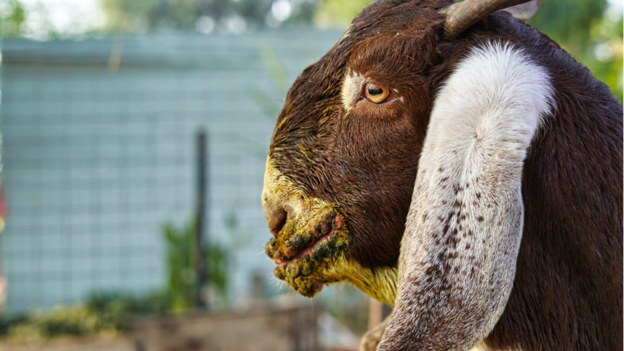
The typical lesion progression includes papules, vesicles, scabs and resolution, with pustules developing within a few days. However, the clinical process can become more complicated when secondary bacterial infection occurs. Invasion by Dermatophilus congolensis may make accurate diagnosis difficult. Buccal mucosal lesions associated with Fusobacterium necrophorum can disseminate to visceral sites. Visceral lesions extending through the digestive tract may result in granulomatous lesions and hoof shedding, while vulval ulcers can occur in the generalized form associated with F. necrophorum.
Following clinical recovery, immunity is reported to persist for eight months to one year. Although humoral immunity contributes substantially to the response to viral infection, cell-mediated immunity is considered important for recover.
Host Immune Response1
The type and extent of ORFV infection are influenced by immune-response cells, antibodies and cytokine activity. The host immune response is important in limiting viral growth. Infected sheep develop antibodies against five immunodominant antigens, which can help distinguish different parapoxviruses.
ORFV infection produces a strong cutaneous immune response. Neutrophils initially enter the affected area, followed by dendritic cells, CD4+ T cells, CD8+ T cells, and B cells accumulating around infected epidermal cells. The speed and intensity of these cellular changes in the dermis are associated with the presence of the virus and clinical signs. The host response relies importantly on Tc CD8+ cells and the MHC class 1 pathway for defence against viral infection.
Viral Immune Evasion and Recurrence
ORFV can reinfect and multiply in animals even after recovery from an earlier infection. The virus may infect epidermal cells and replicate for a short period before host antiviral effector molecules reach the infection site. It may also be less likely to induce apoptosis by targeting regenerated epidermal cells.
The virus possesses several immunomodulating genes capable of obstructing components of the host protective response. Factors associated with ORFV virulence include vascular endothelial growth factor (VEGF), the ovine gene encoding cytokine IL-10, the interferon resistance gene (OVIFNR), and a gene that obstructs the inflammatory cytokine GM-CSF.
Key Takeaway
When recurrent orf occurs within a flock, the disease should be viewed in the context of skin damage, direct animal contact, environmental persistence, host susceptibility and the ability of ORFV to interfere with immune responses. Recovery provides immunity for a limited period, while recurrent infection can still occur. Understanding these factors is useful when interpreting repeated cases and assessing disease persistence within sheep and goat populations.
References
- Teshale A, Alemayehu A. Contagious ecthyma and its public health significance. Dairy Vet Sci J. 2018;7(3):555711. doi:10.19080/JDVS.2018.07.555711 https://juniperpublishers.com/jdvs/pdf/JDVS.MS.ID.555711.pdf
- Bhagawati N, Shankarishan P, Habibi M. Contagious ecthyma in goat and sheep: a review of current status and future perspectives. Uttar Pradesh J Zool. 2025;46(10):229-239. doi:10.56557/UPJOZ/2025/v46i104982. https://mbimph.com/index.php/UPJOZ/article/view/4982/6394
Related Contents
.jpg)
Video
Transjugular Removal of Canine Heartworms: A Clinical and Surgical Overview
Transjugular removal of canine heartworms is a specialized intervention used in selected dogs with s...

Article
Feline Pregnancy Endocrinology: Hormonal Changes and Placental Function
Pregnancy in cats involves a distinctive endocrine pattern in which ovarian and placental hormones w...

Article
Hormonal Control of Pregnancy Termination in Cats
Pregnancy maintenance in cats depends strongly on coordinated hormonal support, particularly progest...

Article
Feline Embryo Implantation and Early Placental Development
Pregnancy establishment in cats involves a sequence of precisely timed events between fertilization,...

Article
Ultrasonographic Monitoring of Pregnancy in Cats: A Gestational Timeline
Ultrasonography provides a practical way to follow the progression of feline pregnancy by identifyin...

Article
Feline Mismating: Pregnancy Diagnosis and Clinical Management
Mismating or unplanned mating is a common clinical problem in sexually mature queen cats because of...

Article
Medical Termination of Pregnancy in Queens: Drugs, Timing and Treatment Protocols
Medical termination of pregnancy (MTP) in queen cats should be approached according to the timing of...

Article
Safety and Aftercare Following Pregnancy Termination in Queen Cats
Pregnancy termination in queen cats requires more than selecting an appropriate abortifacient. Once...