Article
Preventing Canine Distemper: Vaccination and Biosecurity
Canine distemper remains a major infectious disease despite the availability of effective vaccines. Ongoing circulation of canine distemper virus (CDV), genetic diversity among viral strains, incomplete vaccination, and interactions between domestic dogs and wildlife continue to present challenges for disease control. For practicing veterinarians, prevention extends beyond administering vaccines. Effective control also requires appropriate vaccination protocols, biosecurity measures, surveillance, and client education to reduce transmission within individual households and high-risk environments1,2.
A comprehensive preventive strategy not only protects individual patients but also contributes to reducing disease spread within the wider canine population.
Vaccination as the Foundation of Prevention
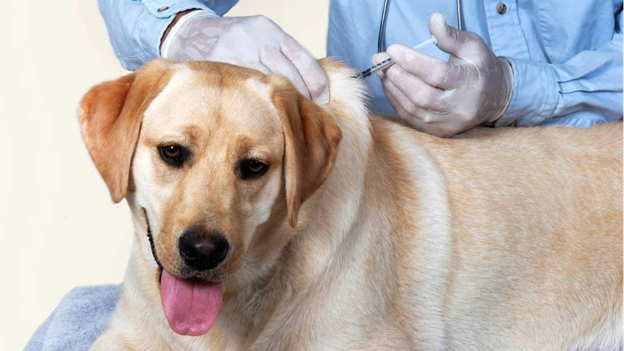
Vaccination remains the most effective preventive measure against canine distemper. Commercial modified live virus (MLV) vaccines provide long-term immunity and are commonly included in multivalent combinations protecting against canine infectious hepatitis virus, leptospiral organisms, canine parvovirus, canine parainfluenza virus, and, in some formulations, canine coronavirus3.
Routine immunization begins at approximately 45 days or 6 weeks of age, followed by a booster three weeks later and annual revaccination thereafter. Additional recommendations include initiating core vaccination at 6–8 weeks of age and repeating doses every 3–4 weeks until puppies reach 16–20 weeks of age, with subsequent boosters administered annually or every three years depending on clinical circumstances and risk assessment1,3.
Modified live vaccines generally provide protection lasting approximately three years, while detectable antibody titres in adult dogs indicate persistent protective immunity supported by immunological memory3,4.
Understanding Vaccine Options and Limitations
Several vaccine platforms are available for canine distemper prevention.
Modified live virus vaccines provide strong and durable immunity but have occasionally been associated with suspected vaccine-induced disease, including fever, anorexia, vomiting, diarrhea, and neurological signs. Such cases may involve previously unrecognized immunodeficiency, particularly when multiple puppies within a litter are affected5.
Inactivated vaccines provide comparatively lower levels of protection and are primarily intended for wildlife species. Recombinant canarypox-vectored vaccines expressing CDV hemagglutinin and fusion proteins offer an alternative approach by overcoming maternal-derived antibody interference earlier in life without causing post-vaccinal encephalitis. Both recombinant and modified live vaccines demonstrate comparable onset and duration of immunity, with protective antibody responses persisting for at least five years1,6.
Although vaccination has substantially reduced disease prevalence, infections may still occur because of genetic differences between circulating field strains and vaccine strains, particularly those outside the America-1 lineage6,7.
Strengthening Disease Control Through Biosecurity
Vaccination is most effective when combined with appropriate biosecurity practices.
Shelters represent particularly high-risk environments where overcrowding, stress, inadequate staffing, and limited financial resources facilitate virus transmission. Vaccinating dogs at the time of shelter admission plays an important role in establishing herd immunity and reducing outbreak risk2,3.
Rapid recognition of suspected cases, together with appropriate isolation and ongoing surveillance, contributes to limiting transmission within densely housed canine populations. Monitoring antibody titres through virus neutralization testing may also assist in evaluating protective immunity and guiding revaccination decisions, particularly in adult dogs4.
Because domestic dogs serve as an important source of infection for wildlife species, maintaining vaccination coverage also supports broader disease control efforts beyond companion animal practice8.
Public Health and Future Challenges
Canine distemper continues to present evolving challenges because of ongoing viral mutation and cross-species transmission. Genetic variation, particularly involving the viral H protein, contributes to infections across multiple host species and complicates eradication efforts9.
Bidirectional transmission between domestic dogs and wildlife, including synanthropic species, highlights the importance of sustained surveillance and preventive strategies. Declining population-level measles immunity has also prompted discussion regarding potential susceptibility to CDV in humans, reinforcing the importance of continued monitoring and disease control10.
Financial constraints, difficulties vaccinating free-roaming and semi-owned dogs, and owner misconceptions regarding vaccination continue to limit complete disease control in many regions2.
Conclusion
Preventing canine distemper requires more than routine vaccination alone. Effective disease control combines appropriate immunization schedules, selection of suitable vaccine platforms, biosecurity measures, surveillance, and client education. Maintaining high vaccination coverage, implementing preventive strategies in high-risk settings, and remaining alert to emerging viral variants are essential components of reducing the impact of canine distemper in both domestic dog populations and susceptible wildlife.
References
- Solikhah TI, Alvaro AP, Putra AT, Ibrahim RA, Khairullah AR, Akram M. A review of canine distemper in domestic dogs. Journal of Advanced Veterinary Research. 2026 Jul 1;16(4):546-56. https://www.advetresearch.com/index.php/AVR/article/download/2565/1670
- Parkman V. Optimal Control Applied to a Canine Distemper Outbreak Modeled in an Animal Shelter. The Florida State University; 2023. https://repository.lib.fsu.edu/islandora/object/fsu:887491/datastream/PDF/view
- Andrukonis A, Brown KM, Hall NJ, Protopopova A. Intake vaccinations reduced signs of canine respiratory disease during an outbreak at an animal shelter. Frontiers in Veterinary Science. 2021 Feb 1;8:627580. https://www.frontiersin.org/journals/veterinary-science/articles/10.3389/fvets.2021.627580/pdf
- Bergmann M, Freisl M, Zablotski Y, Khan MA, Speck S, Truyen U, Hartmann K. Prevalence of neutralizing antibodies to canine distemper virus and response to vaccination in client-owned adult healthy dogs. Viruses. 2021 May 20;13(5):945. https://www.mdpi.com/1999-4915/13/5/945
- Pekkarinen HM, Karkamo VK, Vainio-Siukola KJ, Hautaniemi MK, Kinnunen PM, Gadd TK, Holopainen RH. Post-vaccinal distemper-like disease in two dog litters with confirmed infection of vaccine virus strain. Comparative Immunology, Microbiology and Infectious Diseases. 2024 Feb 1;105:102114. https://www.sciencedirect.com/science/article/pii/S0147957123001728
- Zhigang C, Li Y, Cheng Y, Shi P, Wang J, Feng E, Cheng S. Phylogenetic Analysis and Biological Characteristics Identification of a Canine Distemper Virus Strain Isolated from a vaccinated Domestic Dog in the Northeast China. https://pdfs.semanticscholar.org/5f57/c824299bc15d39313cce8ea3626e3f893da3.pdf
- Lanszki Z, Zana B, Zeghbib S, Jakab F, Szabo N, Kemenesi G. Prolonged infection of canine distemper virus in a mixed-breed dog. Veterinary Sciences. 2021 Apr 11;8(4):61. https://www.mdpi.com/2306-7381/8/4/61
- Gastelum-Leyva F, Pena-Jasso A, Alvarado-Vera M, Plascencia-López I, Patron-Romero L, Loera-Castaneda V, Gándara-Mireles JA, Lares-Asseff I, Leal-Ávila MÁ, Alvelais-Palacios JA, Almeida-Pérez J. Evaluation of the efficacy and safety of silver nanoparticles in the treatment of non-neurological and neurological distemper in dogs: A randomized clinical trial. Viruses. 2022 Oct 24;14(11):2329. https://www.mdpi.com/1999-4915/14/11/2329
- Rivera-Martínez A, Rodríguez-Alarcón CA, Adame-Gallegos JR, Laredo-Tiscareño SV, de Luna-Santillana ED, Hernández-Triana LM, Garza-Hernández JA. Canine distemper virus: Origins, mutations, diagnosis, and epidemiology in Mexico. Life. 2024 Aug 13;14(8):1002. https://www.mdpi.com/2075-1729/14/8/1002
- Wilson J, Rubio S, Salvador LC, Nemeth NM, Fishburn JD, Gottdenker NL. Canine distemper virus phylogenetic structure and ecological correlates of infection in mesocarnivores across anthropogenic land use gradients. Microbiology spectrum. 2025 Apr 1;13(4):e01225-24. https://journals.asm.org/doi/pdf/10.1128/spectrum.01225-24
Related Contents
.jpg)
Upcoming Event
World Animal Day
World Animal Day highlights the importance of protecting animal health and welfare through responsib...
.jpg)
Video
Transjugular Removal of Canine Heartworms: A Clinical and Surgical Overview
Transjugular removal of canine heartworms is a specialized intervention used in selected dogs with s...

Article
Feline Pregnancy Endocrinology: Hormonal Changes and Placental Function
Pregnancy in cats involves a distinctive endocrine pattern in which ovarian and placental hormones w...

Article
Hormonal Control of Pregnancy Termination in Cats
Pregnancy maintenance in cats depends strongly on coordinated hormonal support, particularly progest...

Article
Feline Embryo Implantation and Early Placental Development
Pregnancy establishment in cats involves a sequence of precisely timed events between fertilization,...

Article
Ultrasonographic Monitoring of Pregnancy in Cats: A Gestational Timeline
Ultrasonography provides a practical way to follow the progression of feline pregnancy by identifyin...

Article
Feline Mismating: Pregnancy Diagnosis and Clinical Management
Mismating or unplanned mating is a common clinical problem in sexually mature queen cats because of...

Article
Medical Termination of Pregnancy in Queens: Drugs, Timing and Treatment Protocols
Medical termination of pregnancy (MTP) in queen cats should be approached according to the timing of...