Article
Slaughterhouse Lung Examination in Pigs: Detecting Subclinical Respiratory Disease
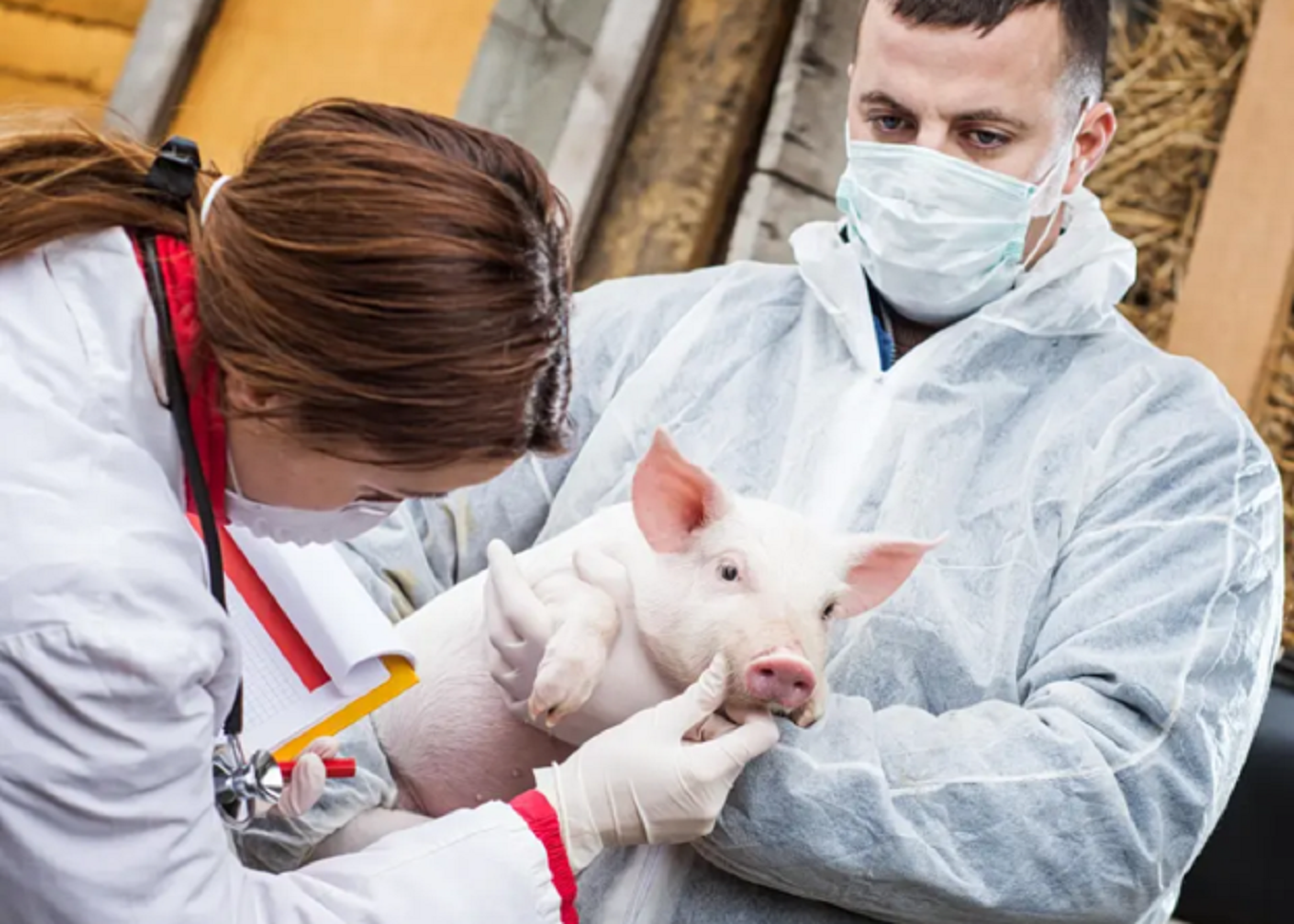
A batch of pigs may reach slaughter weight without showing obvious respiratory signs, yet examination of their lungs may reveal evidence of previous or ongoing respiratory disease. This creates an important opportunity for veterinarians: slaughterhouse inspection can identify respiratory health problems that routine farm-level observations may overlook.
Slaughterhouse examination provides valuable information about the respiratory health of fattening pigs and can complement clinical observations, necropsy findings, laboratory results, and production records. It also helps veterinarians identify potential herd-level problems and evaluate the effectiveness of preventive measures[1].
Why Examine Lungs at Slaughter?
Respiratory diseases, particularly porcine respiratory disease complex (PRDC), remain important challenges in intensive pig production. Two commonly observed lesions are cranioventral pulmonary consolidation (CVPC) and pleurisy[1],[2],[3].
Unlike farm-level monitoring, which depends partly on visible clinical signs, slaughterhouse examination can reveal lesions in pigs that may not have displayed obvious coughing or breathing difficulties during fattening. However, it cannot detect infections that do not produce visible respiratory lesions[2].
This distinction is clinically important. A lack of apparent respiratory illness does not necessarily indicate an absence of previous respiratory health problems.
Selecting Representative Pigs for Examination[2]
The reliability of slaughterhouse findings depends considerably on which animals are examined. Selecting only the healthiest or poorest-performing pigs can distort the estimated prevalence of respiratory lesions.
This becomes particularly relevant when animals from the same group are sent for slaughter in multiple batches. Early batches may contain faster-growing pigs with fewer respiratory lesions, whereas later batches may include smaller animals with a greater history of health problems.
A minimum sample of 30 randomly selected pigs from the same slaughter batch has been shown to provide reliable herd-level information. However, examining more animals or selecting a sample proportional to batch size can improve the representativeness of the findings.
Interpreting Slaughterhouse Findings
Do lesions at slaughter reflect respiratory health throughout the entire fattening period? Not necessarily.
Pulmonary lesions can progress and regress over time. Some lesions may heal before slaughter, resulting in false-negative findings. Conversely, infections occurring towards the end of fattening may produce visible lesions at slaughter despite a relatively short disease period.
Observations have demonstrated positive associations between CVPC at slaughter and coughing during the final three weeks of fattening. Chronic lesions, including fissures, were associated with coughing approximately seven to three weeks before slaughter[4].
Therefore, slaughterhouse findings should not be interpreted in isolation or treated as a complete record of respiratory disease throughout production.
Clinical Bottom Line
For practicing veterinarians, slaughterhouse lung examination is a useful addition to herd-health monitoring. Findings can help compare respiratory health between farm batches, identify potential subclinical problems, monitor changes over time, and evaluate preventive interventions.
However, gross lesions are not specific to individual pathogens. Laboratory testing, farm-level clinical observations, and performance records remain important for interpreting their significance and guiding appropriate control measures.
References:
- Eze JI, Correia-Gomes C, Borobia-Belsué J, Tucker AW, Sparrow D, Strachan DW, Gunn GJ. Comparison of respiratory disease prevalence among voluntary monitoring systems for pig health and welfare in the UK. PloS one. 2015 May 28;10(5):e0128137. https://journals.plos.org/plosone/article/file?id=10.1371/journal.pone.0128137&type=printable
- Maes D, Sibila M, Pieters M, Haesebrouck F, Segalés J, de Oliveira LG. Review on the methodology to assess respiratory tract lesions in pigs and their production impact. Veterinary research. 2023 Feb 1;54(1):8. https://link.springer.com/content/pdf/10.1186/s13567-023-01136-2.pdf
- Oliveira Filho JX, Morés MA, Rebelatto R, Agnol AM, Plieski CL, Klein CS, Barcellos DE, Morés N. Pasteurella multocida type A as the primary agent of pneumonia and septicaemia in pigs. Pesquisa Veterinária Brasileira. 2015 Aug;35(8):716-24. https://www.scielo.br/j/pvb/a/9vBjBh4kGvqJJfFxMkTnSyS/?format=pdf&lang=en
- Pessoa J, da Costa MR, Manzanilla EG, Norton T, McAloon C, Boyle L. Managing respiratory disease in finisher pigs: Combining quantitative assessments of clinical signs and the prevalence of lung lesions at slaughter. Preventive veterinary medicine. 2021 Jan 1;186:105208. https://www.sciencedirect.com/science/article/pii/S0167587720308928
Related Contents
Article
Multifactorial Causes of Gout in Poultry: Identifying Nutritional, Infectious and Management-Related Risk Factors
Gout in poultry is often associated with excessive dietary calcium or protein. However, attributing...
Article
Visceral vs Articular Gout in Chickens: Differentiating Clinical Presentation and Pathological Lesions
A chicken with swollen joints and difficulty walking may present a very different clinical picture f...
Article
Clinical Pathology and Postmortem Diagnosis of Gout in Chickens
A chicken may show only dullness, reduced feed intake and dehydration before developing severe syste...
Article
Cranioventral Pulmonary Consolidation in Pigs: Pathological Features and Clinical Significance
A pig may show reduced growth performance without displaying prominent respiratory signs. At slaught...
Article
Pleurisy in Pigs: Lesion Development, Pathogen Associations and Clinical Interpretation
Pleural adhesions in slaughter pigs can indicate respiratory disease that occurred weeks before the...
Article
Scoring Lung Lesions in Pigs: Choosing Practical Methods for CVPC and Pleurisy
A lung lesion score is useful only when it captures the extent of disease consistently. In pig produ...
Article
Recognising Urinary Bladder Rupture in Buffalo Calves with Obstructive Urolithiasis
A buffalo calf presenting with abdominal distension, anorexia and repeated attempts to urinate may h...
Article
Tube Cystostomy for Obstructive Urolithiasis in Buffalo Calves: Surgical Management and Recovery
Obstructive urolithiasis complicated by urinary bladder rupture requires surgical intervention to re...