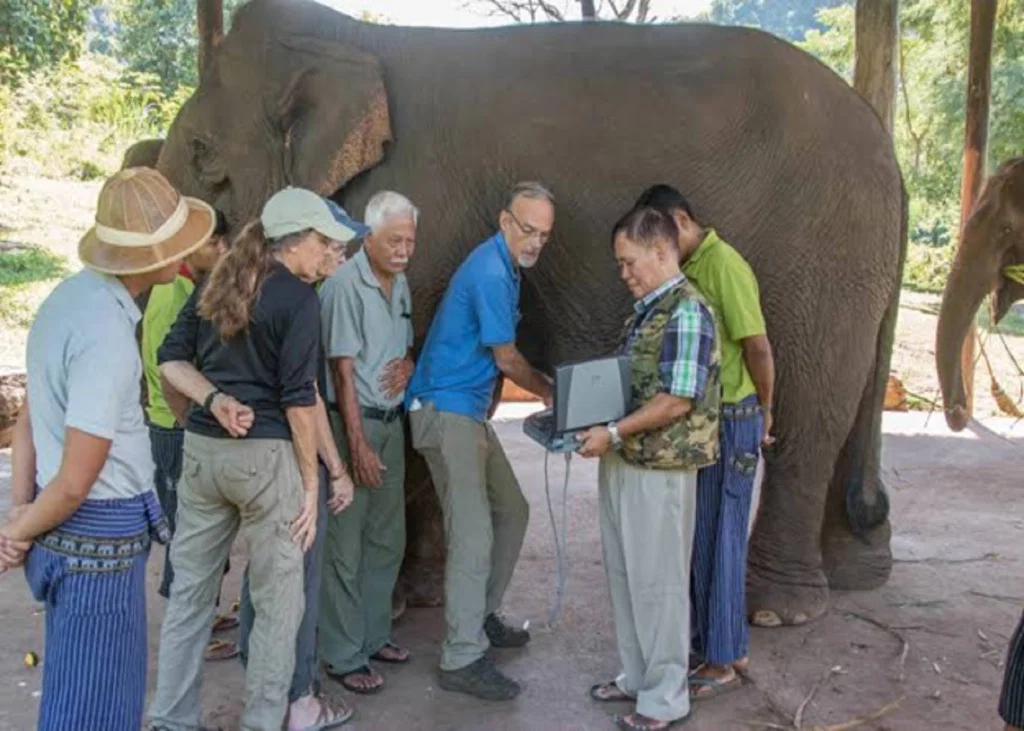
Article
Pregnancy Monitoring in Asian Elephants: Interpreting Ultrasound and Hormonal Findings
Confirming pregnancy is only the beginning of reproductive monitoring in an elephant.
With a gestation lasting approximately 22 months, a single examination provides limited information about whether the pregnancy is continuing as expected. The greater clinical value comes from following fetal and maternal findings over time.
Ultrasound and hormonal monitoring answer different questions
Ultrasonography and progestagen measurement should not be viewed as interchangeable tests.
Ultrasonography can provide direct information about reproductive structures and, depending on the stage of gestation, fetal development and viability. Hormonal monitoring provides a different perspective by tracking the endocrine changes associated with pregnancy.
Pregnancy in elephants involves prolonged luteal activity, with multiple corpora lutea contributing to the maintenance of gestation[1]. This distinctive physiology helps explain why progestagen concentrations remain elevated for a prolonged period during pregnancy[1].
The practical implication is that a hormonal result provides information about the endocrine environment but does not independently confirm every aspect of fetal wellbeing.
Interpret hormone values as a pattern
Progestagen concentrations change throughout elephant gestation and eventually decline as parturition approaches[2].
A result should therefore not be classified as reassuring or concerning solely because of its absolute numerical value.
Its interpretation depends on:
- The stage of gestation;
- The assay and sample type used;
- The laboratory's validated method;
- Previous values from the same elephant;
- The direction and rate of hormonal change;
- Concurrent clinical and ultrasonographic findings.
Longitudinal research involving pregnant and cycling Asian elephants has demonstrated considerable variation in reproductive hormone profiles between individuals[3].
This supports an important monitoring principle:
Where serial measurements are available, the trajectory of an individual elephant's hormone concentrations may provide more useful context than an isolated value.
Use ultrasound to assess what hormones cannot show directly
Hormonal monitoring cannot directly demonstrate fetal viability or provide anatomical information about the developing conceptus.
This is where ultrasonography has a distinct role.
Serial ultrasonographic examinations allow changes in reproductive structures and fetal development to be followed directly. When an ultrasonographic finding differs from what is expected for the stage of pregnancy, it should be interpreted alongside—not replaced by—hormonal findings.
The most useful monitoring strategy therefore does not ask which modality is superior.
It asks:
What additional information does each modality contribute to the assessment of this pregnancy?
Do not assume that a low progestagen concentration identifies pregnancy failure
A reduction in progestagen concentration may be clinically important, but the result requires careful interpretation.
A single value may be influenced by biological variation, gestational stage and analytical methodology. More importantly, an endocrine change does not necessarily identify the underlying reason for an abnormal pregnancy.
Serial measurements can help establish whether the finding represents an isolated result, a sustained decline or a pattern that differs from the elephant's previous pregnancy-associated profile[2],[3].
When an abnormal hormonal pattern is identified, the clinical assessment should therefore broaden to include ultrasonographic findings and the mother's overall condition rather than relying on the hormone concentration alone.
Exogenous progestins should not be treated as a routine response
The use of exogenous progestins in pregnant elephants requires particular caution.
A 2022 report described altrenogest administration in three pregnant Asian elephants following concerns about declining endogenous progestagen concentrations[4]. Although treatment maintained pregnancies for varying periods, the reported cases also included adverse reproductive outcomes, including stillbirth and neonatal death[4].
The report demonstrates that exogenous progestin administration can alter the endocrine environment.
It does not establish altrenogest as a universally effective treatment for pregnancy failure or as an automatic response to a low endogenous progestagen result[4].
A decision to intervene should therefore consider the complete reproductive assessment, the individual elephant's history and the limitations of the available evidence.
Build the monitoring programme around change
Depending on the elephant's reproductive history and the facilities available, longitudinal monitoring may incorporate:
- Known or estimated breeding and ovulation dates;
- Serial ultrasonographic examinations;
- Fetal development and viability;
- Serial progestagen measurements;
- Maternal clinical status;
- Previous reproductive and obstetric history;
- Changes in management or health during gestation.
The frequency and combination of assessments will depend on the individual case.
The important principle is consistency. Repeated observations are more informative when they can be compared using similar methods over time.
Clinical takeaway
Pregnancy in Asian elephants is best assessed longitudinally rather than through a single hormonal result or ultrasound examination.
Ultrasonography provides direct information about the developing pregnancy, while hormonal monitoring helps interpret the endocrine environment supporting it.
When the two are interpreted alongside maternal clinical findings and the elephant's individual reproductive history, they provide a more meaningful basis for monitoring than either method used in isolation.
References:
- Lueders I, Niemuller C, Rich P, et al. Gestating for 22 months: luteal development and pregnancy maintenance in elephants. Proc Biol Sci. 2012;279(1743):3687-3696. https://doi.org/10.1098/rspb.2012.1038
- Kajaysri J, Nokkaew W. Assessment of pregnancy status of Asian elephants by measurement of progestagen and glucocorticoid and their metabolites in serum and faeces. J Vet Med Sci. 2014;76:363–368. https://doi.org/10.1292/jvms.13-0103
- Towiboon P, Saenphet K, Tayapiwattana C, Tangyuenyong S, Watanabe G, Mahasawangkul S, Brown JL, Thitaram C. Relationship among serum Progestagens, cortisol, and prolactin in pregnant and cycling Asian elephants in Thailand. Veterinary Sciences. 2022 May 22;9(5):244. https://doi.org/10.3390/vetsci9050244
- Kottwitz JJ, Kiso W, Boothe DM, Schmitt D. Administration of altrenogest to maintain pregnancy in Asian Elephants (Elephas maximus). Animals. 2022 Jul 21;12(14):1852. https://doi.org/10.3390/ani12141852
Related Contents
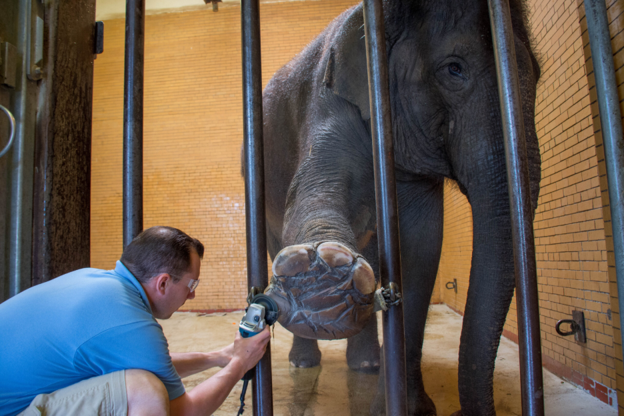
Article
Elephant Foot Health: Detecting Problems Before Lameness
Foot problems in elephants do not necessarily begin with obvious lameness. By the time an elephant i...
Article
When an Elephant’s Behaviour Changes: Recognising Clinically Relevant Patterns
A change in an elephant’s behaviour can be easy to dismiss as temperament. It can also...
Article
Is It Normal for This Elephant? Building an Individual Health Baseline
For a long-lived animal, a single health assessment provides only a snapshot. A more useful c...
Article
Body Condition in Asian Elephants: When Does Change Become Clinically Relevant?
Body condition is often recorded during routine elephant health assessments. Its clinical value, how...
Article
EEHV in Asian Elephant Calves: Recognising the Early Clinical Picture
Elephant endotheliotropic herpesvirus (EEHV) is an important cause of fatal haemorrhagic disease in...
Article
Gastrointestinal Parasites in Asian Elephants: Interpreting Faecal Findings
A positive faecal examination confirms the detection of parasite stages in the sample. It does not,...
Article
Tuberculosis in Asian Elephants: Interpreting Screening Results in Context
Tuberculosis surveillance in elephants presents a fundamental diagnostic challenge: a test result is...
Article
When an Elephant Stops Eating: Interpreting Changes in Appetite and Feeding Behaviour
A reduction in food intake can be one of the earliest observable changes in an elephant that is beco...