Article
When Poor Flock Uniformity Starts in the Broiler House
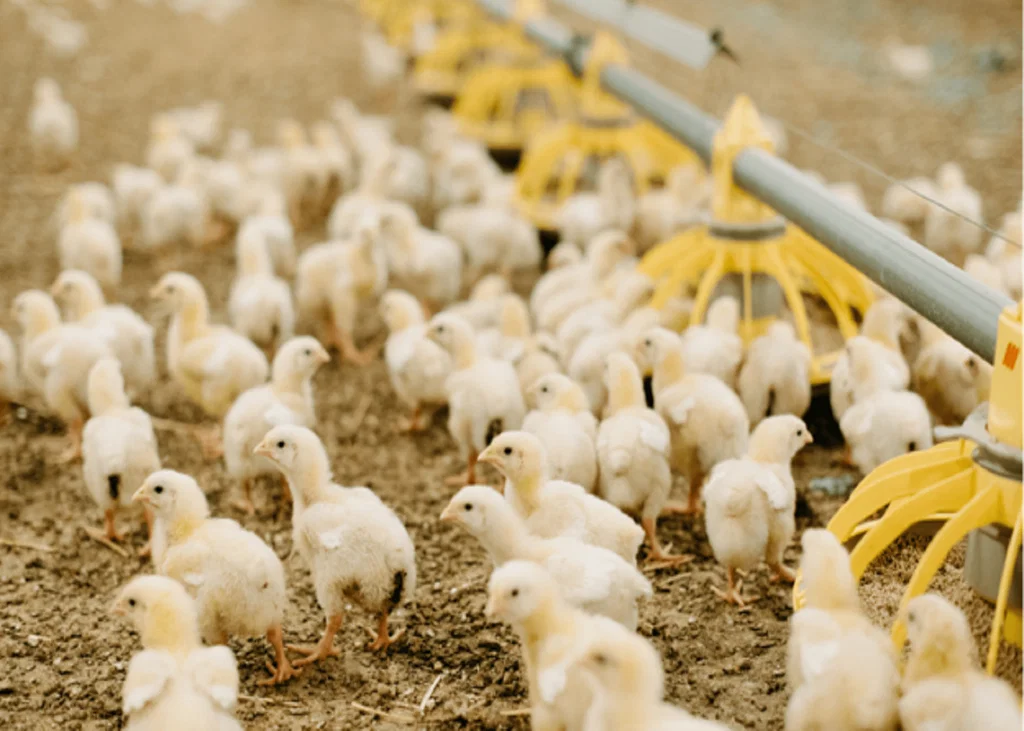
Two broilers can receive the same feed and remain in the same house yet develop very differently. When flock uniformity begins to fall, looking only at average body weight may not reveal where the problem lies. Feed and water access, lighting, air quality and other housing conditions can create differences in growth between birds.
For veterinarians assessing flock performance, the practical question is: Are all birds experiencing the house in the same way?
Feed access is more than having enough feeders
Broilers are generally fed ad libitum, so feeder type alone may not have a major effect on flock uniformity. The way feeders are positioned and accessed, however, can still matter.
Feeder height, accessibility, and distribution within the house can influence feeding behaviour. If some birds have less consistent access to feed, differences in intake may translate into differences in body weight.
Water access deserves the same attention. Uneven drinker distribution or restricted access can reduce water consumption in some birds and indirectly affect feed intake and growth. Water quality is another consideration. Contamination of feeders or drinkers may produce different responses among birds depending on their health status and physiological sensitivity[1],[2].
A house walk-through should therefore include the distribution and accessibility of both feeders and drinkers, rather than assessing only whether equipment is present.
Uneven lighting can mean uneven flock behaviour
Lighting influences feeding behaviour, general management, and stress responses in broilers[3]. This makes light distribution an important part of flock assessment.
Differences in light across the house can influence how birds behave and potentially contribute to variation in growth. LED lighting has been associated with better flock uniformity than conventional lighting systems, while longer rearing light periods have been associated with reduced growth rate and flock uniformity[4],[5].
The practical concern is therefore not simply the type of lighting installed. Is light reaching the house consistently enough to support consistent bird behaviour?
Air quality: Look beyond the house average[2]
Ammonia exposure can affect broiler performance and health. At the same time, ventilation efficiency and microclimatic conditions may differ within the same house, creating uneven exposure among birds.
This is particularly relevant when evaluating a flock with variable growth. Individual birds can respond differently to ammonia exposure because of differences in physiological sensitivity, health status and adaptive capacity. Consequently, two birds exposed to the same general house conditions may not show identical responses.
Environmental variation is especially important during early brooding and growth, when young birds are more sensitive to fluctuations in their surroundings.
Stocking density needs context
Stocking density is closely linked with production efficiency and animal welfare[2], but it should not automatically be blamed when uniformity is poor.
Increasing stocking density from 15.2 to 30.4 birds/m² did not alter flock uniformity at day 28, while flock uniformity was also unaffected across 27–39 kg BW/m² at day 42. Large-scale farm observations likewise found no correlation between stocking density and flock uniformity at day 42[2].
This does not make stocking density irrelevant. Rather, it highlights the need to assess it alongside the conditions that determine how individual birds access resources and experience their environment.
What should the veterinarian check?
When body-weight variation is evident, a practical house assessment should include:
- Feeder and drinker accessibility and distribution
- Consistency of lighting across the house
- Ventilation and air quality
- Variation in temperature and other microclimatic conditions
- Stocking density in relation to the overall house environment
Flock uniformity is not determined by one management variable. Birds respond to their surroundings individually, and small differences in access or exposure can contribute to larger differences in growth. A systematic assessment of the house can therefore help identify management factors that may be contributing to uneven flock performance.
References:
- Mushtaq MM, Pasha TN, Mushtaq T, Akram M, Mahmood S, Farooq U, Parvin R. Growth, water intake, litter moisture, carcass and physiological traits of broiler chickens fed varying levels and sources of potassium under phase feeding system. Livestock Science. 2014 Jan 1;159:61-6. https://www.researchgate.net/profile/Mirza-Mushtaq/publication/259166082
- Choi J, Goo D, Ko H, Lee J, Kim WK. Factors affecting flock uniformity in broiler production: individual, environmental, and management characteristics. Animals. 2026 Jan 8;16(2):185. https://www.mdpi.com/2076-2615/16/2/185
- Nissa SS, Sheikh IU, Altaie HA, Adil S, Banday MT, Kamal M, Alqhtani AH, Swelum AA, Khafaga AF, Al-Shehri M, Abd El-Hack ME. Impacts of varIous lIghtIng programs on chIcken productIon and behavIor–a revIew. Annals of Animal Science. 2024 Oct 1;24(4):1065-79. https://reference-global.com/download/article/10.2478/aoas-2023-0097.pdf
- Galosi L, Falconi R, Biagini L, Corrales Barrios Y, Roncarati A. LED Light Applied to the Feeder: Impact on Growth Performances of Chickens under Productive Conditions. Veterinary Sciences. 2023 Apr 21;10(4):306. https://www.mdpi.com/2306-7381/10/4/306
- Griffin AM, Renema RA, Robinson FE, Zuidhof MJ. The influence of rearing light period and the use of broiler or broiler breeder diets on forty-two-day body weight, fleshing, and flock uniformity in broiler stocks. Journal of Applied Poultry Research. 2005 Jul 1;14(2):204-16. https://www.sciencedirect.com/science/article/pii/S1056617119317933/pdf?md5=4acbd66d4c1d6037ebbf216ab62c2d34&pid=1-s2.0-S1056617119317933-main.pdf
Related Contents
Article
Sudden Death in Cattle: A Practical Differential Diagnosis
A cow is found dead during the morning inspection. There were no obvious warning signs the previous...
Article
Caudal Vena Cava Thrombosis in Cattle: Recognising a Fatal Complication of Liver Abscessation
A cow may appear completely healthy until sudden respiratory distress, haemoptysis or death occurs....
Article
Sudden Death in Sheep: Key Differential Diagnoses for the Veterinarian
A sheep found dead on pasture may leave little warning. One animal may have been affected by a rapid...
Article
Sudden Death in Goats: Recognising Peracute Infectious and Metabolic Causes
A goat found dead with little or no warning can leave very few clinical clues. In these cases, the p...
Article
Necrotic Enteritis in Broilers: Identifying the Farm-Level Risk Factors
A broiler flock showing wet litter, poor performance or rising mortality may have several problems o...
Article
Necrotic Enteritis in Broilers: Linking Intestinal Lesions with Laboratory Diagnosis
A broiler may arrive for postmortem examination with a distended, fragile small intestine covered by...
Article
Controlling Necrotic Enteritis Without Antibiotic Growth Promoters: What Can Feed-Based Strategies Offer?
When antibiotic growth promoters are no longer the main option for controlling necrotic enteritis (N...
Article
Necrotic Enteritis and Antimicrobial Resistance: Implications for Poultry and Food Safety
When a broiler flock develops necrotic enteritis (NE), antimicrobial treatment may appear to be the...