Article
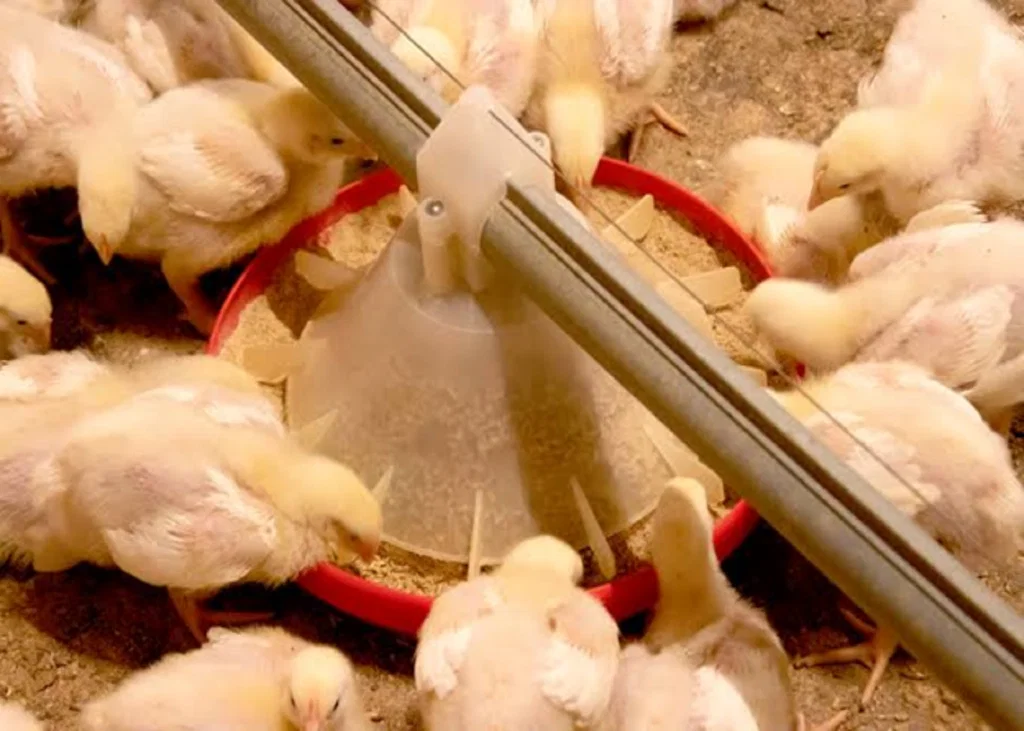
Nutritional Management of Poor Flock Uniformity in Broilers
A flock may receive a nutritionally formulated diet and still develop noticeable differences in body weight. When some birds are consistently smaller than others, the question is not simply whether the diet meets the flock’s requirements. Are all birds obtaining and utilising nutrients consistently enough to maintain similar growth?
Nutritional management can influence flock uniformity through nutrient supply, feed intake, feed form, and individual responses to deficiencies.
When reducing protein becomes a uniformity concern
Lowering crude protein (CP) while supplementing limiting amino acids is increasingly used to reduce feed costs and improve nitrogen utilisation. However, the effect on flock uniformity depends on the extent of nutrient reduction and production conditions.
A 25% reduction in CP did not affect final body weight or flock uniformity in one setting[1]. In contrast, reductions in dietary energy and protein of 3% were associated with poorer flock uniformity, together with reduced nutrient digestibility at days 21 and 42[2].
This difference is clinically important. A lower CP diet should not automatically be considered detrimental, but neither should a reduction be assumed to have no effect on uniformity. The degree of nutrient restriction and the ability of the diet to supply limiting nutrients need to be considered.
Amino acid supply is particularly relevant. Lower amino-acid concentrations have been associated with reduced flock uniformity[3].
Nutrient deficiency does not affect every bird in the same way
The effect of inadequate nutrient supply may extend beyond reduced average growth. Individual birds can respond differently when nutrients are limited.
Differences in the willingness of birds to consume additional feed when faced with nutrient deficiencies can further widen body-weight variation[4]. Thus, two birds exposed to the same diet may not necessarily respond in the same way.
This helps explain why a flock can show increasing variation even when the feed is uniformly distributed. The problem may be the biological response to nutrient availability, rather than feed distribution alone.
Growth rate and feed efficiency also provide useful context. Poor flock uniformity has been associated with poor feed efficiency and slower growth at day 42[5]. When body-weight variation is increasing, nutritional assessment should therefore be considered alongside growth and feed-efficiency patterns rather than treated as an isolated feed-quality issue.
Is the feed itself sufficiently uniform?
Feed mixing is an obvious point to check, but adequate mixing may make this factor less important than expected.
Feed mixing time and feed uniformity did not significantly affect flock uniformity when feed was adequately mixed. This suggests that simply identifying feed uniformity as a possible concern is not enough; the practical question is whether inadequate mixing is actually occurring[3].
Feed form can also influence growth. Modern broilers are commonly offered pelleted or crumbled feed because these forms can improve body weight, feed intake, and feed efficiency. Pelleted or crumbled feed improved flock uniformity at day 14 in one setting, with possible contributions from increased feed intake, improved nutrient utilisation, greater feed homogeneity and reduced selective feeding[3].
Particle size should still be considered in feed assessment. Different corn particle sizes in mash or crumble feed did not alter flock uniformity in the reported work, although particle size can influence feed characteristics, digestive efficiency, and gut development[3].
A practical nutritional assessment
When flock uniformity is declining, useful questions include:
- Has dietary energy, CP, or amino-acid supply been reduced?
- Could nutrient limitations affect birds differently?
- Is feed adequately mixed?
- What feed form is being provided?
- Are changes in body weight occurring alongside poorer feed efficiency or growth?
- Could differences in feed intake be contributing to the variation?
Clinical Bottom Line
Poor flock uniformity should not automatically be attributed to inadequate crude protein or poor feed quality. Nutritional effects depend on what nutrient is limiting, how substantially the diet has been altered, feed intake, feed form, and individual bird responses. Assessing these factors together provides a more useful approach when nutritional management is suspected of contributing to uneven broiler growth.
References:
- Ojediran TK, Fasola MO, Oladele TO, Onipede TL, Emiola IA. Growth performance, flock uniformity and economic indices of broiler chickens fed low crude protein diets supplemented with lysine. Archivos de zootecnia. 2017;66(256):543-50. https://www.redalyc.org/pdf/495/49553571010.pdf
- Ahiwe EU, Ejiofor I, Iwuji TC, Ahamba IS, Giwa AL. Flock uniformity, blood indices, and nutrient retention of broiler chickens fed low energy and protein diets supplemented with multi-enzyme. https://www.researchgate.net/profile/Ifeanyi-Ahamba/publication/367570442
- Choi J, Goo D, Ko H, Lee J, Kim WK. Factors affecting flock uniformity in broiler production: individual, environmental, and management characteristics. Animals. 2026 Jan 8;16(2):185. https://www.mdpi.com/2076-2615/16/2/185
- Berhe ET, Gous RM. Effect of dietary protein content on growth, uniformity and mortality of two commercial broiler strains. South African Journal of Animal Science. 2008 Jan 1;38(4):293-302. https://www.scielo.org.za/pdf/sajas/v38n4/04.pdf
- Vasdal G, Granquist EG, Skjerve E, de Jong IC, Berg C, Michel V, Moe RO. Associations between carcass weight uniformity and production measures on farm and at slaughter in commercial broiler flocks. Poultry Science. 2019 Oct 1;98(10):4261-8. https://www.sciencedirect.com/science/article/pii/S0032579119479406
Related Contents
Article
Sudden Death in Cattle: A Practical Differential Diagnosis
A cow is found dead during the morning inspection. There were no obvious warning signs the previous...
Article
Caudal Vena Cava Thrombosis in Cattle: Recognising a Fatal Complication of Liver Abscessation
A cow may appear completely healthy until sudden respiratory distress, haemoptysis or death occurs....
Article
Sudden Death in Sheep: Key Differential Diagnoses for the Veterinarian
A sheep found dead on pasture may leave little warning. One animal may have been affected by a rapid...
Article
Sudden Death in Goats: Recognising Peracute Infectious and Metabolic Causes
A goat found dead with little or no warning can leave very few clinical clues. In these cases, the p...
Article
Necrotic Enteritis in Broilers: Identifying the Farm-Level Risk Factors
A broiler flock showing wet litter, poor performance or rising mortality may have several problems o...
Article
Necrotic Enteritis in Broilers: Linking Intestinal Lesions with Laboratory Diagnosis
A broiler may arrive for postmortem examination with a distended, fragile small intestine covered by...
Article
Controlling Necrotic Enteritis Without Antibiotic Growth Promoters: What Can Feed-Based Strategies Offer?
When antibiotic growth promoters are no longer the main option for controlling necrotic enteritis (N...
Article
Necrotic Enteritis and Antimicrobial Resistance: Implications for Poultry and Food Safety
When a broiler flock develops necrotic enteritis (NE), antimicrobial treatment may appear to be the...