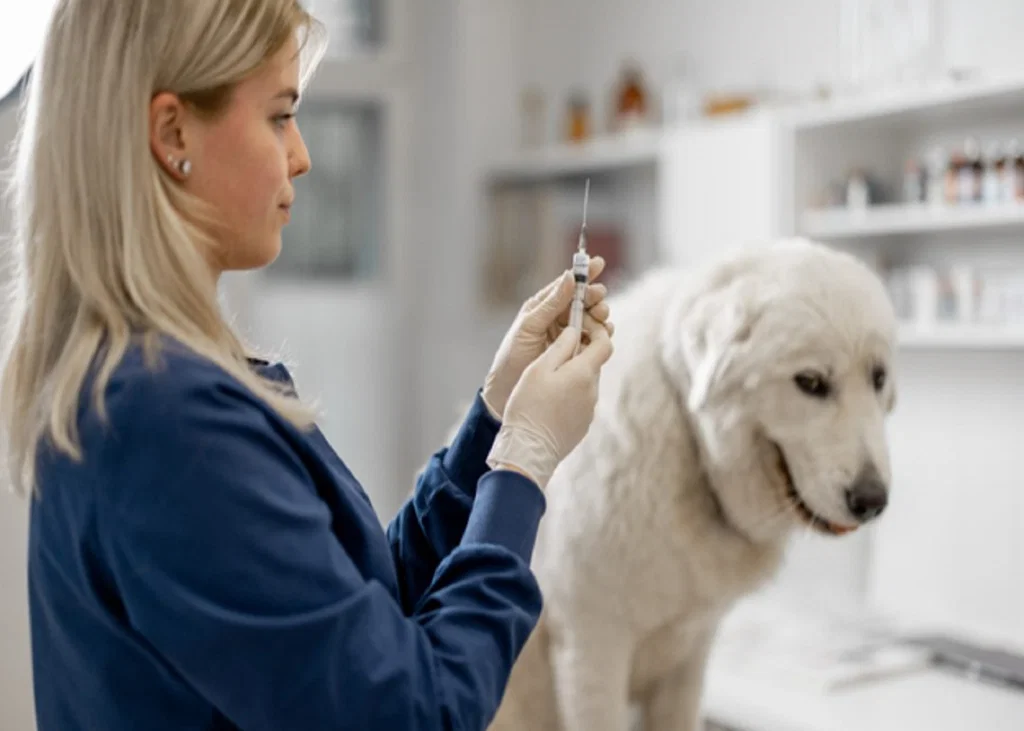
Article
Rabies Vaccination in Dogs in India: Current Recommendations for Veterinary Practice
Rabies is endemic in India, and dogs remain the principal source of human rabies exposure. The National Action Plan for Dog-Mediated Rabies Elimination (NAPRE) places sustained mass dog vaccination at the centre of dog-mediated rabies elimination[1].
For individual dogs, however, vaccination decisions should not be based on a single blanket schedule. The current NCDC Manual of Zoonotic Diseases of Public Health Importance states that there is no specific national vaccine policy for non-shelter pet dogs; applicable local laws or regulations and the product leaflet should be followed[2].
1. Vaccination as a core preventive measure
- Rabies vaccination is considered a core vaccination for dogs in rabies-endemic areas[2].
- Inactivated/killed rabies vaccines are used for individual dog and cat protection and for mass canine vaccination programmes[2].
- Vaccination should be incorporated into routine preventive healthcare and population-level rabies-control programmes.
2. Vaccination of individual pet dogs
For pet dogs:
- Follow applicable local laws and regulations as the first priority[2].
- Follow the licensed product information for the vaccine being administered[2].
- Record the vaccination date, vaccine/product details and relevant identification information.
- Establish a clear revaccination plan based on the licensed duration of immunity (DOI), local requirements and the product label[2].
The NCDC manual notes that licensed canine rabies vaccines may have either a 1-year or 3-year DOI, and the timing of boosters should therefore be determined by the licensed DOI and applicable requirements rather than by assuming that every product requires the same interval.[2]
3. Puppies
For puppies ≤16 weeks of age, the NCDC guidance recommends prioritising applicable local laws/regulations and the product leaflet[2].
The manual also notes evidence of rabies in puppies younger than one month; therefore, very young age should not be interpreted as absence of rabies risk[2].
The veterinarian should consider:
- Age;
- Health status;
- Vaccination history;
- Local rabies epidemiology;
- Potential exposure;
- Applicable regulations; and
- The licensed age indication of the vaccine.
4. Dogs ≥16 weeks
For dogs ≥16 weeks, vaccination should similarly follow applicable local requirements and the licensed product information[2].
The vaccination record should clearly distinguish:
- Primary vaccination;
- Subsequent revaccination;
- Vaccine/product administered; and
- Date of administration.
5. Vaccination and rabies-control programmes
Individual vaccination and mass dog vaccination have different objectives.
For individual dogs, the objective is to maintain protection of the animal.
At the population level, the objective is to reduce transmission within the dog population and consequently reduce human exposure.
Under India's NAPRE framework, strategic mass dog vaccination should achieve vaccination of at least 70% of the dog population annually for three consecutive years and maintain 70% coverage in the defined geographical area[2].
6. Practical points for veterinary practice
Before administering or scheduling a rabies vaccine:
- Confirm the dog's identity and vaccination history.
- Check the vaccine's licensed indication and DOI.
- Review applicable local requirements.
- Assess whether the dog has had a potential rabies exposure.
- Administer and store the vaccine according to the product instructions.
- Document the vaccination appropriately.
- Communicate the next recommended vaccination date clearly to the owner.
Key Takeaway
In India, rabies vaccination of dogs is a core preventive measure, but there is no single universal booster schedule for all non-shelter pet dogs. Veterinarians should follow applicable local requirements and the licensed product information, while supporting population-level vaccination programmes aimed at maintaining ≥70% coverage.
References:
- National Rabies Control Programme. National Action Plan for Dog Mediated Rabies Elimination from India by 2030. Ministry of Health and Family Welfare, Government of India; 2023. https://rabiesfreeindia.mohfw.gov.in/about-nrcp
- National Centre for Disease Control. Manual of Zoonotic Diseases of Public Health Importance. Chapter 27: Rabies. Ministry of Health and Family Welfare, Government of India; 2025. https://ncdc.mohfw.gov.in/uploads/announcements/1776058154_1771071100ZDPHIManual20251.pdf
Related Contents
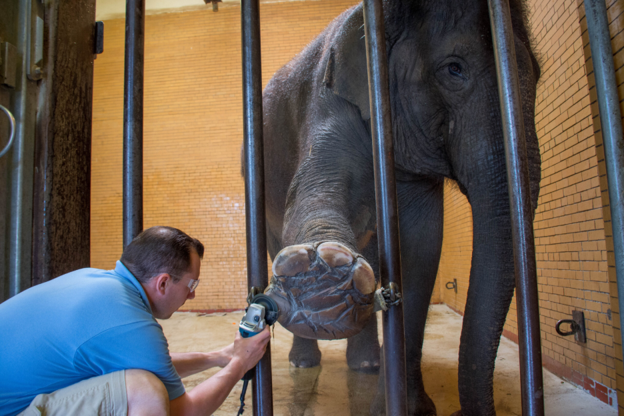
Article
Elephant Foot Health: Detecting Problems Before Lameness
Foot problems in elephants do not necessarily begin with obvious lameness. By the time an elephant i...
Article
When an Elephant’s Behaviour Changes: Recognising Clinically Relevant Patterns
A change in an elephant’s behaviour can be easy to dismiss as temperament. It can also...
Article
Is It Normal for This Elephant? Building an Individual Health Baseline
For a long-lived animal, a single health assessment provides only a snapshot. A more useful c...
Article
Body Condition in Asian Elephants: When Does Change Become Clinically Relevant?
Body condition is often recorded during routine elephant health assessments. Its clinical value, how...
Article
EEHV in Asian Elephant Calves: Recognising the Early Clinical Picture
Elephant endotheliotropic herpesvirus (EEHV) is an important cause of fatal haemorrhagic disease in...
Article
Gastrointestinal Parasites in Asian Elephants: Interpreting Faecal Findings
A positive faecal examination confirms the detection of parasite stages in the sample. It does not,...
Article
Tuberculosis in Asian Elephants: Interpreting Screening Results in Context
Tuberculosis surveillance in elephants presents a fundamental diagnostic challenge: a test result is...
Article
Pregnancy Monitoring in Asian Elephants: Interpreting Ultrasound and Hormonal Findings
Confirming pregnancy is only the beginning of reproductive monitoring in an elephant. With a...