Article
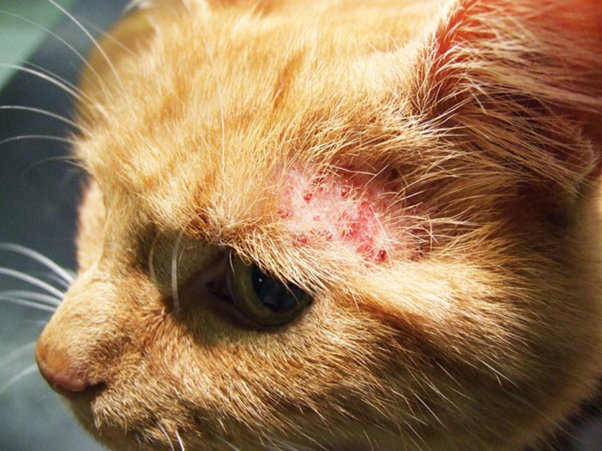
Feline Allergic Dermatitis — A Practical, Stepwise Diagnostic Approach
Once the complexity of feline allergic dermatitis is understood, the solution lies in discipline. The 2023 AAHA guidelines emphasize that successful diagnosis depends on a structured, stepwise approach—not clinical intuition1.
Step 1: Rule Out Ectoparasites First
Fleas remain the most common cause of allergic dermatitis in cats, and indoor status does not eliminate risk. The absence of visible fleas does not rule out flea allergy, making empirical treatment a practical necessity in many cases. Treating all in-contact animals is equally important to prevent reinfestation1.
Step 2: Perform the Minimum Dermatologic Database
A minimum dermatologic database (MDB) is essential and should include skin cytology, ear cytology, skin scrapings, and dermatophyte testing. Dermatophytosis is particularly important in cats, as it can closely mimic allergic disease. Skipping this step risks missing treatable conditions and delays accurate diagnosis.
Step 3: Control Secondary Infections
Secondary infections, including bacterial and Malassezia dermatitis, must be addressed early. These infections can significantly increase pruritus, mask the underlying disease, and reduce the effectiveness of antipruritic therapies. Treating them is not optional—it is foundational.
Step 4: Conduct a Diet Trial
A diet trial remains the only reliable method to diagnose food allergy. No clinical signs can distinguish food allergy from atopy, making this step essential. The protocol requires strict dietary exclusion for 4–12 weeks, followed by rechallenge to confirm diagnosis. In cats, compliance challenges—such as food selectivity and multi-pet households—often complicate execution, but this does not diminish its importance1.
Feline Atopy — A Diagnosis of Exclusion
Once ectoparasites and food allergy have been ruled out, feline atopic dermatitis can be diagnosed. Allergy testing should not be used to diagnose atopy; its role is limited to identifying allergens for immunotherapy. Misuse of these tests remains a common clinical error1.
Treatment Considerations — Cats Are Different
Treatment strategies in cats differ significantly from dogs. Glucocorticoids are often highly effective and commonly used as first-line therapy. Cyclosporine is well-supported for long-term management. While oclacitinib and lokivetmab are widely used in dogs, their use in cats is off-label, with limited but emerging evidence. Clinical judgment is essential when adapting these therapies.
Practical Clinical Strategy
Managing pruritic cats effectively requires consistency. Each case should begin with flea control, followed by a minimum dermatologic database. Secondary infections must be treated promptly, and a diet trial should be initiated where indicated. Only after these steps are completed should atopy be considered.
Final Takeaway
Feline allergic dermatitis is not solved through shortcuts—it is solved through process. In cats, diagnosis is not about recognition—it is about exclusion done right.
Reference
- Miller J, Simpson A, Bloom P, Diesel A, Friedeck A, Paterson T, Wisecup M, Yu CM. 2023 AAHA management of allergic skin diseases in dogs and cats guidelines. Journal of the American Animal Hospital Association. 2023 Nov 1;59(6):255-84. https://www.aaha.org/wp-content/uploads/globalassets/02-guidelines/2023-aaha-management-of-allergic-skin-diseases-in-dogs-and-cats-guidelines/resources/2023-aaha-management-of-allergic-skin-diseases-guidelines.pdf
Related Contents
.jpg)
Video
Transjugular Removal of Canine Heartworms: A Clinical and Surgical Overview
Transjugular removal of canine heartworms is a specialized intervention used in selected dogs with s...

Article
Feline Pregnancy Endocrinology: Hormonal Changes and Placental Function
Pregnancy in cats involves a distinctive endocrine pattern in which ovarian and placental hormones w...

Article
Hormonal Control of Pregnancy Termination in Cats
Pregnancy maintenance in cats depends strongly on coordinated hormonal support, particularly progest...

Article
Feline Embryo Implantation and Early Placental Development
Pregnancy establishment in cats involves a sequence of precisely timed events between fertilization,...

Article
Ultrasonographic Monitoring of Pregnancy in Cats: A Gestational Timeline
Ultrasonography provides a practical way to follow the progression of feline pregnancy by identifyin...

Article
Feline Mismating: Pregnancy Diagnosis and Clinical Management
Mismating or unplanned mating is a common clinical problem in sexually mature queen cats because of...

Article
Medical Termination of Pregnancy in Queens: Drugs, Timing and Treatment Protocols
Medical termination of pregnancy (MTP) in queen cats should be approached according to the timing of...

Article
Safety and Aftercare Following Pregnancy Termination in Queen Cats
Pregnancy termination in queen cats requires more than selecting an appropriate abortifacient. Once...