Article
Diabetic Remission in Cats: Improving the Chances and Preventing Relapse
Diabetic remission is one of the most rewarding outcomes in feline diabetes management. Although not every diabetic cat will achieve remission, appropriate case selection, prompt intervention, and consistent monitoring can significantly improve the likelihood of reducing insulin dependence. For practicing veterinarians, understanding the factors that influence remission allows realistic goal setting, individualized treatment planning, and meaningful discussions with caregivers from the time of diagnosis.
Importantly, remission should not be viewed as a permanent cure. Instead, it represents a temporary state in which exogenous insulin is no longer required while maintaining good glycaemic control. Ongoing vigilance remains essential because relapse may occur months or even years later1.
What Constitutes Diabetic Remission?
Diabetic remission is defined as the absence of a requirement for exogenous insulin for at least four weeks, accompanied by the resolution of clinical signs of diabetes mellitus.21 Although remission has been associated with longer survival times and improved caregiver-reported quality of life, the underlying disease process may still persist2,3.
In cats with severe insulin resistance secondary to conditions such as hypersomatotropism, successful treatment of the underlying disorder may ultimately result in resolution of diabetes. In contrast, remission associated with routine insulin-treated diabetes should generally be regarded as temporary, requiring continued surveillance.
Which Cats Are More Likely to Achieve Remission?
Reported remission rates range from 11% to more than 60%, reflecting the heterogeneous nature of feline diabetes1,4,5,6. Several clinical factors consistently influence the probability of achieving remission.
Cats diagnosed earlier in the course of disease generally have a greater chance of remission because beta cell function is more likely to recover once glucotoxicity is reduced.24,30,31 Likewise, less severe hyperglycaemia at diagnosis and rapid achievement of good glycaemic control favour recovery of endogenous insulin secretion4,6,7,8.
Body condition also plays an important role. Obesity contributes to insulin resistance, increasing insulin requirements. Safe weight loss of at least 2% of body weight during the first month of insulin therapy in obese cats has been identified as a predictor of remission3.
Other factors associated with improved outcomes include:
- Prompt initiation of appropriate insulin therapy.
- Use of long-acting or intermediate-acting insulin formulations.
- Feeding a low-carbohydrate diet.
- Identification and management of diseases contributing to insulin resistance, including hypersomatotropism and inflammatory disorders3.
Conversely, diabetic neuropathy suggests prolonged hyperglycaemia and is associated with a lower likelihood of remission.30 Cats developing diabetes following corticosteroid administration may have an increased chance of remission once diabetogenic medication is discontinued3,7.
Recognising Remission in Clinical Practice
Remission should be suspected whenever insulin requirements progressively decline while clinical control remains excellent.
Indicators include1,3:
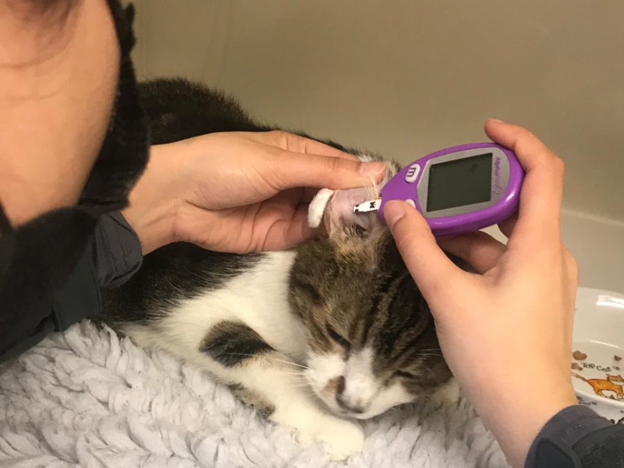
- Persistent normoglycaemia identified through continuous glucose monitoring or home blood glucose curves
- Normal fructosamine concentrations
- Clinical episodes suggesting hypoglycaemia
- Repeated negative urine glucose testing performed at home
Once remission is suspected, insulin therapy should be reduced systematically according to the patient's response rather than discontinued abruptly unless clinically indicated. The guideline recommends progressive dose reductions with reassessment every 3–7 days or weekly, depending on the insulin dose being administered1. Careful monitoring during this transition minimizes the risk of recurrent hyperglycaemia while avoiding unnecessary hypoglycaemia.
Preventing Relapse After Remission
Remission requires ongoing management rather than discharge from diabetic care. Reported relapse rates range from 13% to 40%, and achieving a second remission appears considerably less likely3.
Maintaining remission depends on preserving insulin sensitivity and recognising recurrence early. Practical measures include maintaining an ideal body condition score, avoiding unnecessary diabetogenic medications whenever possible, continuing nutritional recommendations, and encouraging regular home monitoring of blood glucose or urine glucose.
Routine reassessment also provides opportunities to detect weight gain, emerging insulin resistance, or concurrent disease before clinical diabetes reappears.
Practical Clinical Insights
Diabetic remission should be presented as an achievable treatment objective for appropriately selected cats rather than an expectation for every patient. Early diagnosis, rapid establishment of good glycaemic control, effective weight management, and treatment of concurrent insulin-resistant conditions collectively improve the likelihood of remission. Equally important is preparing caregivers for continued monitoring after insulin has been discontinued, as remission represents ongoing disease control rather than permanent resolution. With a structured follow-up plan and individualized management, veterinarians can maximize both the duration of remission and long-term quality of life for diabetic cats.
Reference
- Niessen SJ, Bjornvad C, Church DB, Davison L, Esteban-Saltiveri D, Fleeman LM, Forcada Y, Fracassi F, Gilor C, Hanson J, Herrtage M. Agreeing Language in Veterinary Endocrinology (ALIVE): Diabetes mellitus-a modified Delphi-method-based system to create consensus disease definitions. The Veterinary Journal. 2022 Nov 1;289:105910. https://www.sciencedirect.com/science/article/pii/S1090023322001253
- Rothlin-Zachrisson N, Öhlund M, Röcklinsberg H, Ström Holst B. Survival, remission, and quality of life in diabetic cats. Journal of Veterinary Internal Medicine. 2023 Jan;37(1):58-69. https://academic.oup.com/jvim/article/37/1/58/8448017
- Taylor S, Cannon M, Church D, Fleeman L, Fracassi F, Gilor C, Mott J, Niessen S. 2025 iCatCare consensus guidelines on the diagnosis and management of diabetes mellitus in cats. Journal of feline medicine and surgery. 2025 Nov;27(11):1098612X251399103. https://journals.sagepub.com/doi/pdf/10.1177/1098612X251399103
- Marshall RD, Rand JS, Morton JM. Treatment of newly diagnosed diabetic cats with glargine insulin improves glycaemic control and results in higher probability of remission than protamine zinc and lente insulins. Journal of feline medicine and surgery. 2009 Aug;11(8):683-91. https://journals.sagepub.com/doi/pdf/10.1016/j.jfms.2009.05.016
- Gottlieb S, Rand JS, Anderson ST. Frequency of diabetic remission, predictors of remission and survival in cats using a low-cost, moderate-intensity, home-monitoring protocol and twice-daily glargine. Journal of Feline Medicine and Surgery. 2024 Apr;26(4):1098612X241232546. https://journals.sagepub.com/doi/pdf/10.1177/1098612X241232546
- Zini E, Hafner M, Osto M, Franchini M, Ackermann M, Lutz TA, Reusch CE. Predictors of clinical remission in cats with diabetes mellitus. Journal of veterinary internal medicine. 2010 Nov;24(6):1314-21. https://onlinelibrary.wiley.com/doi/pdf/10.1111/j.1939-1676.2010.0598.x
- Roomp K, Rand J. Intensive blood glucose control is safe and effective in diabetic cats using home monitoring and treatment with glargine. Journal of feline medicine and surgery. 2009 Aug;11(8):668-82. https://journals.sagepub.com/doi/pdf/10.1016/j.jfms.2009.04.010
- Tschuor F, Zini E, Schellenberg S, Wenger M, Kaufmann K, Furrer D, Lutz TA, Reusch CE. Remission of diabetes mellitus in cats cannot be predicted by the arginine stimulation test. Journal of veterinary internal medicine. 2011 Jan;25(1):83-9. https://onlinelibrary.wiley.com/doi/pdf/10.1111/j.1939-1676.2010.0649.x
Related Contents
Article
FGF-23 in Feline CKD: An Early Signal of Phosphate Dysregulation
A cat with early chronic kidney disease (CKD) may have a normal serum phosphate concentration. Does...

Article
Albuminuria or Transferrinuria? Reading the Glomerular Signal in Feline CKD
A cat can have chronic kidney disease (CKD) with only mild proteinuria. So, when urinary protein is...
Article
Tubular Injury Biomarkers in Feline CKD: What Can NGAL, KIM-1 and L-FABP Tell You?
When feline CKD is already suspected, identifying reduced renal function is only part of the clinica...
Article
Can Renal Fibrosis Biomarkers Reveal CKD Progression in Cats?
Chronic kidney disease in cats is not only a problem of declining renal function. Structural changes...
Article
When Creatinine May Not Tell the Full Story in Feline Acute Kidney Injury
Serum creatinine is routinely used with changes in urine output to diagnose and grade Acute Kidney I...

Article
When a Normal-Looking Udder Hides Mastitis: Recognising Subclinical Mastitis in Buffaloes
A buffalo can appear clinically normal while mastitis is already affecting the udder and milk produc...

Article
Buffalo Subclinical Mastitis: Which Risk Factors Should Vets Investigate?
When subclinical mastitis (SCM) keeps appearing in a buffalo herd, looking only at the affected anim...
Article
Diagnosing Subclinical Mastitis in Buffaloes: From SCC and CMT to Molecular Tests
Subclinical mastitis (SCM) can remain hidden because the buffalo may show no obvious udder or milk a...