Article
When to Use PCR vs Serology in Poultry Practice
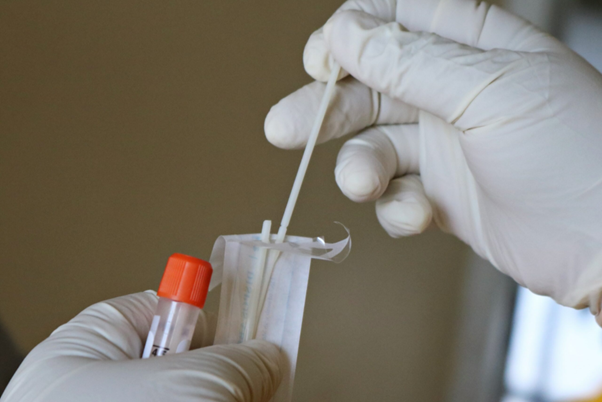
In poultry practice, diagnostic confusion often arises when deciding between PCR and serology. Both are widely used, yet they answer fundamentally different clinical questions. Incorrect test selection or misinterpretation is one of the common reasons behind delayed treatment decisions, unnecessary antibiotic use, or repeated farm losses. Understanding the timing and biological meaning of these tests is therefore more important than the test itself.
Understanding the Basic Difference
PCR detects the presence of pathogen genetic material and is therefore useful in identifying active infection. Serology, on the other hand, measures antibody response and reflects exposure or immune status rather than direct pathogen presence. This distinction is critical in field conditions where disease stage varies widely between flocks and even within the same flock.
This principle has been consistently demonstrated in poultry respiratory disease investigations, where PCR identifies early infection more reliably, while serology reflects prior exposure or vaccination response¹.
When PCR is More Useful in Field Conditions
PCR is most valuable when birds are showing active clinical disease and a definitive etiological diagnosis is required quickly. In acute respiratory outbreaks, enteric disease flares, or sudden mortality events, PCR helps identify the pathogen directly from clinical samples.
In conditions such as Mycoplasma gallisepticum infection or infectious bronchitis, PCR is particularly useful in early infection when antibody levels may not yet be detectable. Studies have shown that molecular detection often outperforms serology in early-stage disease because it does not depend on host immune response².
However, PCR interpretation must be cautious. Detection of pathogen DNA does not always confirm active disease, especially in birds recently treated with antibiotics or in vaccinated flocks where residual genetic material may still be present.
When Serology Provides Better Value
Serology becomes more meaningful when the objective is to understand flock-level exposure rather than individual infection status. It is commonly used in breeder monitoring, vaccination evaluation, and surveillance programs.
In poultry respiratory disease complexes, serological tests such as ELISA help in understanding whether the flock has been exposed over time and whether vaccination programs are inducing an expected immune response. This makes serology particularly useful in chronic or subclinical infections where pathogens may not be consistently detectable³.
A key limitation is that antibodies take time to develop. Therefore, early infection can produce false-negative results, which is why serology should not be relied upon for acute clinical diagnosis.
Why Discrepancies Between PCR and Serology Are Common
Field veterinarians often encounter situations where PCR and serology results do not match. This is not unusual and should not be interpreted as diagnostic error.
Early infection typically shows PCR positivity with negative serology because antibodies have not yet developed. In contrast, past exposure or vaccination may produce positive serology with a negative PCR result. After treatment, PCR may still detect residual nucleic acids even when clinical disease has resolved.
These patterns are well documented in veterinary diagnostic literature and highlight that both tests represent different biological timelines rather than conflicting results2,4.
Practical Field Interpretation
In practical poultry work, PCR is more useful when there is an active outbreak and immediate pathogen identification is required to guide intervention. Serology is more appropriate when evaluating flock immunity, monitoring vaccination response, or investigating past exposure trends.
In complex respiratory or enteric disease cases, combining both tests often provides the most reliable interpretation, as it helps bridge the gap between active infection and immune response.
Conclusion
PCR and serology should not be viewed as competing diagnostic tools. Instead, they represent two different windows of infection—one detecting the organism itself and the other detecting the host response. Correct selection depends entirely on disease stage, clinical presentation, and investigation objective. Rational use of both tests improves diagnostic accuracy, supports better treatment decisions, and reduces unnecessary antimicrobial use in poultry practice.
References
- Elyazeed HA, Al-Atfeehy NM, Abotaleb R, Sayed R, Marouf S. Preparation of ELISA and lateral flow kits for rapid diagnosis of Mycoplasma gallisepticum in poultry. Scientific Reports. 2020 Jun 3;10(1):9056. https://www.nature.com/articles/s41598-020-65848-7
- Eriksson E, Aspan A. Comparison of culture, ELISA and PCR techniques for Salmonella detection in faecal samples for cattle, pig and poultry. BMC veterinary research. 2007 Sep 22;3(1):21. https://pmc.ncbi.nlm.nih.gov/articles/PMC2110889/
- Liebhart D, Bilic I, Grafl B, Hess C, Hess M. Diagnosing infectious diseases in poultry requires a holistic approach: a review. Poultry. 2023 Apr 25;2(2):252-80. https://www.mdpi.com/2674-1164/2/2/20
- Elyazeed HA, Al-Atfeehy NM, Abotaleb R, Sayed R, Marouf S. Preparation of ELISA and lateral flow kits for rapid diagnosis of Mycoplasma gallisepticum in poultry. Scientific Reports. 2020 Jun 3;10(1):9056. https://doi.org/10.1038/s41598-020-65848-7
Related Contents
Article
Recognising Leptospirosis Across Animal Species: Clinical Presentations and Organ-Specific Changes
A dog presents with fever and systemic illness, while cattle experience reproductive failure without...
Article
Psychogenic Polydipsia in Dogs: Recognising Behavioural Triggers and Clinical Indicators
A dog presents with persistent excessive drinking and urination, yet its physical examination reveal...

Article
Diagnostic Approach to Canine PU/PD: Differentiating Primary Polydipsia from Primary Polyuria
Persistent excessive drinking and urination can be the presenting signs of several conditions in dog...
.jpg)
Upcoming Event
Culture-Guided Treatment of UTIs in Dogs and Cats
Make informed antibiotic choices in canine and feline UTIs with a culture-guided approach. Explore h...
Article
Managing Psychogenic Polydipsia in Dogs: Water Intake, Behavioural Therapy and Pharmacological Intervention
Once psychogenic polydipsia (PPD) has been identified, management needs to address more than the vol...

Article
Duck Viral Hepatitis in Ducklings: Clinical Recognition and Differential Diagnosis
A sudden rise in mortality among young ducklings, particularly those under three weeks of age, shoul...
Article
Confirming Duck Viral Hepatitis: Choosing and Interpreting Diagnostic Tests
When young ducklings develop sudden mortality and liver lesions suggestive of duck viral hepatitis (...
Article
Duck Viral Hepatitis Vaccination: Managing Maternal Antibody Interference and Field Efficacy
Vaccination is a key strategy for controlling Duck Viral Hepatitis (DVH), particularly in intensive...