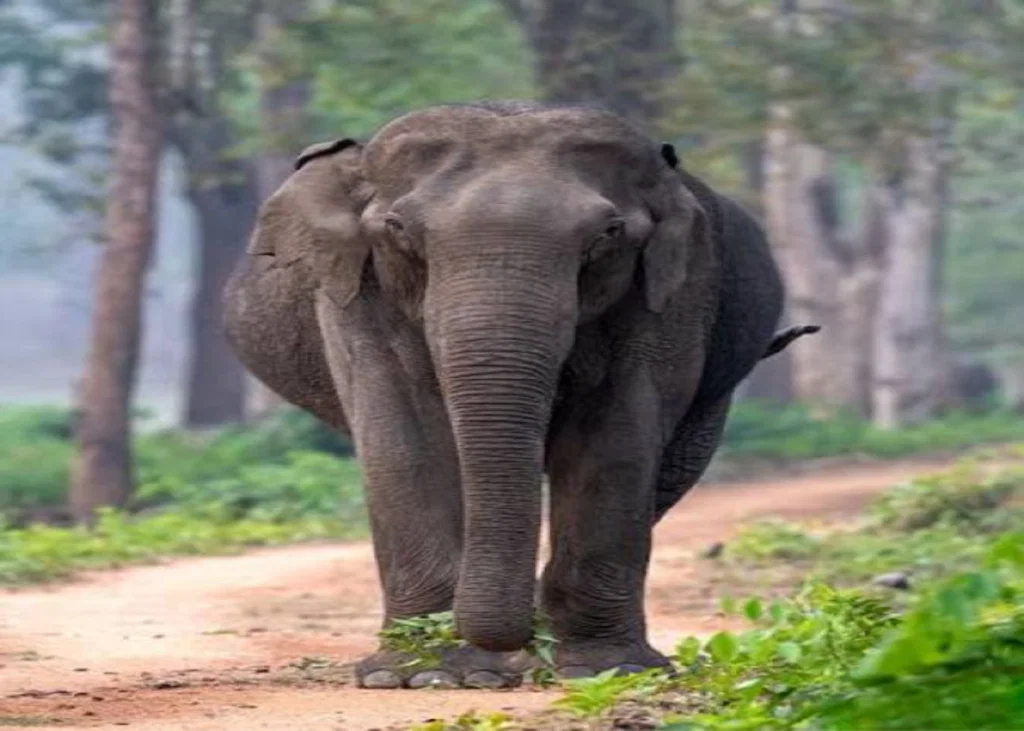
Article
Male Reproductive Assessment in Elephants: Looking Beyond Testosterone and Semen Volume
Assessing fertility in a male Asian elephant is rarely as simple as measuring testosterone or collecting a single semen sample.
Musth, age, individual variation and semen quality can all influence the interpretation of reproductive findings. A more useful approach is to consider endocrine status, sexual state, semen characteristics and reproductive anatomy together.
Is testosterone enough?
Testosterone is closely associated with male reproductive activity, but it should not be treated as a stand-alone measure of fertility.
A 2024 study examined 152 semen samples from four male Asian elephants and found a positive relationship between serum testosterone concentration and sperm motility in three of the four bulls. One bull also showed significantly higher sperm motility during musth, while patterns in other bulls suggested increasing motility around the onset or progression of musth[1].
These findings are clinically interesting, but the small number of bulls means they should not be interpreted as a universal testosterone–fertility relationship.
For an individual bull, testosterone may therefore provide useful context for reproductive status, but semen quality still needs to be assessed directly.
What should be assessed in semen?
Semen volume alone can be misleading.
A 2022 study evaluated 153 ejaculates from 25 Asian elephant bulls and assessed volume, sperm concentration, progressive motility, viability, morphology, acrosome status and membrane integrity. Good-motility ejaculates had better viability, acrosome integrity, membrane integrity and sperm morphology, although they could have lower semen volume and sperm concentration[2].
This is an important clinical distinction:
A large ejaculate is not necessarily a high-quality ejaculate.
When semen is collected for fertility assessment, evaluating multiple parameters provides substantially more information than recording volume alone.
A practical semen profile can therefore include:
- Ejaculate volume;
- Progressive motility;
- Sperm concentration;
- Viability;
- Morphology;
- Acrosome integrity; and
- Sperm membrane integrity.
Repeated assessments may be particularly useful when a bull produces variable samples.
Can reproductive anatomy add information?
Accessory reproductive structures can provide additional context.
In the same 2022 study, transrectal ultrasonography was used to assess the ampullae. Bulls with ampullae measuring ≥7 cm² produced larger-volume ejaculates, but ampulla size was not associated with sperm motility or concentration[2].
This distinction matters clinically. An apparently well-developed accessory gland structure may provide information about semen quantity without necessarily predicting semen quality.
Therefore, reproductive ultrasonography should complement rather than replace semen evaluation.
What about biomarkers beyond testosterone?
Research has also investigated whether other endocrine markers could provide additional information about male reproductive function.
A 2022 study involving seven Asian elephant bulls found that serum insulin-like growth factor-1 (IGF-1) was positively associated with the proportion of spermatozoa with intact acrosomes and with serum testosterone. The authors proposed serum IGF-1 as a potential indicator of testicular function, particularly spermatogenesis[3].
However, this was based on only 17 ejaculates from seven bulls. IGF-1 should therefore be regarded as an investigational biomarker rather than an established clinical fertility test.
How should musth be incorporated into assessment?
Musth status should be recorded when evaluating a male elephant's reproductive findings.
Rather than treating musth as synonymous with fertility, it is more appropriate to document it as part of the animal's reproductive state and interpret hormonal and semen findings in that context.
This becomes particularly relevant when comparing samples collected at different times. A change in testosterone or sperm motility may have a different significance depending on whether the bull is approaching musth, in musth or outside musth.
A practical reproductive assessment
For a bull undergoing reproductive evaluation, consider combining:
History and clinical assessment
- Age and reproductive history;
- Breeding history and previous fertility;
- Musth status and recent behavioural changes; and
- General health and body condition.
Endocrine assessment
- Serum testosterone when clinically indicated;
- Interpretation in relation to musth status; and
- Additional biomarkers only where validated or available as part of a specific reproductive investigation.
Semen assessment
- Volume;
- Progressive motility;
- Concentration;
- Viability;
- Morphology;
- Acrosome integrity; and
- Membrane integrity.
Reproductive imaging
- Transrectal assessment of accessory reproductive structures where appropriate; and
- Comparison with previous examinations when available.
The aim is not to identify a single “fertility number”, but to determine whether endocrine status, reproductive anatomy and semen quality are consistent with one another.
When the findings do not agree
Consider a bull with high testosterone but poor sperm motility.
The hormonal result should not be interpreted as evidence of normal fertility simply because testosterone is elevated.
Conversely, a bull with moderate testosterone but acceptable semen parameters should not automatically be classified as subfertile.
Discordant findings should prompt consideration of timing, musth status, individual variation, semen collection quality and repeat assessment before drawing conclusions about fertility.
Clinical takeaway
Male reproductive assessment in Asian elephants is strongest when hormonal status, musth, semen quality and reproductive anatomy are interpreted together. Testosterone can provide useful reproductive context, but semen quality requires direct assessment, while reproductive ultrasonography can add anatomical information. Individual trends and repeated assessments are often more informative than a single measurement.
References:
- LaDue CA, Brown JL, Davis M, Kibe G, Kiso WK. Relationship between testosterone and sperm motility in Asian elephants (Elephas maximus): Potential implications during the sexual state of musth. Theriogenology Wild. 2024 Jan 1;4:100072. https://doi.org/10.1016/j.therwi.2024.100072
- Thongphakdee A, Kiatsomboon S, Noimoon S, Kongprom U, Boonorana I, Karoon S, Thawnern J, Sakulthai A, Sombutputorn P, Sukmak M, Punkong C. Semen characteristics and second successful artificial insemination of Asian elephant (Elephas maximus) in Thailand. Veterinary World. 2022 May 22;15(5):1246. http://www.doi.org/10.14202/vetworld.2022.1246-1255
- Yang, Y.; Suwimonteerabutr, J.; Angkawanish, T.; Chatdarong, K. Serum Insulin-like Growth Factor-1 Is a Biomarker of Testosterone Production and Intact Acrosome in Asian Elephants (Elephas maximus). Animals 2022, 12, 1570. https://doi.org/10.3390/ani12121570
Related Contents
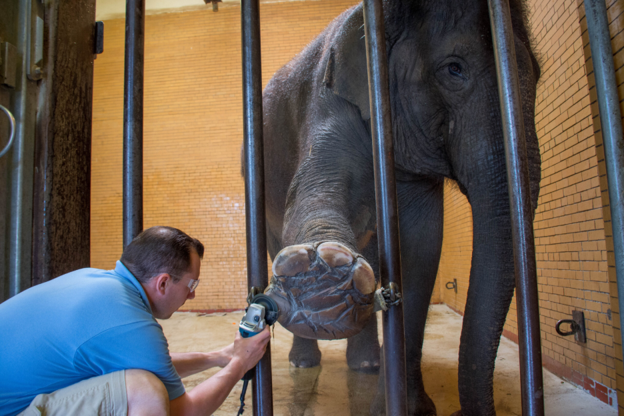
Article
Elephant Foot Health: Detecting Problems Before Lameness
Foot problems in elephants do not necessarily begin with obvious lameness. By the time an elephant i...
Article
When an Elephant’s Behaviour Changes: Recognising Clinically Relevant Patterns
A change in an elephant’s behaviour can be easy to dismiss as temperament. It can also...

Article
Is It Normal for This Elephant? Building an Individual Health Baseline
For a long-lived animal, a single health assessment provides only a snapshot. A more useful c...
Article
Body Condition in Asian Elephants: When Does Change Become Clinically Relevant?
Body condition is often recorded during routine elephant health assessments. Its clinical value, how...
Article
EEHV in Asian Elephant Calves: Recognising the Early Clinical Picture
Elephant endotheliotropic herpesvirus (EEHV) is an important cause of fatal haemorrhagic disease in...
Article
Gastrointestinal Parasites in Asian Elephants: Interpreting Faecal Findings
A positive faecal examination confirms the detection of parasite stages in the sample. It does not,...
Article
Tuberculosis in Asian Elephants: Interpreting Screening Results in Context
Tuberculosis surveillance in elephants presents a fundamental diagnostic challenge: a test result is...
Article
Pregnancy Monitoring in Asian Elephants: Interpreting Ultrasound and Hormonal Findings
Confirming pregnancy is only the beginning of reproductive monitoring in an elephant. With a...