Article
When Rabies is Suspected: A Step-by-Step Strategy for Veterinary Response and Outbreak Control
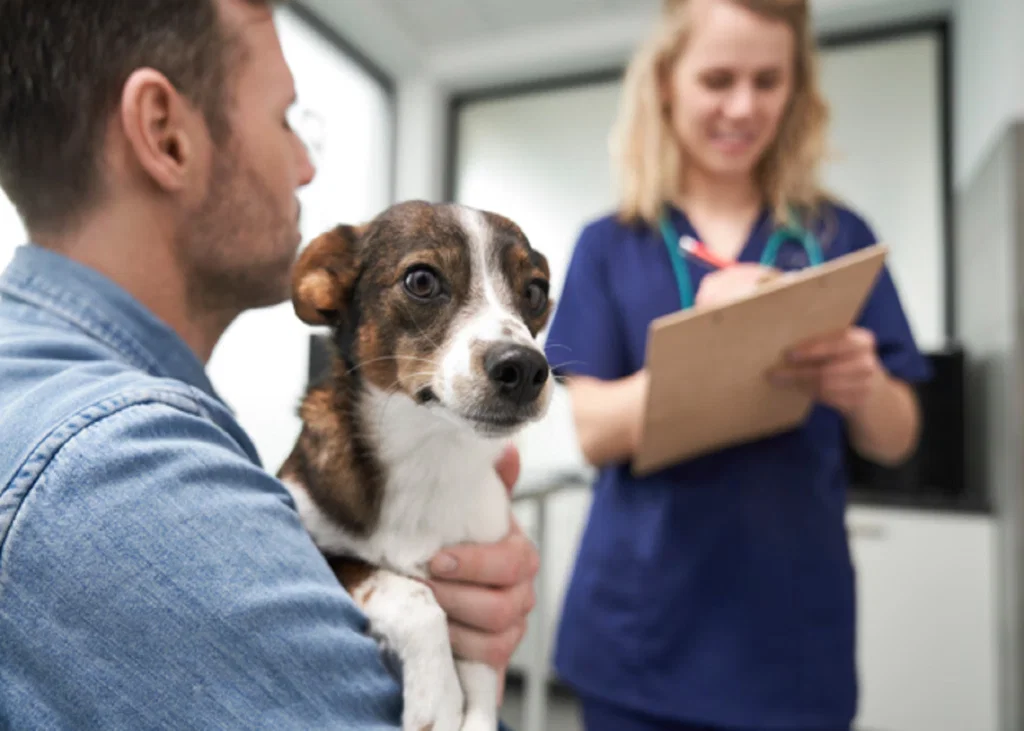
A dog presents with unexplained neurological signs. A cat that recently became ill has bitten its owner. Or multiple animals from the same locality are suddenly linked to suspected rabies exposure.
The immediate question for a veterinarian is often: Could this be rabies?
But an equally important question follows: What happens next?
Responding effectively to suspected rabies requires more than clinical suspicion. It requires a coordinated strategy that connects veterinary practice with surveillance, laboratory diagnosis, public health and local authorities[1]˒[2]˒[3].
Here is a practical framework for thinking through the response.
Step 1: Recognize that one suspected case may have wider implications
A suspected rabies case should not always be viewed as an isolated clinical event.
The animal may have interacted with other animals, bitten or scratched humans, or moved through different locations before showing signs of illness. These details can be important for identifying possible exposure and understanding the potential extent of transmission[2].
Veterinarians therefore have an important role in collecting and documenting relevant information, including the animal's vaccination history, location, movement and contact history.
The objective is to begin building an epidemiological picture rather than focusing only on the individual animal.
Step 2: Document and report without delay
Delays in reporting can weaken outbreak investigation and response.
The Baiyun case described in the 2025 review illustrates the importance of rapid reporting and coordinated investigation following a suspected rabies case[2].
Veterinary observations can become important surveillance data. Information on suspected and confirmed cases, animal populations and vaccination records can help authorities understand disease patterns and identify areas requiring intervention[3].
A strong rabies response therefore depends on having systems that allow relevant information to move quickly between veterinary services, laboratories and public health authorities.
Step 3: Connect clinical suspicion with appropriate diagnostic investigation
Clinical signs may raise suspicion, but laboratory capacity plays an essential role in rabies surveillance and disease confirmation[2]˒[3].
The available diagnostic approaches described in the literature include the direct fluorescent antibody test, direct rapid immunohistochemical testing and real-time RT-PCR[2].
For veterinarians, the key principle is that appropriate diagnostic investigation requires coordination with relevant laboratories and authorities.
Strengthening laboratory capacity is particularly important in regions where diagnostic facilities are limited or concentrated in major cities[3]. Without reliable diagnostic support, suspected cases may remain unconfirmed, contributing to under-reporting and an incomplete understanding of local rabies activity[2]˒[3].
Step 4: Assess the wider animal and human exposure network
A suspected case can trigger questions that extend well beyond the affected animal.
Which animals may have been exposed? Were there people who were bitten, scratched or otherwise exposed? Are other animals in the area showing compatible signs?
The response described in the Baiyun case involved investigating potential exposures, testing animals and coordinating preventive measures for individuals who may have been exposed[2].
This highlights an important principle: rabies response should focus on the network surrounding a suspected case, not only the case itself.
Such an approach requires coordination between veterinary and human health services, reflecting the practical importance of One Health[1]˒[3].
Step 5: Strengthen surveillance in the affected area
Once a potential risk has been identified, surveillance becomes essential.
Systematic collection of information on suspected and confirmed cases, dog populations and vaccination status can help create a clearer picture of the local situation[3].
Surveillance should also consider domestic and relevant wildlife populations, as rabies can involve interconnected urban and sylvatic transmission cycles[1]˒[2].
The aim is not simply to identify additional cases. It is to understand where transmission may be occurring and where control measures need to be strengthened.
Step 6: Coordinate a One Health response
Rabies cannot be effectively controlled by one sector working alone.
Animal health professionals, human healthcare providers, public health authorities, laboratories and other relevant sectors all hold different pieces of the same puzzle[1]˒[3].
The Baiyun response provides an example of multisectoral collaboration involving disease-control authorities, hospitals, veterinary and agricultural departments, laboratories and local authorities[2].
This type of coordination can support faster information sharing, exposure assessment, surveillance and implementation of appropriate control measures.
For veterinarians, this reinforces an important point: reporting a suspected case is not the end of the veterinary role—it can be the beginning of a wider coordinated response.
Step 7: Use the event to strengthen future prevention
An outbreak response should not end once the immediate concern has been addressed.
The event can reveal gaps in vaccination coverage, surveillance, laboratory access, record keeping or communication between sectors[2]˒[3].
These gaps provide an opportunity to strengthen future prevention strategies.
Mass dog vaccination remains a central component of rabies control, with approximately 70% vaccination coverage identified as an important target for reducing transmission[2]˒[3]. However, vaccination programmes need to be supported by effective surveillance, dog population management, reliable records and coordination across sectors[2]˒[3].
A suspected case is a test of the entire system
The response to suspected rabies reveals how well the larger control system actually works.
Can the case be reported quickly? Can appropriate diagnostic investigation be initiated? Can potential exposures be identified? Can animal and human health sectors communicate effectively?
These questions are just as important as recognising the clinical signs in the first place.
For veterinarians, a suspected rabies case represents more than a diagnostic challenge. It is an opportunity to activate the broader systems required to interrupt transmission.
Recognize. Document. Report. Investigate. Coordinate. Strengthen surveillance.
A structured response built around these steps can help transform an individual suspected case into an opportunity for stronger rabies prevention and control[1]˒[2]˒[3].
References:
- Acharya KP, Acharya N, Phuyal S, Upadhyaya M, Lasee S. One-health approach: A best possible way to control rabies. One Health. 2020 Dec 1;10:100161. https://doi.org/10.1016/j.onehlt.2020.100161
- Zha R, Lu J, Chen J, Guo C, Lu J. Exploring one health-based strategies for rabies elimination: Overview and future prospects. PLOS Neglected Tropical Diseases. 2025 Jun 18;19(6):e0013159. https://doi.org/10.1371/journal.pntd.0013159
- Acharya KP, Subedi D, Wilson RT. Rabies control in South Asia requires a One Health approach. One health. 2021 Jun 1;12:100215. https://doi.org/10.1016/j.onehlt.2021.100215
Related Contents
Article
Elephant Foot Health: Detecting Problems Before Lameness
Foot problems in elephants do not necessarily begin with obvious lameness. By the time an elephant i...
Article
When an Elephant’s Behaviour Changes: Recognising Clinically Relevant Patterns
A change in an elephant’s behaviour can be easy to dismiss as temperament. It can also...
Article
Is It Normal for This Elephant? Building an Individual Health Baseline
For a long-lived animal, a single health assessment provides only a snapshot. A more useful c...
Article
Body Condition in Asian Elephants: When Does Change Become Clinically Relevant?
Body condition is often recorded during routine elephant health assessments. Its clinical value, how...
Article
EEHV in Asian Elephant Calves: Recognising the Early Clinical Picture
Elephant endotheliotropic herpesvirus (EEHV) is an important cause of fatal haemorrhagic disease in...
Article
Gastrointestinal Parasites in Asian Elephants: Interpreting Faecal Findings
A positive faecal examination confirms the detection of parasite stages in the sample. It does not,...
Article
Tuberculosis in Asian Elephants: Interpreting Screening Results in Context
Tuberculosis surveillance in elephants presents a fundamental diagnostic challenge: a test result is...
Article
Pregnancy Monitoring in Asian Elephants: Interpreting Ultrasound and Hormonal Findings
Confirming pregnancy is only the beginning of reproductive monitoring in an elephant. With a...