Article
Advanced Physiotherapy Modalities for Canine Osteoarthritis: Clinical Applications and Current Evidence
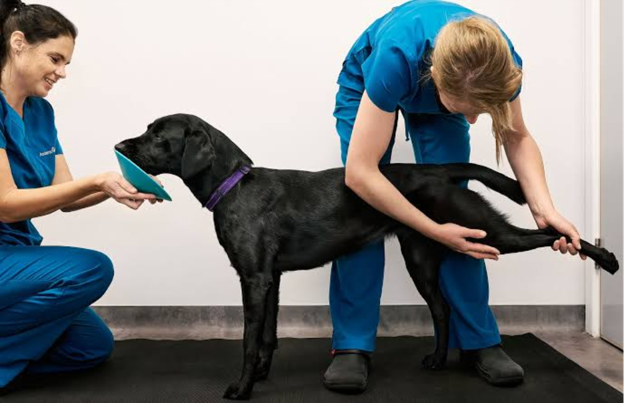
Physiotherapy for canine osteoarthritis (OA) extends beyond therapeutic exercises and lifestyle modification. A range of advanced physiotherapeutic modalities is available to complement multimodal OA management, with the goals of reducing pain, improving function, enhancing mobility, and supporting long-term quality of life. Most of these interventions require specialized equipment and trained personnel, making them suitable additions once foundational management strategies have been established. While several modalities have shown encouraging clinical outcomes, the strength of evidence varies, and treatment selection should be individualized according to the patient's clinical presentation and therapeutic objectives1.
Low-Level Laser Therapy
Low-level laser therapy (LLLT) is a non-invasive modality that utilizes near-infrared or infrared light. Proposed therapeutic effects include analgesia and modulation of inflammation through multiple biological mechanisms1,2.
Clinical use in dogs with naturally occurring OA has demonstrated improvements in lameness and pain scores, with progressive benefits observed over multiple treatment sessions. In some patients, analgesic medication requirements were reduced during the treatment period. Importantly, no adverse effects have been reported in canine or human OA patients receiving laser therapy1.
Despite these encouraging findings, treatment protocols differ considerably with respect to wavelength, dosage, treatment frequency, and application sites, making direct comparison between protocols difficult. Optimal joint-specific treatment parameters have yet to be established1,3,4.
Therapeutic Ultrasound
Therapeutic ultrasound (TU) combines thermal and non-thermal effects to address periarticular soft tissues and joint dysfunction. Traditionally, it has been incorporated into rehabilitation programmes to reduce muscle shortening and hypertonicity, particularly before stretching exercises1,5,6.
Beyond its thermal effects, ultrasound has demonstrated anti-inflammatory cellular responses and favourable effects on cartilage metabolism, supporting its role as an adjunctive treatment for osteoarthritis1,7,8.
In an experimental canine OA model, repeated ultrasound treatments improved synovial fluid viscosity, joint range of motion, muscle mass, and limb loading. However, important clinical questions regarding treatment frequency, dosage, and the comparative effectiveness of continuous versus pulsed ultrasound remain unresolved1,9.
Extracorporeal Shock Wave Therapy
Extracorporeal shock wave therapy (ESWT) has become an important physiotherapeutic option for selected osteoarthritic patients. Both focused and radial shockwave technologies are used in veterinary practice, with differences in tissue penetration and energy distribution1.
Clinical outcomes have varied according to the affected joint. Improvements in objective gait parameters have been reported in dogs with elbow and hip OA, whereas similar benefits were not consistently observed in dogs with stifle OA. Positive effects have included improved peak vertical force, vertical impulse, lameness scores, activity, and owner-assessed comfort following treatment1.
Although these results are encouraging, evidence regarding long-term outcomes, ideal treatment intervals, energy settings, and frequency remains limited. Patient selection and realistic client counselling therefore remain important components of treatment planning1.
Electrotherapy
Electrotherapy encompasses several techniques that differ in their mechanisms of action and clinical application. Rather than considering electrotherapy as a single intervention, each modality should be evaluated individually according to the therapeutic goal1.
Interferential current (IC) has demonstrated improvements in limb loading, pain control, oedema reduction, muscle relaxation, and mobility in dogs with OA, making it a promising adjunctive modality1.
Neuromuscular electrical stimulation (NMES) may be particularly valuable for patients unable to perform adequate strengthening exercises because of pain, weakness, or concurrent disease. Its primary objective is preservation or improvement of muscle mass and strength while supporting functional recovery1.
Transcutaneous electrical nerve stimulation (TENS) is primarily directed toward pain management. Clinical observations have demonstrated short-term improvements in limb loading following treatment, while longer treatment programmes incorporated into physiotherapy protocols have also been associated with improved weight-bearing symmetry in overweight osteoarthritic dogs1. However, sustained long-term analgesic benefits remain less clearly defined.
Practical Clinical Insights
- Introduce advanced physiotherapy modalities as part of a comprehensive multimodal OA management plan rather than as standalone therapies.
- Select the modality according to the patient's primary clinical need, whether pain control, muscle preservation, improved mobility, or functional support.
- Explain to owners that treatment protocols often require multiple sessions and periodic reassessment to determine clinical response.
- Continue regular monitoring throughout treatment and adjust physiotherapy plans according to changes in mobility, comfort, and overall function.
- Recognize that although several advanced modalities demonstrate encouraging clinical outcomes, evidence supporting optimal treatment parameters and long-term efficacy continues to evolve.
Advanced physiotherapy modalities provide veterinarians with valuable options for supporting dogs with osteoarthritis beyond conventional management. When integrated thoughtfully with exercise programmes, environmental modification, weight management, and pharmacological therapy, these interventions can contribute to improved patient comfort and functional mobility while maintaining realistic expectations regarding individual response and the current level of evidence.
References
1. Mille MA, McClement J, Lauer S. Physiotherapeutic strategies and their current evidence for canine osteoarthritis. Veterinary sciences. 2022 Dec 21;10(1):2. https://www.mdpi.com/2306-7381/10/1/2
2. Mantineo M, Pinheiro JP, Morgado AM. Low-level laser therapy on skeletal muscle inflammation: evaluation of irradiation parameters. Journal of biomedical optics. 2014 Sep 1;19(9):098002-. https://www.spiedigitallibrary.org/journalArticle/Download?fullDOI=10.1117/1.JBO.19.9.098002
3. Barale L, Monticelli P, Raviola M, Adami C. Preliminary clinical experience of low-level laser therapy for the treatment of canine osteoarthritis-associated pain: A retrospective investigation on 17 dogs. Open Veterinary Journal. 2020 Mar 30;10(1):116-9. https://www.ajol.info/index.php/ovj/article/download/194984/184168
4. Looney AL, Huntingford JL, Blaeser LL, Mann S. A randomized blind placebo-controlled trial investigating the effects of photobiomodulation therapy (PBMT) on canine elbow osteoarthritis. The Canadian Veterinary Journal. 2018 Sep;59(9):959. https://pmc.ncbi.nlm.nih.gov/articles/PMC6091142/pdf/cvj_09_959.pdf
5. Yildirim MA, Kadriye ÖN, Gökşenoğlu G. Effectiveness of ultrasound therapy on myofascial pain syndrome of the upper trapezius: randomized, single-blind, placebo-controlled study. Archives of rheumatology. 2018 Mar 23;33(4):418. https://pmc.ncbi.nlm.nih.gov/articles/PMC6409164/pdf/ArchRheumatol-33-418.pdf
6. Acevedo B, Millis DL, Levine D, Guevara JL. Effect of therapeutic ultrasound on calcaneal tendon heating and extensibility in dogs. Frontiers in Veterinary Science. 2019 Jun 12;6:185. https://www.frontiersin.org/journals/veterinary-science/articles/10.3389/fvets.2019.00185/pdf
7. Yang Q, Nanayakkara GK, Drummer C, Sun Y, Johnson C, Cueto R, Fu H, Shao Y, Wang L, Yang WY, Tang P. Low-intensity ultrasound-induced anti-inflammatory effects are mediated by several new mechanisms including gene induction, immunosuppressor cell promotion, and enhancement of exosome biogenesis and docking. Frontiers in Physiology. 2017 Oct 23;8:818. https://www.frontiersin.org/journals/physiology/articles/10.3389/fphys.2017.00818/pdf
8. Wu Y, Zhu S, Lv Z, Kan S, Wu Q, Song W, Ning G, Feng S. Effects of therapeutic ultrasound for knee osteoarthritis: a systematic review and meta-analysis. Clinical rehabilitation. 2019 Dec;33(12):1863-75. https://drive.google.com/file/d/1arOTjvOxyB7DpfAM342U7h9_K7ITmHZD/view
9. Zeng C, Li H, Yang T, Deng ZH, Yang Y, Zhang Y, Ding X, Lei GH. Effectiveness of continuous and pulsed ultrasound for the management of knee osteoarthritis: a systematic review and network meta-analysis. Osteoarthritis and cartilage. 2014 Aug 1;22(8):1090-9. https://www.sciencedirect.com/science/article/pii/S1063458414011510
Related Contents

Article
Chronic Cough in Dogs and Cats: How to Classify and Localize It
A dog has been coughing for several weeks. The owner describes it as “honking,” but the...
Article
Diagnosing the Coughing Dog or Cat: Choosing the Right Diagnostic Test
A coughing dog or cat does not automatically need every available respiratory test. The more useful...
Article
Bronchoscopy and Airway Sampling in Dogs and Cats with Chronic Cough
In dogs and cats with chronic cough, thoracic radiographs may not fully explain the airway abnormali...

Article
When Should Veterinarians Suppress Cough?
Cough suppression plays a specific role in managing respiratory diseases in dogs and cats. The aim i...
Article
Managing Persistent Cough in Dogs and Cats: From Conventional Therapy to Emerging Options
Persistent cough in dogs and cats may require more than treatment of the primary disease. When cough...
Article
Bacterial Diseases in Farmed Fish: Recognising Clinical Patterns in Practice
A fish population develops haemorrhagic lesions, lethargy and poor appetite. Another shows exophthal...
Article
Viral Diseases in Aquaculture: Recognising Clinical Patterns Before the Outbreak Escalates
A group of cultured fish begins showing dark skin, haemorrhage, anaemia and abnormal behaviour. In a...
Article
Parasitic Diseases in Farmed Fish: Recognising Gill, Skin and Systemic Involvement
A group of fingerlings is losing appetite and becoming increasingly inactive. Some fish have excessi...