Article
Why Animal Handlers Are the Most Vulnerable to Brucellosis: A Field-Level Perspective
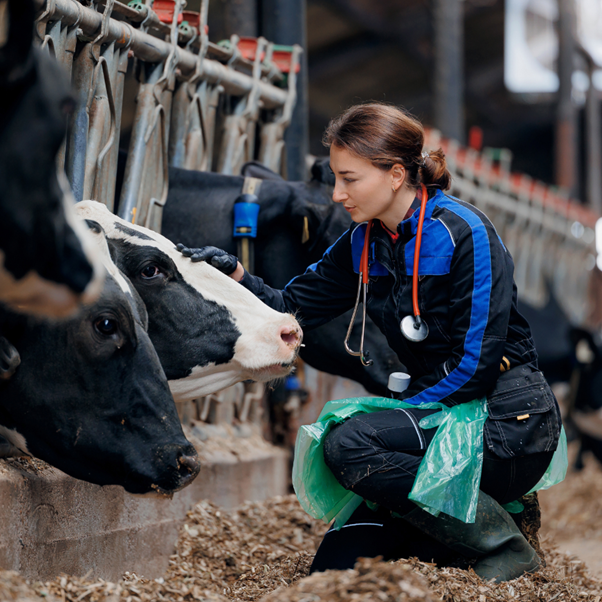
Brucellosis control strategies often focus on veterinarians, but field data suggest that the greatest vulnerability lies elsewhere, with animal handlers. These individuals form the backbone of rural animal healthcare systems, yet remain the least protected and least informed.
In India’s expanding dairy sector, where veterinary outreach is uneven, animal handlers frequently act as the first responders in animal care1,2. Their role, though critical, places them at disproportionate risk of zoonotic infections like brucellosis.
Understanding the Risk Disparity
Recent studies highlight a striking trend; animal handlers show the highest brucellosis prevalence (31.25%) among veterinary personnel1. This contrasts sharply with veterinarians (7.5%) and para-veterinarians (11.11%).
The reasons are multifactorial:
- Lack of formal training
- Limited awareness of zoonotic diseases
- Minimal use of PPE
- Frequent exposure to high-risk procedures
Unlike veterinarians, animal handlers often learn through observation and experience, without structured education in disease prevention.
Knowledge Gaps and Misconceptions
A major contributor to increased risk is poor awareness of disease transmission. Animal handlers were found to:
- Be less aware of brucellosis symptoms
- Underestimate risks from sick animals
- Fail to recognize reproductive procedures as high-risk
- Rely heavily on informal sources of information (69.5%)1
In contrast, veterinarians and para-veterinarians rely more on formal sources such as journals and government guidelines, improving their understanding and practices.
High Exposure Without Protection
Animal handlers frequently perform high-risk interventions, often exceeding those handled by veterinarians. These include:
- Handling aborted fetuses (mean exposure: 2.08 vs 0.8 in veterinarians)
- Managing stillbirths
- Assisting in parturition
- Removing retained placenta
Despite this, PPE usage remains alarmingly low, largely due to lack of awareness rather than resource constraints1.
Behavioral and Perception Barriers1
Interestingly, animal handlers often show low perceived risk of infection. Many do not consider brucellosis a serious occupational threat and are less likely to adopt preventive measures.
Statistical models indicate that being an animal handler was associated with lower likelihood of PPE use, not because of barriers like cost or heat stress, but due to lack of motivation and awareness.
This highlights a critical issue, risk perception drives behavior more than accessibility.
Vaccination Awareness and Gaps1
Another concerning finding is that 26.6% of animal handlers were unaware of brucellosis vaccination in cattle. This directly affects disease control efforts, as they are often responsible for implementing vaccination programs in rural areas.
Their limited understanding of vaccination importance can undermine national eradication efforts.
Needlestick Injuries and Field Risks1
Animal handlers are frequently involved in vaccination drives, increasing their exposure to needlestick injuries. Although reported cases were low, their frontline involvement suggests potential underreporting.
Accidental inoculation with live vaccines such as RB51 can lead to serious health consequences. Proper training in needle safety protocols is therefore essential.
The Role of Training and Information Channels
The study reveals that information source significantly influences PPE usage. Those accessing formal channels (government programs, journals) were more likely to adopt protective measures [6].
However, animal handlers predominantly rely on peer communication, which may perpetuate misinformation.
Introducing structured training programs, newsletters, and community-level awareness campaigns could significantly improve their knowledge and practices.
Bridging the Gap: Practical Solutions
To reduce brucellosis risk among animal handlers, the following strategies are critical:
- Mandatory basic training in zoonotic diseases
- Inclusion of biosecurity practices in skill development programs
- Easy access to affordable PPE
- Regular health screening and serosurveys
- Integration into formal veterinary networks
Recognizing their contribution and equipping them with the right tools can transform them from a vulnerable group into a key asset in disease control.
Conclusion: From Vulnerability to Empowerment
Animal handlers are indispensable to India’s livestock ecosystem, yet they remain the most overlooked in terms of occupational safety.
Addressing their knowledge gaps, improving training, and fostering a culture of biosecurity can significantly reduce brucellosis transmission, not just among them, but across the entire veterinary chain.
Reference
- Tiwari HK, Proch V, Singh BB, Schemann K, Ward M, Singh J, Gill JP, Dhand NK. Brucellosis in India: Comparing exposure amongst veterinarians, para-veterinarians and animal handlers. One Health. 2022 Jun 1;14:100367. https://www.sciencedirect.com/science/article/pii/S2352771421001579
- Singh J, Singh BB, Tiwari HK, Josan HS, Jaswal N, Kaur M, Kostoulas P, Khatkar MS, Aulakh RS, Gill JP, Dhand NK. Using dairy value chains to identify production constraints and biosecurity risks. Animals. 2020 Dec 8;10(12):2332. https://www.mdpi.com/2076-2615/10/12/2332
Related Contents
Article
Recognising Leptospirosis Across Animal Species: Clinical Presentations and Organ-Specific Changes
A dog presents with fever and systemic illness, while cattle experience reproductive failure without...
Article
Psychogenic Polydipsia in Dogs: Recognising Behavioural Triggers and Clinical Indicators
A dog presents with persistent excessive drinking and urination, yet its physical examination reveal...
Article
Diagnostic Approach to Canine PU/PD: Differentiating Primary Polydipsia from Primary Polyuria
Persistent excessive drinking and urination can be the presenting signs of several conditions in dog...
.jpg)
Upcoming Event
Culture-Guided Treatment of UTIs in Dogs and Cats
Make informed antibiotic choices in canine and feline UTIs with a culture-guided approach. Explore h...
Article
Managing Psychogenic Polydipsia in Dogs: Water Intake, Behavioural Therapy and Pharmacological Intervention
Once psychogenic polydipsia (PPD) has been identified, management needs to address more than the vol...
Article
Duck Viral Hepatitis in Ducklings: Clinical Recognition and Differential Diagnosis
A sudden rise in mortality among young ducklings, particularly those under three weeks of age, shoul...
Article
Confirming Duck Viral Hepatitis: Choosing and Interpreting Diagnostic Tests
When young ducklings develop sudden mortality and liver lesions suggestive of duck viral hepatitis (...
Article
Duck Viral Hepatitis Vaccination: Managing Maternal Antibody Interference and Field Efficacy
Vaccination is a key strategy for controlling Duck Viral Hepatitis (DVH), particularly in intensive...