
Article
Pharmacological Management of Canine Osteoarthritis: Current Therapeutic Options for Pain Control
Effective pain management remains a central goal in the treatment of canine osteoarthritis (OA). As OA progresses, chronic pain, inflammation, and declining mobility can significantly impact a dog's daily function and quality of life. Pharmacological therapy aims to interrupt the underlying mechanisms contributing to pain while supporting improved mobility and comfort. Rather than relying on a single medication, treatment should be tailored to the individual patient, taking into account disease severity, concurrent illnesses, treatment response, and the need for long-term management1,2,3.
Selecting the most appropriate therapeutic option requires an understanding of each drug class, its mechanism of action, clinical role, and safety considerations.
NSAIDs: The Cornerstone of Pain Management
Non-steroidal anti-inflammatory drugs (NSAIDs), particularly cyclooxygenase-2 (COX-2) selective agents such as carprofen, meloxicam, and firocoxib, continue to play a central role in managing OA-associated pain and inflammation. These medications act by inhibiting cyclooxygenase enzymes, thereby reducing prostaglandin synthesis involved in pain and inflammatory pathways.
NSAIDs provide effective analgesic and anti-inflammatory benefits and remain an important first-line option for many dogs with osteoarthritis. However, careful patient selection is essential. Dogs with pre-existing renal, hepatic, or gastrointestinal disease require additional consideration before initiating therapy. Baseline laboratory evaluation followed by periodic bloodwork is recommended when long-term treatment is anticipated to help monitor patient safety3,4,5.
Grapiprant: A Targeted Alternative
Grapiprant offers a different pharmacological approach by selectively blocking the EP4 prostaglandin receptor, an important mediator of osteoarthritic pain and inflammation. Unlike traditional NSAIDs, this mechanism spares other prostaglandin pathways involved in normal physiological functions.
This targeted action provides effective pain control while offering a favourable safety profile, with a lower risk of gastrointestinal and renal adverse effects compared with conventional NSAIDs. Grapiprant may therefore be considered in patients where preserving these physiological pathways is an important clinical consideration5.
Bedinvetmab: Targeting Chronic Osteoarthritic Pain
Bedinvetmab represents a targeted biological therapy for canine OA. This canine-specific monoclonal antibody binds to and neutralizes nerve growth factor (NGF), a key mediator involved in chronic pain signalling.
Administered as a monthly subcutaneous injection, bedinvetmab has demonstrated high efficacy in improving chronic OA pain, mobility, and quality of life6,7,8. Its targeted mechanism and favourable safety profile make it a valuable therapeutic option, particularly for dogs in which NSAID therapy may not be appropriate because of renal or gastrointestinal disease3.
Pentosan Polysulfate Sodium as Adjunctive Therapy
Pentosan polysulfate sodium is classified as a disease-modifying osteoarthritis drug (DMOAD). Rather than serving as a primary analgesic, it provides chondroprotective and mild anti-inflammatory effects. Its proposed actions include stimulating hyaluronic acid production while inhibiting catabolic enzymes involved in cartilage degradation.
The greatest clinical value appears to be as an adjunctive therapy, particularly in dogs with early-to-moderate OA, where it can be incorporated into a broader multimodal treatment strategy rather than used as a standalone intervention3.
Conclusion
Pharmacological management of canine osteoarthritis extends beyond simply relieving pain. A thoughtful, individualized approach allows veterinarians to match each therapeutic option to the patient's clinical needs while balancing efficacy with long-term safety. NSAIDs remain the cornerstone of treatment for many patients, while Grapiprant provides an alternative targeted mechanism, Bedinvetmab offers a novel biological approach for chronic pain control, and Pentosan polysulfate sodium serves as a useful adjunct in multimodal management. Careful patient selection, appropriate monitoring, and integration of these therapies within a comprehensive treatment plan can help optimize mobility, improve comfort, and support a better quality of life for dogs living with osteoarthritis.
References
- Brown DC, Boston RC, Coyne JC, Farrar JT. Development and psychometric testing of an instrument designed to measure chronic pain in dogs with osteoarthritis. American journal of veterinary research. 2007 Jun 1;68(6):631-7. https://pmc.ncbi.nlm.nih.gov/articles/PMC2907349/pdf/nihms213863.pdf
- Sandersoln RO, Beata C, Flipo RM, Genevois JP, Macias C, Tacke S, Vezzoni A, Innes JF. Systematic review of the management of canine osteoarthritis. Veterinary Record. 2009 Apr;164(14):418-24. https://www.academia.edu/download/111909367/418.full.pdf
- Bougherara H, Boukhechem S, Dib AL. A multimodal approach to Canine Osteoarthritis management: A state-of-the-art. Open Veterinary Journal. 2025 Nov 30;15(11):5461. https://pmc.ncbi.nlm.nih.gov/articles/PMC12861432/
- Innes JF, Clayton J, Lascelles BD. Review of the safety and efficacy of long‐term NSAID use in the treatment of canine osteoarthritis. Veterinary Record. 2010 Feb;166(8):226-30. https://www.researchgate.net/profile/B-Duncan-X-Lascelles/publication/41509855_Review_of_the_safety_and_efficacy_of_long
- Kirkby Shaw K, Rausch‐Derra LC, Rhodes L. Grapiprant: an EP 4 prostaglandin receptor antagonist and novel therapy for pain and inflammation. Veterinary medicine and science. 2016 Feb;2(1):3-9. https://onlinelibrary.wiley.com/doi/pdfdirect/10.1002/vms3.13
- Enomoto M, Mantyh PW, Murrell J, Innes JF, Lascelles BD. Anti‐nerve growth factor monoclonal antibodies for the control of pain in dogs and cats. Veterinary Record. 2019 Jan;184(1):23-. https://bvajournals.onlinelibrary.wiley.com/doi/pdfdirect/10.1136/vr.104590
- Krautmann M, Walters R, Cole P, Tena J, Bergeron LM, Messamore J, Mwangi D, Rai S, Dominowski P, Saad K, Zhu Y. Laboratory safety evaluation of bedinvetmab, a canine anti-nerve growth factor monoclonal antibody, in dogs. The Veterinary Journal. 2021 Oct 1;276:105733. https://www.sciencedirect.com/science/article/pii/S1090023321001283
- Corral MJ, Moyaert H, Fernandes T, Escalada M, Tena JK, Walters RR, Stegemann MR. A prospective, randomized, blinded, placebo-controlled multisite clinical study of bedinvetmab, a canine monoclonal antibody targeting nerve growth factor, in dogs with osteoarthritis. Veterinary anaesthesia and analgesia. 2021 Nov 1;48(6):943-55. https://www.sciencedirect.com/science/article/pii/S1467298721002014
Related Contents
Article
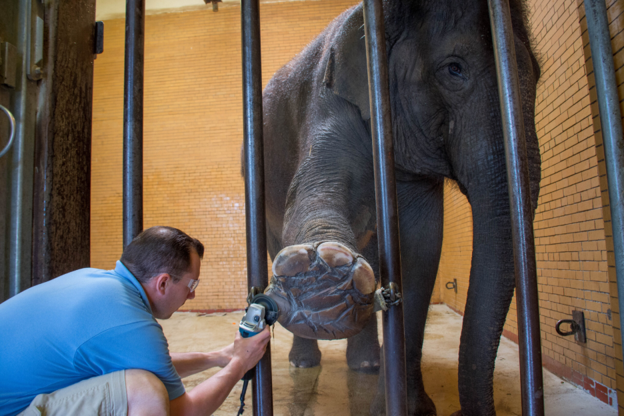
Elephant Foot Health: Detecting Problems Before Lameness
Foot problems in elephants do not necessarily begin with obvious lameness. By the time an elephant i...

Article
When an Elephant’s Behaviour Changes: Recognising Clinically Relevant Patterns
A change in an elephant’s behaviour can be easy to dismiss as temperament. It can also...

Article
Is It Normal for This Elephant? Building an Individual Health Baseline
For a long-lived animal, a single health assessment provides only a snapshot. A more useful c...

Article
Body Condition in Asian Elephants: When Does Change Become Clinically Relevant?
Body condition is often recorded during routine elephant health assessments. Its clinical value, how...

Article
EEHV in Asian Elephant Calves: Recognising the Early Clinical Picture
Elephant endotheliotropic herpesvirus (EEHV) is an important cause of fatal haemorrhagic disease in...

Article
Gastrointestinal Parasites in Asian Elephants: Interpreting Faecal Findings
A positive faecal examination confirms the detection of parasite stages in the sample. It does not,...
Article
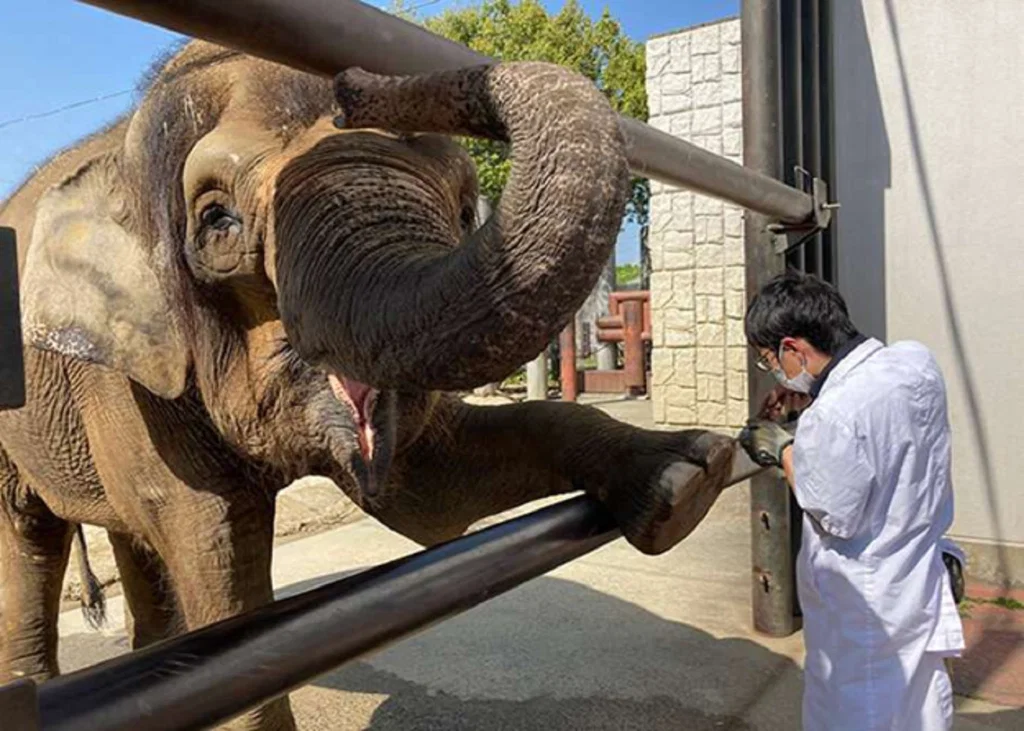
Tuberculosis in Asian Elephants: Interpreting Screening Results in Context
Tuberculosis surveillance in elephants presents a fundamental diagnostic challenge: a test result is...

Article
Pregnancy Monitoring in Asian Elephants: Interpreting Ultrasound and Hormonal Findings
Confirming pregnancy is only the beginning of reproductive monitoring in an elephant. With a...