Article
Preventing Orf in Sheep and Goats: Vaccination, Biosecurity and Zoonotic Protection
Contagious ecthyma can persist within affected flocks and may remain a management challenge because of its contagious nature, environmental persistence and potential for transmission to people. Prevention therefore requires more than vaccination alone. Isolation, sanitation, animal movement control and appropriate precautions when handling affected animals or vaccines all have a role in limiting transmission.
Vaccination as a Control Measure1
Because there is no specific antiviral therapeutic regimen for orf, vaccination is described as an important approach to managing the infection. Although antiviral medication may reduce disease severity, it does not cure an infected animal. Supportive care, including antibiotics, may help prevent or treat secondary bacterial infections.
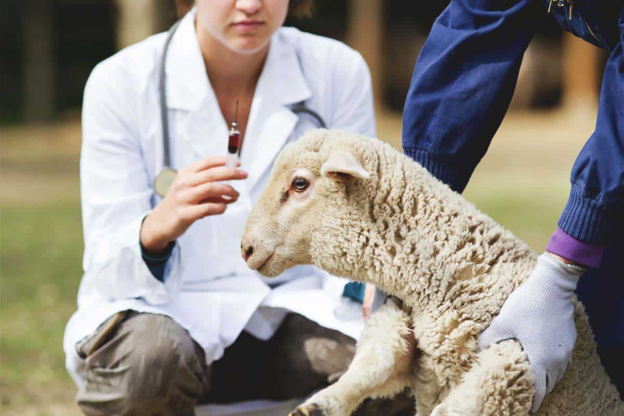
Live attenuated vaccines are described as being preferred over other vaccine types and are used in several regions where orf is endemic. An autologous vaccine can be prepared by triturating scab material in saline and adding penicillin/streptomycin. When administering a vaccination drop, the source specifies scarification of the inner thigh or another suitable region rather than the face or legs.
A live attenuated tissue-culture vaccine has been reported to reduce disease severity. Attenuated vaccines generally produce long-lasting immunity following a single injection, without the need for further boosters. The ORFV D1701 strain is identified as one effective live attenuated vaccine for sheep and goats. However, its limitations include the possibility of vaccine-virus spread and an inability to provide strong protection against reinfection.
Farm-Level Biosecurity1
Vaccination should be accompanied by sanitation and disinfection procedures. During an outbreak, isolating affected animals can help limit transmission. New animals should be confined before being introduced into the existing farm population.
The source also emphasizes reducing opportunities for damage to the mouth and muzzle. Animals should not be allowed access to plants, scratchy straw or feed that could produce wounds and provide opportunities for viral entry. Movement of animals between locations should also be restricted to reduce the possibility of spreading infection.
The conclusion further emphasizes quarantine where animals are exposed or infected. In areas where disease has become widespread, large-scale vaccination together with restrictions on animal movement is described as a practical approach for initial disease control and eventual eradication. The source also notes that some sheep and goats without visible signs may act as carriers and that the virus can remain on infected premises for months.
Protecting Veterinary Personnel and Farmers1,2
Orf is zoonotic, and people can become infected through direct contact with lesions. Shepherds, veterinarians, farmers involved in bottle-feeding newborn lambs, slaughterhouse workers and meat handlers are identified as groups at risk.
Appropriate precautions are therefore important when handling affected animals and vaccines. Impermeable gloves should be used, and hands should be washed with warm, soapy water or cleaned with hand sanitizer for 20 seconds after contact with sheep or goats. Farmer and animal-worker education should include recognition of clinical signs, routes of transmission and the possibility of recurrence following repeated viral exposure.
Carcass handling also requires care because transmission to humans occurs through direct contact with lesions. The source states that the virus does not infect the muscle tissue of affected animals and that thoroughly cooked meat is safe to consume.
Key Takeaway
Effective orf prevention requires a combined approach rather than reliance on a single intervention. Vaccination can play an important role, but quarantine, isolation of affected animals, sanitation, disinfection and movement restrictions remain relevant to limiting spread. Because ORFV can also infect people, veterinarians and animal handlers should use appropriate protective measures and reinforce farmer education, particularly during outbreaks.
References
- Bhagawati N, Shankarishan P, Habibi M. Contagious ecthyma in goat and sheep: a review of current status and future perspectives. Uttar Pradesh J Zool. 2025;46(10):229-239. doi:10.56557/UPJOZ/2025/v46i104982. https://mbimph.com/index.php/UPJOZ/article/view/4982/6394
- Nandi S, De UK, Chowdhury S. Current status of contagious ecthyma or orf disease in goat and sheep—A global perspective. Small ruminant research. 2011 Apr 1;96(2-3):73-82. https://doi.org/10.1016/j.smallrumres.2010.11.018
Related Contents
.jpg)
Video
Transjugular Removal of Canine Heartworms: A Clinical and Surgical Overview
Transjugular removal of canine heartworms is a specialized intervention used in selected dogs with s...

Article
Feline Pregnancy Endocrinology: Hormonal Changes and Placental Function
Pregnancy in cats involves a distinctive endocrine pattern in which ovarian and placental hormones w...

Article
Hormonal Control of Pregnancy Termination in Cats
Pregnancy maintenance in cats depends strongly on coordinated hormonal support, particularly progest...

Article
Feline Embryo Implantation and Early Placental Development
Pregnancy establishment in cats involves a sequence of precisely timed events between fertilization,...

Article
Ultrasonographic Monitoring of Pregnancy in Cats: A Gestational Timeline
Ultrasonography provides a practical way to follow the progression of feline pregnancy by identifyin...

Article
Feline Mismating: Pregnancy Diagnosis and Clinical Management
Mismating or unplanned mating is a common clinical problem in sexually mature queen cats because of...

Article
Medical Termination of Pregnancy in Queens: Drugs, Timing and Treatment Protocols
Medical termination of pregnancy (MTP) in queen cats should be approached according to the timing of...

Article
Safety and Aftercare Following Pregnancy Termination in Queen Cats
Pregnancy termination in queen cats requires more than selecting an appropriate abortifacient. Once...