Article
Diagnosing Caprine Mastitis: Practical Application of SCC, CMT, and Bacteriological Identification
Accurate diagnosis is a key component of effective mastitis management in dairy goats. While clinical mastitis can often be identified through visible udder changes and milk abnormalities, subclinical mastitis remains challenging because affected animals may not show apparent signs of infection. Delayed detection of subclinical infections can contribute to reduced milk production, poor milk quality, increased disease transmission within the herd, and economic losses1,2,3.
For veterinarians managing dairy goat farms, selecting appropriate diagnostic approaches requires an understanding of the advantages and limitations of available tools. Methods such as somatic cell count (SCC), California mastitis test (CMT), milk electrical conductivity testing, bacterial identification, and molecular techniques can support mastitis diagnosis when interpreted alongside clinical findings and herd-level risk factors.
Clinical Diagnosis of Mastitis
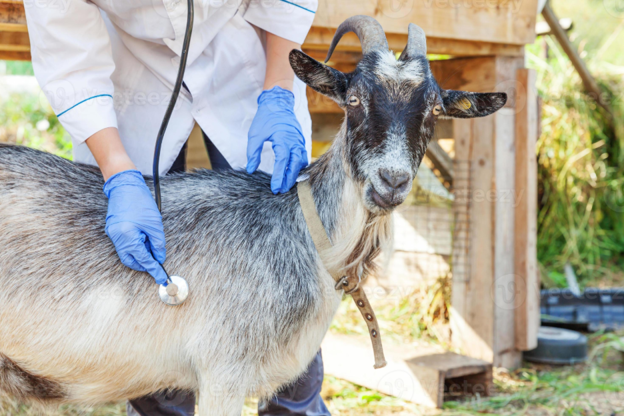
Clinical mastitis is generally identified through physical examination of the udder and assessment of milk changes. In affected goats, examination may reveal mammary gland swelling, increased firmness, heat, and pain. Changes in milk consistency, including clots, abnormal colour, unpleasant odour, and reduced milk production, are important diagnostic indicators4,5.
Systemic signs such as decreased feed intake, lethargy, and fever may also occur, particularly in severe cases. Veterinarians should consider these clinical findings together with the severity of inflammation while determining the need for further diagnostic evaluation.
Somatic Cell Count: A Useful Indicator with Limitations
Somatic cell count is widely used as an indicator of mammary gland inflammation. Somatic cells, mainly white blood cells, naturally occur in milk as part of the udder’s defence mechanism. However, increased levels may indicate an inflammatory response associated with intramammary infection6.
In goats, SCC interpretation requires careful consideration because healthy animals can naturally have higher somatic cell levels than cattle. This makes it difficult to establish a single universal SCC threshold for mastitis diagnosis in goats7.
Reported findings indicate that SCC greater than 0.5 × 10⁶ cells/ml detected intramammary infection with a sensitivity of 71.43%, whereas SCC greater than 1 × 10⁶ cells/ml showed a sensitivity of 23.23%8. Different thresholds have been applied, including 500,000 cells/ml, 1 × 10⁶ cells/ml, and 2 × 10⁶ cells/ml, reflecting the challenges in standardizing SCC interpretation for goat milk9.
Therefore, SCC should be considered as a supportive diagnostic parameter rather than a standalone confirmation tool.
California Mastitis Test (CMT) in Field Diagnosis
The California mastitis test is one of the most commonly used field-based screening methods for detecting subclinical mastitis. It is inexpensive, simple to perform, and does not require advanced laboratory facilities, making it useful for routine herd monitoring9.
The test works by reacting with somatic cells present in milk. The reagent disrupts cell membranes, allowing cellular DNA to interact and produce increased milk viscosity. The intensity of gel formation is graded visually, commonly ranging from 0 to +3 or 0 to +4 depending on the scoring system used9.
Despite its practical value, CMT has limitations in goats. Factors other than infection can influence SCC levels, reducing test specificity. The test detects approximately 80% of intramammary infections when milk somatic cells exceed 7 × 10⁶ cells/ml and around 62% when levels exceed 5 × 10⁶ cells/ml9. Therefore, CMT can serve as an initial screening method, but confirmatory testing is recommended before making important herd management decisions.
Bacteriological Identification: Confirming the Causative Agent
Bacteriological isolation and identification remain an important diagnostic approach for determining the organisms responsible for mastitis. Identifying the pathogen helps veterinarians make informed antimicrobial selection decisions and supports antimicrobial resistance management.
However, bacterial culture requires specialized facilities, trained personnel, and time, which can limit routine application, particularly in resource-limited settings. Targeted bacterial identification from pre-screened samples can help reduce unnecessary laboratory costs and improve diagnostic efficiency.
On-farm culture systems allow veterinarians to obtain information about bacterial involvement more rapidly and support strategic treatment decisions without waiting for delayed laboratory results. Rapid on-farm diagnostic tests have also demonstrated the potential to diagnose mastitis at the farm level with high sensitivity and specificity, allowing earlier decision-making in clinical practice9.
Additional Diagnostic Approaches9
Milk electrical conductivity testing evaluates changes in milk ions, including sodium, potassium, chloride, and calcium. Intramammary infections can increase ion levels due to altered tissue permeability, resulting in increased electrical conductivity. However, diagnostic accuracy depends on factors such as infection severity, stage, prevalence, and causative organism.
Molecular techniques such as polymerase chain reaction (PCR) provide another approach by detecting pathogen-specific DNA sequences. These methods can identify specific organisms and differentiate pathogen characteristics. Reported findings indicate that qPCR-based identification of Staphylococcus aureus can provide high sensitivity and specificity.
Practical Clinical Insights
- Combine clinical examination with diagnostic testing rather than relying on a single parameter.
- Interpret SCC values carefully because goat milk naturally differs from cow milk in somatic cell levels.
- Use CMT as a herd screening tool, but avoid making critical treatment or culling decisions based only on CMT results.
- Pathogen identification supports more responsible antimicrobial selection and improves mastitis control strategies.
Conclusion
Diagnosis of caprine mastitis requires a practical combination of clinical assessment, screening tests, and pathogen identification methods. SCC and CMT remain valuable tools for herd monitoring, but their limitations must be considered during interpretation. Bacteriological and molecular approaches provide additional information for targeted management decisions. A structured diagnostic approach enables veterinarians to identify infections earlier, improve treatment strategies, and support long-term udder health in dairy goat herds.
References
- Balemi A, Gumi B, Amenu K, Girma S, Gebru MU, Tekle M, Ríus AA, D’Souza DH, Agga GE, Kerro Dego O. Prevalence of mastitis and antibiotic resistance of bacterial isolates from CMT positive milk samples obtained from dairy cows, camels, and goats in two pastoral districts in Southern Ethiopia. Animals. 2021 May 24;11(6):1530. https://www.mdpi.com/2076-2615/11/6/1530
- Koop G, Islam MN, Rahman MM, Khatun M, Ferdous J, Sayeed MA, Islam S, Ahaduzzaman M, Akter S, Mannan A, Hassan MM. Risk factors and therapy for goat mastitis in a hospital-based case-control study in Bangladesh. Preventive veterinary medicine. 2016 Feb 1;124:52-7. https://www.academia.edu/download/116615607/j.prevetmed.2015.12.00720240706-1-q2zwew.pdf
- Smistad M, Sølverød L, Inglingstad RA, Østerås O. Distribution of somatic cell count and udder pathogens in Norwegian dairy goats. Journal of dairy science. 2021 Nov 1;104(11):11878-88. https://www.sciencedirect.com/science/article/pii/S0022030221007876
- Yan Y, Zhu K, Liu H, Fan M, Zhao X, Pan M, Ma B, Wei Q. The relationship between mastitis and antimicrobial peptide S100A7 expression in dairy goats. Veterinary Sciences. 2023 Nov 14;10(11):653. https://www.mdpi.com/2306-7381/10/11/653
- Rana EA, Das T, Dutta A, Rahman M, Bostami MB, Akter N, Barua H. Coagulase-positive methicillin-resistant Staphylococcus aureus circulating in clinical mastitic goats in Bangladesh. Veterinary World. 2020 Jul 11;13(7):1303. https://pmc.ncbi.nlm.nih.gov/articles/PMC7429371/pdf/Vetworld-13-1303.pdf
- Podhorecká K, Borková M, Šulc M, Seydlová R, Dragounová H, Švejcarová M, Peroutková J, Elich O. Somatic cell count in goat milk: An indirect quality indicator. Foods. 2021 May 11;10(5):1046. https://www.mdpi.com/2304-8158/10/5/1046
- Novac CȘ, Nadăș GC, Matei IA, Bouari CM, Kalmár Z, Crăciun S, Fiț NI, Dan SD, Andrei S. Milk pathogens in correlation with inflammatory, oxidative and nitrosative stress markers in goat subclinical mastitis. Animals. 2022 Nov 23;12(23):3245. https://www.mdpi.com/2076-2615/12/23/3245
- Tedde V, Bronzo V, Puggioni GM, Pollera C, Casula A, Curone G, Moroni P, Uzzau S, Addis MF. Milk cathelicidin and somatic cell counts in dairy goats along the course of lactation. Journal of Dairy Research. 2019 May;86(2):217-21. https://air.unimi.it/bitstream/2434/648476/2/Tedde%20et%20al_JDR_2019_Milk%20Cathelicidin%20and%20SCC%20in%20Dairy%20Goats%20Along%20the%20Course%20of%20Lactation.pdf
- Tibebu A, Teshome Y, Tamrat H, Bahiru A. Mastitis in goat: A review of etiology, epidemiology, economic impact, and public health concerns. One Health. 2025 Dec 1;21:101131. https://www.sciencedirect.com/science/article/pii/S2352771425001673
Related Contents
.jpg)
Video
Transjugular Removal of Canine Heartworms: A Clinical and Surgical Overview
Transjugular removal of canine heartworms is a specialized intervention used in selected dogs with s...

Article
Feline Pregnancy Endocrinology: Hormonal Changes and Placental Function
Pregnancy in cats involves a distinctive endocrine pattern in which ovarian and placental hormones w...

Article
Hormonal Control of Pregnancy Termination in Cats
Pregnancy maintenance in cats depends strongly on coordinated hormonal support, particularly progest...

Article
Feline Embryo Implantation and Early Placental Development
Pregnancy establishment in cats involves a sequence of precisely timed events between fertilization,...

Article
Ultrasonographic Monitoring of Pregnancy in Cats: A Gestational Timeline
Ultrasonography provides a practical way to follow the progression of feline pregnancy by identifyin...

Article
Feline Mismating: Pregnancy Diagnosis and Clinical Management
Mismating or unplanned mating is a common clinical problem in sexually mature queen cats because of...

Article
Medical Termination of Pregnancy in Queens: Drugs, Timing and Treatment Protocols
Medical termination of pregnancy (MTP) in queen cats should be approached according to the timing of...

Article
Safety and Aftercare Following Pregnancy Termination in Queen Cats
Pregnancy termination in queen cats requires more than selecting an appropriate abortifacient. Once...