Article
Practical Treatment of Ovine Footrot in Sheep: Evidence-Based Approaches for Veterinarians
Successful treatment of ovine footrot requires more than simply addressing individual lesions. The choice of therapy should consider the severity of disease, flock size, husbandry practices, management resources, and prevailing environmental conditions. A multifaceted approach is often necessary, combining prompt treatment of affected sheep with measures that minimise further transmission within the flock. Early intervention remains one of the most effective ways to reduce footrot-associated lameness, making timely identification and treatment a key component of clinical practice1,2,3,4.
Treat Early to Improve Outcomes
Once lameness compatible with footrot is identified, treatment should not be delayed. Prompt intervention within three days of the onset of lameness has been shown to substantially reduce the prevalence of footrot-related lameness1,2,3,4.
Treatment plans should always be tailored to the individual flock. Factors such as climate, housing, flock management, and available labour influence both treatment choices and the likelihood of successful disease control.
Foot Trimming: Use Judiciously1
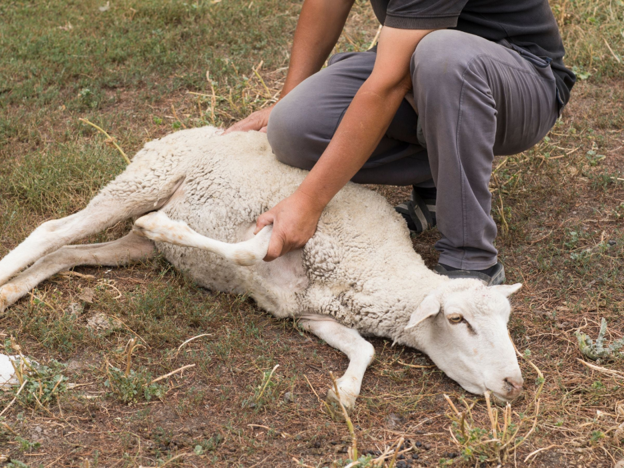
Functional foot trimming helps restore normal hoof shape and improve gait. In sheep affected by footrot, careful and minimal removal of loose, undermined horn can assist clinical assessment and expose diseased tissue without causing unnecessary trauma.
Routine or aggressive trimming, however, should be approached with caution. Frequent trimming has been associated with a higher prevalence of footrot, possibly because gathering sheep facilitates transmission of Dichelobacter nodosus and excessive trimming damages sensitive tissues, delays healing, and prolongs recovery.
Good hygiene during trimming is equally important. Knives should be decontaminated after every animal by wiping the blade with a disposable disinfecting towel containing 60% ethanol. Greater reduction of D. nodosus has been achieved when this is combined with immersion in 4% formaldehyde followed by a second mechanical cleaning. Disposable gloves should be changed between animals, and all horn trimmings should be collected and disposed of appropriately to minimise pathogen spread.
Footbathing as Part of Treatment
Footbathing continues to play an important role in the management of ovine footrot, although protocols vary considerably between production systems.
Effective footbathing begins with removal of mud and manure by passing sheep through clean water before entering the disinfectant solution. The disinfectant should reach a depth of at least 6 cm, and sheep should remain in the bath for a minimum of 10 minutes. Following treatment, animals should stand on a clean, firm surface until the hooves are completely dry1.
Several disinfectants are available:
- Zinc sulphate has been used successfully in flock treatment programmes. Weekly footbathing with a 10% zinc sulphate solution eliminated virulent D. nodosus from multiple sheep flocks within 6–19 weeks without antibiotics and with minimal culling, although complete eradication has not been achieved consistently under all circumstances1.
- Formaldehyde is generally used as a 2–5% solution. Concentrations above 5% may harden the hoof horn and lead to cracks following repeated use. Its effectiveness is also reduced by organic material, requiring more frequent replacement of the solution1.
- Copper sulphate remains an effective disinfectant and retains activity in the presence of organic matter. However, it poses environmental concerns, and improper management may result in copper toxicity if sheep ingest the solution1.
Newer disinfectants containing organic acids and glutaraldehyde have demonstrated promise as environmentally acceptable alternatives suitable for future footbath programmes5.
Antimicrobial Therapy
Antimicrobials remain an effective treatment option for clinically affected sheep. Prompt systemic and topical antibacterial therapy has been associated with reduced disease prevalence and incidence while improving animal health, welfare, and productivity1.
Clinical cure has been reported with several antimicrobial agents, including oxytetracycline, florfenicol, amoxicillin, penicillin-streptomycin, lincomycin-spectinomycin, enrofloxacin, gamithromycin, and erythromycin. Tilmicosin has not been recommended for flock elimination programmes1,6.
Antimicrobial selection should also consider responsible antimicrobial stewardship. Particular attention should be paid to prudent use of macrolides and quinolones, which are regarded as critically important antimicrobial classes and should be reserved for justified clinical situations1.
Pain Management
Footrot is a painful disease, and analgesia should form part of the overall treatment plan whenever pain is recognised. Although treatment with flunixin meglumine did not shorten recovery time from lameness, this finding should not discourage the use of non-steroidal anti-inflammatory drugs when animal welfare is a priority. Further work is needed to better define their analgesic benefits in sheep1.
Practical Clinical Insights
Successful treatment of ovine footrot relies on combining early diagnosis with prompt intervention and sound flock management. Minimal corrective trimming, appropriate footbathing, judicious antimicrobial therapy, effective pain management, and strict hygiene together provide a practical framework for reducing disease severity and limiting transmission. Individual treatment decisions should always be adapted to flock conditions, available resources, and antimicrobial stewardship principles while maintaining a strong focus on animal welfare.
References
- Zanolari P, Dürr S, Jores J, Steiner A, Kuhnert P. Ovine footrot: A review of current knowledge. The Veterinary Journal. 2021 May 1;271:105647. https://www.sciencedirect.com/science/article/pii/S1090023321000423
- Winter JR, Kaler J, Ferguson E, KilBride AL, Green LE. Changes in prevalence of, and risk factors for, lameness in random samples of English sheep flocks: 2004–2013. Preventive veterinary medicine. 2015 Nov 1;122(1-2):121-8. https://wrap.warwick.ac.uk/id/eprint/72942/8/WRAP_prevalence%20and%20risk%20July%202015%20final%20full%20paper.pdf
- Green L, Clifton R. Diagnosing and managing footrot in sheep: an update. In Practice. 2018 Jan;40(1):17-26. https://research.birmingham.ac.uk/files/54803223/Green_et_al_Diagnosing_and_Managing_In_Practice_2018.pdf
- Prosser NS, Purdy KJ, Green LE. Increase in the flock prevalence of lameness in ewes is associated with a reduction in farmers using evidence-based management of prompt treatment: A longitudinal observational study of 154 English sheep flocks 2013–2015. Preventive Veterinary Medicine. 2019 Dec 1;173:104801. https://www.sciencedirect.com/science/article/pii/S0167587718307487
- Hidber T, Pauli U, Steiner A, Kuhnert P. In vitro and ex vivo testing of alternative disinfectants to currently used more harmful substances in footbaths against Dichelobacter nodosus. PLoS One. 2020 Feb 13;15(2):e0229066. https://journals.plos.org/plosone/article/file?id=10.1371/journal.pone.0229066&type=printable
- Kraft AF, Strobel H, Hilke J, Steiner A, Kuhnert P. The prevalence of Dichelobacter nodosus in clinically footrot-free sheep flocks: a comparative field study on elimination strategies. BMC veterinary research. 2020 Jan 22;16(1):21. https://link.springer.com/content/pdf/10.1186/s12917-020-2243-8.pdf
Related Contents
.jpg)
Video
Transjugular Removal of Canine Heartworms: A Clinical and Surgical Overview
Transjugular removal of canine heartworms is a specialized intervention used in selected dogs with s...

Article
Feline Pregnancy Endocrinology: Hormonal Changes and Placental Function
Pregnancy in cats involves a distinctive endocrine pattern in which ovarian and placental hormones w...

Article
Hormonal Control of Pregnancy Termination in Cats
Pregnancy maintenance in cats depends strongly on coordinated hormonal support, particularly progest...

Article
Feline Embryo Implantation and Early Placental Development
Pregnancy establishment in cats involves a sequence of precisely timed events between fertilization,...

Article
Ultrasonographic Monitoring of Pregnancy in Cats: A Gestational Timeline
Ultrasonography provides a practical way to follow the progression of feline pregnancy by identifyin...

Article
Feline Mismating: Pregnancy Diagnosis and Clinical Management
Mismating or unplanned mating is a common clinical problem in sexually mature queen cats because of...

Article
Medical Termination of Pregnancy in Queens: Drugs, Timing and Treatment Protocols
Medical termination of pregnancy (MTP) in queen cats should be approached according to the timing of...

Article
Safety and Aftercare Following Pregnancy Termination in Queen Cats
Pregnancy termination in queen cats requires more than selecting an appropriate abortifacient. Once...