Article
Recognising Equine Gastric Ulcers: Clinical Signs and Diagnostic Challenges
One of the greatest challenges in managing equine gastric ulcer disease is that many affected horses show subtle or no obvious clinical signs.
More Than Just Colic
Classic signs associated with gastric ulceration include:
- Recurrent mild colic
- Reduced appetite
- Weight loss
- Poor body condition
- Girth sensitivity1
However, behavioural changes may be equally important indicators.
Behavioural Clues
Affected horses may display:
- Irritability
- Aggression
- Nervousness
- Teeth grinding
- Self-mutilation
- Poor coat quality1
Because these signs are often attributed to temperament or training issues, gastric disease may be overlooked.
The Performance Connection
Both ESGD and EGGD have been associated with reduced athletic performance2.
Experimental studies demonstrated measurable reductions in aerobic performance in horses with induced gastric ulceration1.
Gastroscopy Remains the Gold Standard
Definitive diagnosis requires gastroscopy using an endoscope at least 2.5–3 metres long to allow visualization of both squamous and glandular regions1.
Gastroscopy not only confirms disease presence but also enables lesion grading and treatment monitoring.
Limitations of Current Diagnostics
Although gastroscopy is highly valuable, it may underestimate lesion severity compared with histopathology1.
Alternative diagnostics such as:
- Sucrose permeability testing
- Faecal occult blood testing
- Serum biomarkers
have been investigated, but none currently match the diagnostic accuracy of gastroscopy1.
Conclusion
Equine gastric ulcers often present with subtle clinical signs that extend far beyond gastrointestinal discomfort. Gastroscopy remains essential for definitive diagnosis and accurate assessment of disease severity.
References
- van den Boom R. Equine gastric ulcer syndrome in adult horses. The Veterinary Journal. 2022 May 1;283:105830. https://doi.org/10.1016/j.tvjl.2022.105830
- Sykes BW, Bowen M, Habershon-Butcher JL, Green M, Hallowell GD. Management factors and clinical implications of glandular and squamous gastric disease in horses. Journal of Veterinary Internal Medicine. 2019 Jan;33(1):233-40. https://doi.org/10.1111/jvim.15350
Related Contents
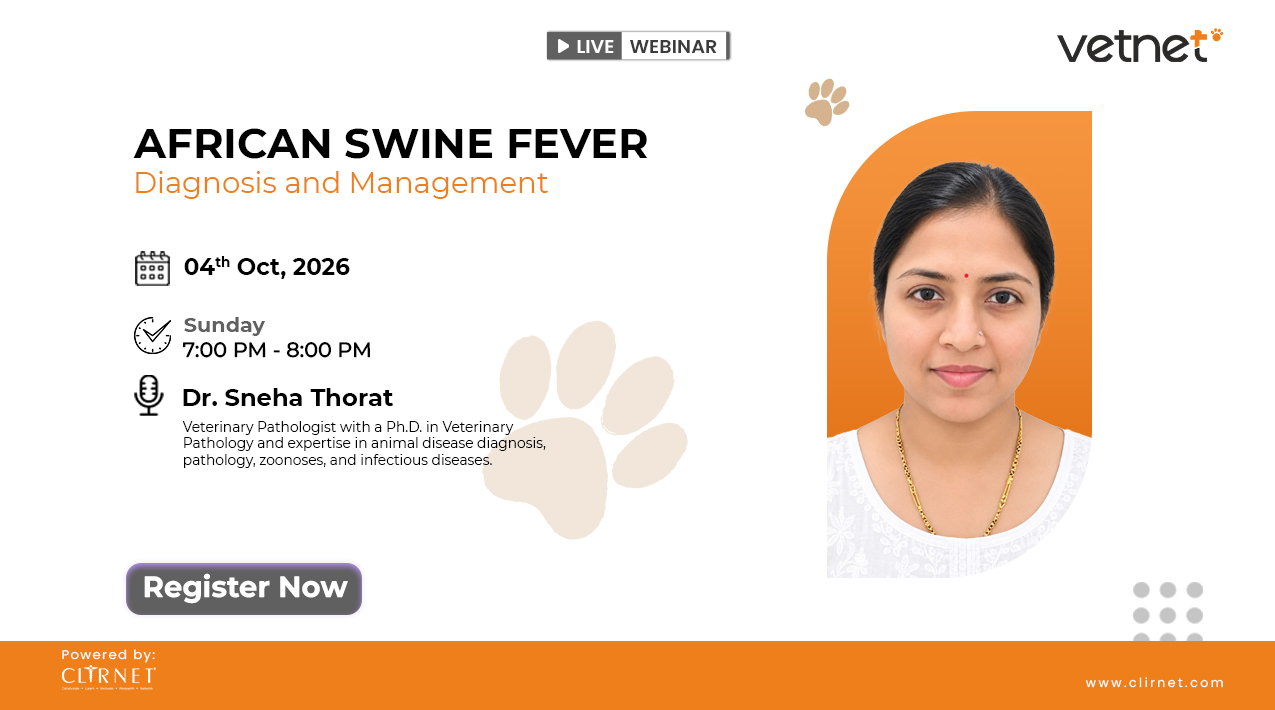
Upcoming Event
African Swine Fever: Diagnosis and Management
African swine fever can cause severe disease and significant losses in affected pig populations.&nbs...
.jpg)
Video
Transjugular Removal of Canine Heartworms: A Clinical and Surgical Overview
Transjugular removal of canine heartworms is a specialized intervention used in selected dogs with s...

Article
Feline Pregnancy Endocrinology: Hormonal Changes and Placental Function
Pregnancy in cats involves a distinctive endocrine pattern in which ovarian and placental hormones w...

Article
Hormonal Control of Pregnancy Termination in Cats
Pregnancy maintenance in cats depends strongly on coordinated hormonal support, particularly progest...

Article
Feline Embryo Implantation and Early Placental Development
Pregnancy establishment in cats involves a sequence of precisely timed events between fertilization,...

Article
Ultrasonographic Monitoring of Pregnancy in Cats: A Gestational Timeline
Ultrasonography provides a practical way to follow the progression of feline pregnancy by identifyin...

Article
Feline Mismating: Pregnancy Diagnosis and Clinical Management
Mismating or unplanned mating is a common clinical problem in sexually mature queen cats because of...

Article
Medical Termination of Pregnancy in Queens: Drugs, Timing and Treatment Protocols
Medical termination of pregnancy (MTP) in queen cats should be approached according to the timing of...