Article
Persistent Breeding-Induced Endometritis in Mares: Pathogenesis, Diagnosis and Management
Some degree of uterine inflammation is a normal response to breeding in mares. After mating or insemination, the uterus typically develops transient inflammation, characterized by an influx of polymorphonuclear leukocytes (PMNs) and free fluid within the uterine lumen. This response normally resolves within 24–36 hours1,2.
The clinical concern arises when the mare cannot efficiently clear sperm, bacteria, inflammatory cells, and debris. If uterine clearance remains inadequate beyond approximately 36–48 hours, the condition is termed persistent breeding-induced endometritis (PBIE). Such mares are more susceptible to secondary bacterial infection2.
Why Does PBIE Develop?
Effective uterine clearance depends on two closely linked mechanisms: myometrial contractions and an appropriate innate immune response.
During the first 24 hours after breeding, inflammatory mediators, including interleukin (IL)-1β, IL-8, and interferon-γ, increase accompanied by activation and recruitment of PMNs1. These cells phagocytose bacteria and release lytic enzymes that help control contamination.
The inflammatory response must then resolve appropriately. In susceptible mares, prolonged or dysregulated inflammation is associated with increased pro-inflammatory cytokine expression, reduced anti-inflammatory cytokine expression, and persistent PMN accumulation2,3,4.
Mechanical clearance is equally important. Myometrial contractions, stimulated by oxytocin and prostaglandin-F2α produced by PMNs, move uterine contents through the cervix and into the vagina. Lymphatic drainage also contributes to the removal of intrauterine fluid2.
Anatomical or functional abnormalities can interfere with this process. Poor perineal conformation, vaginal stretching, incomplete cervical opening, pendulous uterus, and myometrial or endometrial degeneration may impair uterine clearance. Increasing age and repeated foaling have also been associated with anatomical changes that can compromise clearance. In aged mares, myoelectrical activity may also be impaired1.
From Persistent Inflammation to Infection
PBIE can create conditions favourable for secondary bacterial infection. Bacteria may be introduced during breeding, ascend from the vagina, or become activated from a dormant state within the endometrium2,5.
Commonly identified organisms include Escherichia coli and Streptococcus zooepidemicus2. S. zooepidemicus can persist deep within endometrial tissue in chronically infected mares and may not be detected by standard bacterial culture technique1,6.
Practical Diagnosis
History is an essential starting point. Consider the mare's age, parity, reproductive status, foaling history and previous uterine infection or treatment.
Clinically, look for:
- Vulvar discharge
- Cervical discharge on speculum examination
- Free intrauterine fluid on transrectal ultrasonography
These findings should be supported by laboratory assessment, particularly endometrial cytology and bacterial culture with antimicrobial sensitivity testing7.
Endometrial biopsy or hysteroscopy may be considered according to the clinical situation. Because endometritis in mares is primarily a localized uterine condition, blood parameters are not considered diagnostically useful2.
Ultrasonography is particularly valuable for identifying persistent intrauterine fluid. A uterine fluid accumulation exceeding 2 cm in diameter should prompt consideration of uterine lavage in susceptible mares2.
Management: Prioritize Uterine Clearance
Management should primarily aim to restore physiological uterine clearance. Ecbolic treatment using oxytocin, PGF2α, or analogues may be combined with uterine lavage when fluid and inflammatory debris persist.
PGF2α and its analogues should not be continued after ovulation because of potential detrimental effects on luteal development.
Uterine lavage with sterile saline or lactated Ringer's solution may assist mechanical clearance when ultrasonography demonstrates significant fluid accumulation.
Anti-inflammatory approaches may help normalize excessive inflammatory responses, while several immunomodulatory approaches remain under development. Antibiotic treatment should not be used routinely; when bacterial infection is suspected, treatment should be guided by clinical findings, bacterial culture, and antimicrobial sensitivity testing (Nocera et al., 2021).
Clinical Takeaway
PBIE is not simply an infection following mating. It reflects failure to rapidly resolve a normal inflammatory response and efficiently clear uterine contents. For the practicing veterinarian, postbreeding ultrasonography, assessment of uterine clearance and targeted cytological and bacteriological evaluation provide a practical basis for identifying susceptible mares and selecting appropriate management.
References
- Christoffersen M, Woodward E, Bojesen AM, Jacobsen S, Petersen MR, Troedsson MH, Lehn-Jensen H. Inflammatory responses to induced infectious endometritis in mares resistant or susceptible to persistent endometritis. BMC veterinary research. 2012 Mar 29;8(1):41. https://link.springer.com/content/pdf/10.1186/1746-6148-8-41.pdf
- Pascottini OB, Aurich C, England G, Grahofer A. General and comparative aspects of endometritis in domestic species: A review. Reproduction in domestic animals. 2023 Sep;58:49-71. https://onlinelibrary.wiley.com/doi/pdfdirect/10.1111/rda.14390
- Christoffersen M, Troedsson MH. Inflammation and fertility in the mare. Reproduction in Domestic Animals. 2017 Aug;52:14-20. https://www.researchgate.net/profile/Marta-Montillo/publication/319328506
- Woodward EM, Christoffersen M, Campos J, Betancourt A, Horohov D, Scoggin KE, Squires EL, Troedsson MH. Endometrial inflammatory markers of the early immune response in mares susceptible or resistant to persistent breeding-induced endometritis. Reproduction. 2013 Mar 1;145(3):289-96. https://www.researchgate.net/profile/Mette-Christoffersen/publication/236197400
- Davis HA, Stanton MB, Thungrat K, Boothe DM. Uterine bacterial isolates from mares and their resistance to antimicrobials: 8,296 cases (2003–2008). Journal of the American Veterinary Medical Association. 2013 Apr 1;242(7):977-83. https://www.researchgate.net/profile/Kamoltip-Thungrat/publication/236069244
- Skive B, Rohde M, Molinari G, Braunstein TH, Bojesen AM. Streptococcus equi subsp. zooepidemicus invades and survives in epithelial cells. Frontiers in Cellular and Infection Microbiology. 2017 Nov 6;7:465. https://www.frontiersin.org/journals/cellular-and-infection-microbiology/articles/10.3389/fcimb.2017.00465/pdf
- Scott CJ, de Mestre AM, Verheyen KL, Arango-Sabogal JC. Bayesian accuracy estimates and fit for purpose thresholds of cytology and culture of endometrial swab samples for detecting endometritis in mares. Preventive Veterinary Medicine. 2022 Dec 1;209:105783. https://papers.ssrn.com/sol3/Delivery.cfm?abstractid=4107137
- Nocera FP, D’Eletto E, Ambrosio M, Fiorito F, Pagnini U, De Martino L. Occurrence and antimicrobial susceptibility profiles of Streptococcus equi subsp. zooepidemicus strains isolated from mares with fertility problems. Antibiotics. 2021 Dec 27;11(1):25. https://www.mdpi.com/2079-6382/11/1/25
Related Contents
Upcoming Event
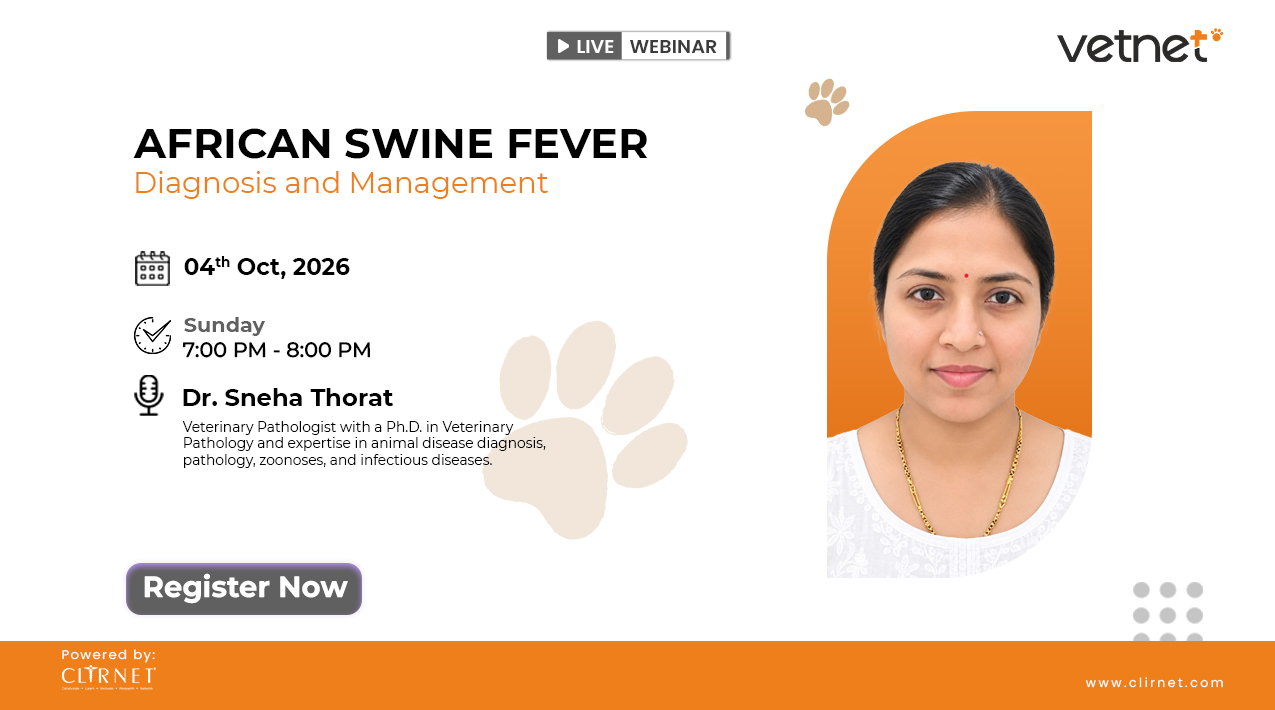
African Swine Fever: Diagnosis and Management
African swine fever can cause severe disease and significant losses in affected pig populations.&nbs...
.jpg)
Video
Transjugular Removal of Canine Heartworms: A Clinical and Surgical Overview
Transjugular removal of canine heartworms is a specialized intervention used in selected dogs with s...

Article
Feline Pregnancy Endocrinology: Hormonal Changes and Placental Function
Pregnancy in cats involves a distinctive endocrine pattern in which ovarian and placental hormones w...

Article
Hormonal Control of Pregnancy Termination in Cats
Pregnancy maintenance in cats depends strongly on coordinated hormonal support, particularly progest...

Article
Feline Embryo Implantation and Early Placental Development
Pregnancy establishment in cats involves a sequence of precisely timed events between fertilization,...

Article
Ultrasonographic Monitoring of Pregnancy in Cats: A Gestational Timeline
Ultrasonography provides a practical way to follow the progression of feline pregnancy by identifyin...

Article
Feline Mismating: Pregnancy Diagnosis and Clinical Management
Mismating or unplanned mating is a common clinical problem in sexually mature queen cats because of...

Article
Medical Termination of Pregnancy in Queens: Drugs, Timing and Treatment Protocols
Medical termination of pregnancy (MTP) in queen cats should be approached according to the timing of...