
Article
Diagnosing Fasciolosis in Sheep: Selecting Appropriate Tests at Different Infection Stages
A negative faecal examination does not necessarily rule out fasciolosis in sheep. During early infection, immature flukes migrate through the liver without producing eggs. Consequently, relying exclusively on faecal testing may delay diagnosis, particularly when affected animals already show clinical signs.
An effective diagnostic approach requires selecting appropriate tests according to the stage of infection, clinical presentation, and purpose of investigation.
Faecal Examination: Useful for Detecting Established Infection[1]
Coproscopy using the flotation technique is commonly used to detect Fasciola hepatica eggs in faecal samples. Its main advantage is that a positive result indicates a current egg-producing infection.
However, this method has important limitations. It cannot detect immature, non-reproducing flukes and may have reduced sensitivity when parasite burdens are low. Intermittent egg shedding and the release of eggs from the gallbladder can also affect interpretation.
Coproscopy may therefore be unsuitable as the sole diagnostic approach for early infection or large-scale flock screening.
Serology: Detecting Exposure Before Egg Production[1],[2]
ELISA-based serological tests can improve diagnostic sensitivity, particularly during the prepatent period. Antibodies against F. hepatica may become detectable within 2–4 weeks after ingestion of metacercariae.
This allows earlier detection than faecal examination. However, antibody detection does not necessarily confirm an active infection. Antibodies may persist for several months after parasite elimination, making it difficult to distinguish current from previous exposure.
Interpretation also requires consideration of the animal's age and grazing history. Maternal antibodies may persist in lambs for up to 12 weeks. Consequently, serological testing is not recommended during the first two months on pasture.
Another limitation is the lack of a clear correlation between antibody titre and actual fluke burden. Serological findings should therefore be interpreted alongside clinical and flock-level information.
Molecular Methods: Opportunities for Earlier Detection
Molecular techniques offer additional diagnostic options for identifying F. hepatica in faecal samples.
Available methods include[2],[3],[4]:
- Polymerase chain reaction (PCR): Nested PCR has demonstrated the ability to detect infection approximately two weeks after exposure.
- Loop-mediated isothermal amplification (LAMP): Detection may be possible as early as one week after infection.
- Recombinase polymerase amplification (RPA): This technique may be particularly useful in resource-limited settings because it does not require thermal cycler equipment or highly trained personnel.
Despite these advantages, improvements in DNA extraction methods are still required to achieve more reliable molecular testing.
Abattoir Findings: An Additional Diagnostic Resource[2]
Meat inspection findings can contribute to the identification of fasciolosis, particularly in slaughtered lambs. Liver lesions and evidence of fluke infection may reveal problems within a flock before obvious clinical disease develops.
However, abattoir surveillance may lack sensitivity and should not be considered a substitute for individual animal testing.
Clinical Bottom Line
No single diagnostic method is suitable for every stage of fasciolosis. Faecal examination is useful for established infections, serology can support earlier detection, and molecular techniques offer opportunities to identify infection during the prepatent period.
For practicing veterinarians, interpreting test results alongside clinical findings, grazing history and flock information is essential to avoid overlooking early infections or misinterpreting evidence of previous exposure.
References:
- Munita MP, Rea R, Martinez-Ibeas AM, Byrne N, Kennedy A, Sekiya M, Mulcahy G, Sayers R. Comparison of four commercially available ELISA kits for diagnosis of Fasciola hepatica in Irish cattle. BMC veterinary research. 2019 Nov 21;15(1):414. https://link.springer.com/content/pdf/10.1186/s12917-019-2160-x.pdf
- Stuen S, Ersdal C. Fasciolosis—an increasing challenge in the sheep industry. Animals. 2022 Jun 8;12(12):1491. https://www.mdpi.com/2076-2615/12/12/1491
- Martínez-Valladares M, Rojo-Vázquez FA. Loop-mediated isothermal amplification (LAMP) assay for the diagnosis of fasciolosis in sheep and its application under field conditions. Parasites & Vectors. 2016 Feb 5;9(1):73. https://link.springer.com/content/pdf/10.1186/s13071-016-1355-2.pdf
- Amiri S, Shemshadi B, Shirali S, Kheirandish F, Fallahi S. Accurate and rapid detection of Fasciola hepatica copro‐DNA in sheep using loop‐mediated isothermal amplification (LAMP) technique. Veterinary medicine and science. 2021 Jul;7(4):1316-24. https://onlinelibrary.wiley.com/doi/pdfdirect/10.1002/vms3.455
Related Contents

Article
Fasciolosis in Sheep: Recognising Clinical Presentations and Disease Progression
A sheep presenting with progressive weight loss, pale mucous membranes and submandibular oedema may...

Article
Flukicide Treatment and Resistance in Sheep: Assessing Drug Efficacy and Managing Treatment Failure
Repeated flukicide treatment does not necessarily translate into effective liver fluke control. Shee...

Article
Pasture Management for Fasciolosis in Sheep: Identifying High-Risk Grazing Areas and Seasonal Exposure
Wet pastures, standing water and poorly managed grazing areas can create favourable conditions for l...

Article
Fasciolosis in Sheep: How Liver Damage Affects Productivity and Reproductive Performance
A sheep flock may experience declining productivity even when only a few animals show obvious signs...
Upcoming Event
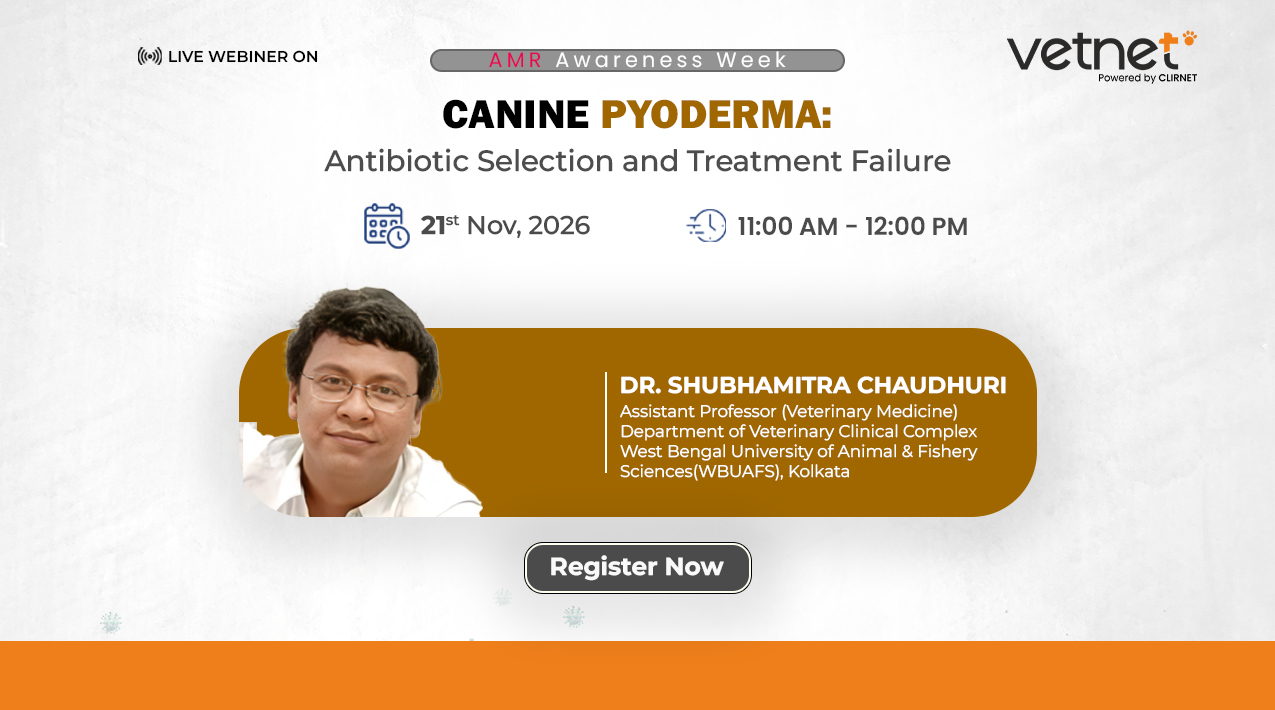
Canine Pyoderma: Antibiotic Selection and Treatment Failure
Strengthen your approach to canine pyoderma with informed antibiotic selection and appropriate diagn...

Upcoming Event
Canine Pyoderma: Antibiotic Selection and Treatment Failure
Explore antibiotic selection, treatment challenges and approaches to managing canine pyoderma cases...
Article
Recognising Leptospirosis Across Animal Species: Clinical Presentations and Organ-Specific Changes
A dog presents with fever and systemic illness, while cattle experience reproductive failure without...

Article
Psychogenic Polydipsia in Dogs: Recognising Behavioural Triggers and Clinical Indicators
A dog presents with persistent excessive drinking and urination, yet its physical examination reveal...