Article
Chronic Canine Otitis: Recognising the Red Flags Before It Becomes End-Stage Ear Disease
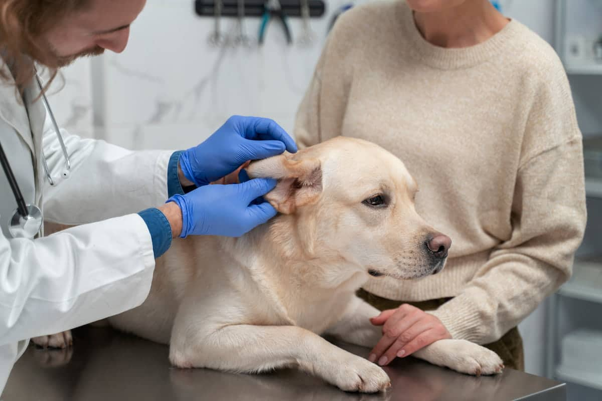
Most chronic ear cases don't become severe overnight.
They progress gradually—often because inflammation is underestimated, follow-up is delayed, or underlying disease remains untreated.
By the time fibrosis and stenosis develop, medical management becomes significantly more challenging.
Chronic Inflammation Changes the Ear Canal
Persistent inflammation causes structural changes that make future infections more likely.
These include1,2:
- Glandular hyperplasia
- Excessive cerumen production
- Hyperkeratosis
- Fibrosis
- Canal stenosis
- Mineralization in advanced disease
These changes create an ideal environment for bacteria and yeast, resulting in a cycle of chronic infection and inflammation.
Hearing Loss May Be Reversible
Owners occasionally report that their dog has become less responsive to commands during an ear infection.
Conductive hearing loss may occur because of1,3:
- Cerumen accumulation
- Purulent discharge
- Swollen ear canals
- Canal narrowing
In many patients, hearing improves considerably once the ear canal is cleaned and inflammation resolves.
Not every case of hearing loss represents permanent neurological damage.
When Should You Suspect Otitis Media?
Middle ear involvement is more common than many clinicians realise, particularly in chronic cases.
Consider otitis media when you observe1:
- Recurrent otitis despite appropriate treatment
- Persistent purulent discharge
- Neurological abnormalities
- Head tilt
- Facial nerve deficits
- Nystagmus
- Poor response to therapy
Remember:
An intact tympanic membrane does not rule out middle ear disease.
Imaging Has Its Place
Routine imaging isn't necessary for uncomplicated otitis externa.
However, advanced cases may benefit from imaging when1:
- Otitis media is suspected
- Ear canal masses are present
- Surgery is being considered
- Chronic disease fails to respond appropriately
CT imaging provides superior assessment of the tympanic bulla compared with conventional radiography.
Don't Wait Too Long to Refer
Referral should be considered when dogs present with:
- Chronic otitis
- Recurrent infections
- Severe canal stenosis
- Suspected otitis media
- Persistent Pseudomonas infections
- Cases requiring video otoscopy or deep ear flushing
Early referral often prevents irreversible ear canal damage and improves long-term patient outcomes.
Client Education Is Preventive Medicine
Many owners stop treatment as soon as scratching decreases.
Explain that:
- Clinical improvement does not equal microbiological cure.
- Follow-up cytology is essential.
- Recurrence usually indicates an unresolved underlying cause rather than treatment failure.
Setting expectations early greatly improves compliance and reduces recurrence.
Clinical Takeaway
The longer inflammation persists, the harder otitis becomes to treat.
Early diagnosis, routine cytology, appropriate ear cleaning, investigation of underlying disease, and timely referral can prevent many dogs from progressing to chronic, irreversible ear disease.
Reference
- Bajwa J. Canine otitis externa—Treatment and complications. The Canadian Veterinary Journal. 2019 Jan;60(1):97. https://pmc.ncbi.nlm.nih.gov/articles/PMC6294027/pdf/cvj_01_97.pdf
- Nuttall T. Managing recurrent otitis externa in dogs: what have we learned and what can we do better?. Journal of the American Veterinary Medical Association. 2023 Jun 1;261(S1):S10-22. https://www.research.ed.ac.uk/files/332390919/JAVMA_otitis_review_2022_unformatted_version_2.pdf
- Secker B, Shaw S, Atterbury RJ. Pseudomonas spp. in canine otitis externa. Microorganisms. 2023 Oct 28;11(11):2650. https://www.mdpi.com/2076-2607/11/11/2650
Related Contents

Upcoming Event
Canine Pyoderma: Antibiotic Selection and Treatment Failure
Strengthen your approach to canine pyoderma with informed antibiotic selection and appropriate diagn...

Upcoming Event
Canine Pyoderma: Antibiotic Selection and Treatment Failure
Explore antibiotic selection, treatment challenges and approaches to managing canine pyoderma cases...
Article
Recognising Leptospirosis Across Animal Species: Clinical Presentations and Organ-Specific Changes
A dog presents with fever and systemic illness, while cattle experience reproductive failure without...
Article
Psychogenic Polydipsia in Dogs: Recognising Behavioural Triggers and Clinical Indicators
A dog presents with persistent excessive drinking and urination, yet its physical examination reveal...
Article
Diagnostic Approach to Canine PU/PD: Differentiating Primary Polydipsia from Primary Polyuria
Persistent excessive drinking and urination can be the presenting signs of several conditions in dog...
.jpg)
Upcoming Event
Culture-Guided Treatment of UTIs in Dogs and Cats
Make informed antibiotic choices in canine and feline UTIs with a culture-guided approach. Explore h...
Article
Managing Psychogenic Polydipsia in Dogs: Water Intake, Behavioural Therapy and Pharmacological Intervention
Once psychogenic polydipsia (PPD) has been identified, management needs to address more than the vol...
Article
Duck Viral Hepatitis in Ducklings: Clinical Recognition and Differential Diagnosis
A sudden rise in mortality among young ducklings, particularly those under three weeks of age, shoul...