Article
Fungal and Oomycete Infections in Fish: Recognising Environmental and Clinical Triggers
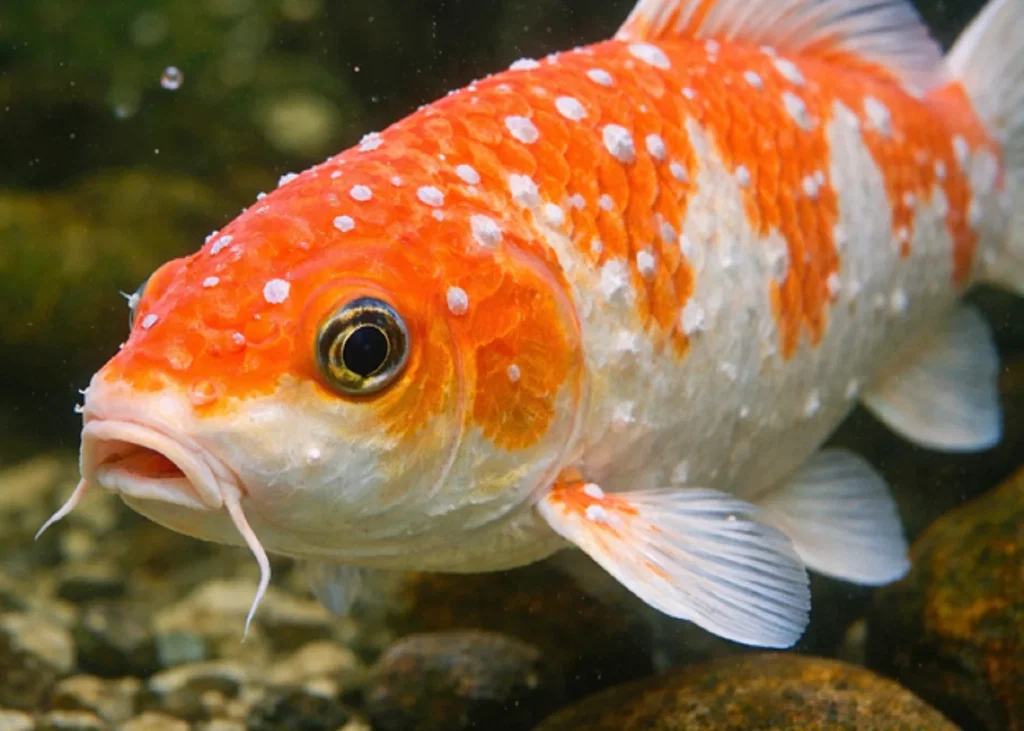
Fungal disease in a fish population may appear after another illness, mechanical injury, or a period of environmental stress. In such situations, visible fungal growth may not represent the initial problem. The clinical context in which the infection develops can be just as important as the lesion itself.
Aquatic fungi can affect eggs, fry, fingerlings, and adult fish. Many are considered secondary attackers, affecting fish that are already diseased, mechanically damaged, or affected by another infection. Oomycetes are particularly important in freshwater aquaculture, with genera including Aphanomyces, Saprolegnia, Achlya, Calyptratheca, Pythiopsis, Thraustotheca, Leptolegnia and Leptomitus.
Saprolegniasis: Consider the conditions surrounding infection
Saprolegniasis is a prevalent infection of freshwater and estuarine fish, including fish in warm and equatorial waters. Saprolegnia species are classical opportunists and feed saprophytically on dead organic material.
The infection is also associated with immunosuppression, making the condition of the host an important consideration when fungal disease is identified.
Temperature can influence the development of Saprolegnia infection. Outbreaks may occur near the physiologically low temperatures tolerated by particular fish species[1].
Therefore, when fungal disease appears, environmental assessment should accompany examination of affected fish rather than focusing only on the visible fungal involvement.
Branchiomycosis: The gills reveal the problem
Branchiomycosis is associated with Branchiomyces demigrans and B. sanguinis and has been reported as a significant problem in Europe and Taiwan.
The disease is associated with environmental stressors including:
- Low pH
- Low dissolved oxygen
- High algal blooms
Fungal spores and detritus present on pond bottoms are described as important sources of infection[2].
Both B. demigrans and B. sanguinis infect gill tissue and can produce a mottled appearance along with thrombosis and ischaemia. Their tissue distribution provides an additional distinction: B. demigrans affects the entire gill, whereas B. sanguinis is restricted to the gill blood vessels[2].
For clinical examination, therefore, the gills deserve particular attention when fish are maintained under stressful water-quality conditions.
EUS: Ulcerative lesions with a granulomatous response
Epizootic ulcerative syndrome (EUS) is a significant periodic epizootic affecting farmed and estuarine fish.
It is associated with invasive infection by Aphanomyces invadans and is characterised by necrotising ulcerative lesions, often accompanied by a granuloma response[2].
The condition was previously referred to as epizootic granulomatous aphanomycosis and has spread widely since being reported in Japan in 1971[2].
The combination of ulceration and granulomatous response makes EUS clinically distinct from superficial fungal involvement alone.
Ichthyophoniasis: An internal fungal disease
Unlike infections primarily recognised through external lesions, ichthyophoniasis involves an internal fungus and causes granulomatosis in freshwater and marine fish.
Clinical signs include a rough skin surface and ring-shaped nodules, with a granulomatous response. The disease may occur in acute or chronic forms.
The inflammatory response differs between these forms. Acute disease is associated with minimal inflammatory response, whereas chronic disease involves a strong, chronic inflammatory response[3].
Clinical bottom line
Fungal and oomycete infections should be interpreted within the host and environmental context.
A fish with fungal disease may already have underlying disease, mechanical damage or other factors affecting its condition. Low dissolved oxygen, low pH, algal blooms, and temperature can also be relevant depending on the infection.
For practicing veterinarians, recognising the type of lesion, tissue involved and environmental conditions surrounding the outbreak can help distinguish among important fungal and oomycete diseases and support a more targeted fish-health assessment.
References:
- Earle G, Hintz W. New approaches for controlling Saprolegnia parasitica, the causal agent of a devastating fish disease. Tropical life sciences research. 2014 Dec;25(2):101. https://pmc.ncbi.nlm.nih.gov/articles/PMC4814142/pdf/tlsr-25-2-101.pdf
- Senthamarai MD, Rajan MR, Bharathi PV. Current risks of microbial infections in fish and their prevention methods: A review. Microbial pathogenesis. 2023 Dec 1;185:106400. https://www.researchgate.net/profile/Rajan-Muthuswami-Ruby/publication/375006029
- Kocan R, Hershberger P, Winton J. Ichthyophoniasis: an emerging disease of Chinook salmon in the Yukon River. Journal of Aquatic Animal Health. 2004 Jun;16(2):58-72. https://www.researchgate.net/profile/Richard-Kocan/publication/237834719
Related Contents

Article
FGF-23 in Feline CKD: An Early Signal of Phosphate Dysregulation
A cat with early chronic kidney disease (CKD) may have a normal serum phosphate concentration. Does...

Article
Albuminuria or Transferrinuria? Reading the Glomerular Signal in Feline CKD
A cat can have chronic kidney disease (CKD) with only mild proteinuria. So, when urinary protein is...
Article
Tubular Injury Biomarkers in Feline CKD: What Can NGAL, KIM-1 and L-FABP Tell You?
When feline CKD is already suspected, identifying reduced renal function is only part of the clinica...
Article
Can Renal Fibrosis Biomarkers Reveal CKD Progression in Cats?
Chronic kidney disease in cats is not only a problem of declining renal function. Structural changes...
Article
When Creatinine May Not Tell the Full Story in Feline Acute Kidney Injury
Serum creatinine is routinely used with changes in urine output to diagnose and grade Acute Kidney I...
Article
When a Normal-Looking Udder Hides Mastitis: Recognising Subclinical Mastitis in Buffaloes
A buffalo can appear clinically normal while mastitis is already affecting the udder and milk produc...
Article
Buffalo Subclinical Mastitis: Which Risk Factors Should Vets Investigate?
When subclinical mastitis (SCM) keeps appearing in a buffalo herd, looking only at the affected anim...

Article
Chronic Cough in Dogs and Cats: How to Classify and Localize It
A dog has been coughing for several weeks. The owner describes it as “honking,” but the...