Article
Beyond the Herd: Applying a One Health Approach to Bovine Tuberculosis Control in India
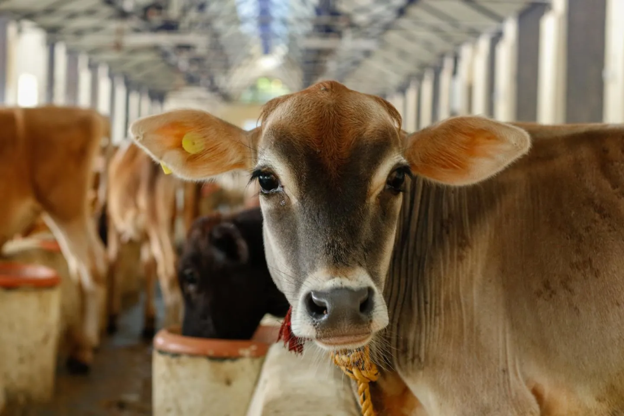
Bovine tuberculosis (bTB) is more than a chronic infectious disease affecting cattle; it is a shared challenge at the interface of animal health, human health, wildlife, and the environment. India has approximately 303.76 million bovines and one of the world's largest infected cattle populations, with an estimated bTB prevalence of 7.3%1,2.
At the same time, the country contributes nearly one-fourth of the global human tuberculosis burden1. These interconnected realities highlight why veterinarians play a central role in implementing a One Health approach. Beyond diagnosing individual animals, veterinary professionals contribute to disease surveillance, public health, food safety, and intersectoral collaboration aimed at reducing transmission across species.
Understanding the One Health Dimension
Although Mycobacterium bovis is the principal cause of bovine tuberculosis, cattle may also be infected by other members of the Mycobacterium tuberculosis complex, including M. tuberculosis, M. africanum, M. caprae, M. orygis, and M. microti3. This broad spectrum of causative organisms demonstrates that tuberculosis cannot be viewed solely as a livestock disease.
Transmission may occur from cattle to humans as well as from humans back to cattle, making both zoonotic and reverse zoonotic transmission important considerations in veterinary practice [19–26]. Reports of M. tuberculosis and M. orygis in cattle, together with their identification in humans, reinforce the need to evaluate tuberculosis within the broader context of shared health risks rather than isolated species-specific infections1,3,4,5,6,7,8.
Looking Beyond Domestic Cattle
A successful control strategy requires veterinarians to consider disease reservoirs beyond livestock. Wildlife species including elephants, gazelles, spotted deer, and blackbuck have been identified with members of the Mycobacterium tuberculosis complex in India9,10,11. While the role of wildlife differs across ecosystems, understanding local wildlife-livestock interactions is important when investigating disease persistence or recurrent herd infections.
Environmental exposure may also influence disease transmission. Members of the Mycobacterium tuberculosis complex have been detected in soil, water, wastewater, and mud in endemic regions, suggesting that contaminated environments may contribute to indirect transmission under suitable conditions1,12. Although the extent of environmental transmission may vary, it highlights the importance of considering the entire production ecosystem during disease investigations.
Animal movement further contributes to disease spread. Historical and contemporary movement of cattle across borders has facilitated the introduction and circulation of different strains, emphasizing the importance of surveillance during livestock movement and trade1.
The Veterinarian's Role in One Health Implementation
Practicing veterinarians are well positioned to translate One Health principles into routine field activities. Important responsibilities include:
- Promoting awareness among farmers and animal handlers about bovine tuberculosis, its transmission, and the importance of early veterinary consultation13.
- Supporting surveillance through ante-mortem testing and encouraging timely reporting of infected herds1.
- Reinforcing slaughterhouse surveillance and appropriate meat inspection practices, particularly in endemic areas, to improve disease detection1.
- Encouraging contact tracing of infected cattle and epidemiologically linked herds to limit further spread1.
- Highlighting the importance of milk pasteurization, particularly where consumption of raw milk remains common, as mycobacteria have been isolated from milk collected from infected animals1.
- Remaining informed about advances in cattle vaccination and DIVA (Differentiate Infected from Vaccinated Animals) strategies that may strengthen future control programmes despite current limitations1.
Practical Clinical Insights
Every herd visit provides an opportunity to contribute to disease control beyond treating individual animals. Discussing tuberculosis risks with livestock owners, encouraging early reporting of suspicious cases, supporting surveillance initiatives, and strengthening communication between veterinary, medical, and public health sectors can collectively improve disease control. Recognizing potential interactions among livestock, wildlife, humans, and the environment also enables more comprehensive risk assessments during routine veterinary practice.
Conclusion
Bovine tuberculosis control requires coordinated action that extends well beyond herd management. A One Health approach integrates surveillance, farmer education, food safety, wildlife considerations, and collaboration across veterinary, medical, environmental, and public health sectors. By applying these principles in daily practice, veterinarians can contribute to reducing disease transmission while supporting healthier livestock populations, safer food systems, and improved public health outcomes in India [49–52].
References
- Ramanujam H, Palaniyandi K. Bovine tuberculosis in India: The need for One Health approach and the way forward. One Health. 2023 Jun 1;16:100495. https://www.sciencedirect.com/science/article/pii/S2352771423000150
- Srinivasan S, Easterling L, Rimal B, Niu XM, Conlan AJ, Dudas P, Kapur V. Prevalence of bovine tuberculosis in India: a systematic review and meta‐analysis. Transboundary and emerging diseases. 2018 Dec;65(6):1627-40. https://onlinelibrary.wiley.com/doi/pdf/10.1111%2Ftbed.12915
- H. Ramanujam, K. Thiruvengadam, R. Singaraj, K. Palaniyandi, Role of abattoir monitoring in determining the prevalence of bovine tuberculosis: a systematic review and meta-analysis, Transbound, Emerg. Dis. (2021) 1–16, https://doi.org/ 10.1111/tbed.1411
- Duffy SC, Srinivasan S, Schilling MA, Stuber T, Danchuk SN, Michael JS, Venkatesan M, Bansal N, Maan S, Jindal N, Chaudhary D. Reconsidering Mycobacterium bovis as a proxy for zoonotic tuberculosis: a molecular epidemiological surveillance study. The Lancet Microbe. 2020 Jun 1;1(2):e66-73. https://www.thelancet.com/pdfs/journals/lanmic/PIIS2666-5247(20)30038-0.pdf
- Refaya AK, Kumar N, Raj D, Veerasamy M, Balaji S, Shanmugam S, Rajendran A, Tripathy SP, Swaminathan S, Peacock SJ, Palaniyandi K. Whole-genome sequencing of a Mycobacterium orygis strain isolated from cattle in Chennai, India. Microbiology Resource Announcements. 2019 Oct 3;8(40):10-128. https://journals.asm.org/doi/pdf/10.1128/mra.01080-19
- Palaniyandi K, Kumar N, Veerasamy M, Kabir Refaya A, Dolla C, Balaji S, Baskaran D, Thiruvengadam K, Rajendran A, Narayanan S, Raj D. Isolation and comparative genomics of Mycobacterium tuberculosis isolates from cattle and their attendants in South India. Scientific Reports. 2019 Nov 29;9(1):17892. https://www.nature.com/articles/s41598-019-54268-x.pdf
- Vitale M. Zoonotic tuberculosis: a complex issue of the Mycobacterium tuberculosis complex. The Lancet Microbe. 2020 Jun 1;1(2):e45-6. https://www.thelancet.com/pdfs/journals/lanmic/PIIS2666-5247(20)30032-X.pdf
- Bapat PR, Dodkey RS, Shekhawat SD, Husain AA, Nayak AR, Kawle AP, Daginawala HF, Singh LK, Kashyap RS. Prevalence of zoonotic tuberculosis and associated risk factors in Central Indian populations. Journal of epidemiology and global health. 2017 Jan;7(4):277-83. https://link.springer.com/content/pdf/10.1016/j.jegh.2017.08.007.pdf
- Zachariah A, Pandiyan J, Madhavilatha GK, Mundayoor S, Chandramohan B, Sajesh PK, Santhosh S, Mikota SK. Mycobacterium tuberculosis in wild Asian elephants, southern India. Emerging infectious diseases. 2017 Mar;23(3):504. https://pmc.ncbi.nlm.nih.gov/articles/PMC5382741/pdf/16-1741.pdf
- Mukherjee F, Kanani AN, Sharma GK, Srinivasan VA, Bahekar VS, Pasha SY, Kannan P, Prasad A, Rana SK, Premalatha D. Isolation and analysis of the molecular epidemiology and zoonotic significance of Mycobacterium tuberculosis in domestic and wildlife ruminants from three states in India. Revue Scientifique et Technique de l'OIE. 2018;37(3):999-1012. https://eprints.nirt.res.in/1630/1/201854.pdf
- Refaya AK, Ramanujam H, Ramalingam M, Rao GV, Ravikumar D, Sangamithrai D, Shanmugam S, Palaniyandi K. Tuberculosis caused by Mycobacterium orygis in wild ungulates in Chennai, South India. Transboundary and emerging diseases. 2022 Sep;69(5):e3327-33. https://eprints.nirt.res.in/1901/1/202217.pdf
- Mtetwa HN, Amoah ID, Kumari S, Bux F, Reddy P. Molecular surveillance of tuberculosis-causing mycobacteria in wastewater. Heliyon. 2022 Feb 1;8(2). https://www.cell.com/heliyon/pdf/S2405-8440(22)00198-0.pdf
- J.A. Barasona, J. Vicente, I. Díez-Delgado, J. Aznar, C. Gort´ azar, M.J. Torres, Environmental presence of Mycobacterium tuberculosis complex in aggregation points at the wildlife/livestock interface, Transbound. Emerg. Dis. 64 (2017) 1148–1158, https://doi.org/10.1111/tbed.12480
- Chauhan AS, George MS, Lindahl J, Grace D, Kakkar M. Community, system and policy level drivers of bovine tuberculosis in smallholder periurban dairy farms in India: a qualitative enquiry. BMC Public Health. 2019 Mar 13;19(1):301. https://link.springer.com/content/pdf/10.1186/s12889-019-6634-3.pdf
Related Contents
Upcoming Event
African Swine Fever: Diagnosis and Management
African swine fever can cause severe disease and significant losses in affected pig populations.&nbs...
.jpg)
Video
Transjugular Removal of Canine Heartworms: A Clinical and Surgical Overview
Transjugular removal of canine heartworms is a specialized intervention used in selected dogs with s...

Article
Feline Pregnancy Endocrinology: Hormonal Changes and Placental Function
Pregnancy in cats involves a distinctive endocrine pattern in which ovarian and placental hormones w...

Article
Hormonal Control of Pregnancy Termination in Cats
Pregnancy maintenance in cats depends strongly on coordinated hormonal support, particularly progest...

Article
Feline Embryo Implantation and Early Placental Development
Pregnancy establishment in cats involves a sequence of precisely timed events between fertilization,...

Article
Ultrasonographic Monitoring of Pregnancy in Cats: A Gestational Timeline
Ultrasonography provides a practical way to follow the progression of feline pregnancy by identifyin...

Article
Feline Mismating: Pregnancy Diagnosis and Clinical Management
Mismating or unplanned mating is a common clinical problem in sexually mature queen cats because of...

Article
Medical Termination of Pregnancy in Queens: Drugs, Timing and Treatment Protocols
Medical termination of pregnancy (MTP) in queen cats should be approached according to the timing of...