Article
Lumpy Skin Disease: From Clinical Signs to Field-Level Control
Lumpy Skin Disease (LSD) is a highly contagious viral disease of cattle and buffaloes caused by the Lumpy Skin Disease Virus (LSDV), a member of the Capripoxvirus genus in the Poxviridae family. It is an OIE‑listed transboundary disease and has emerged as a major concern for livestock health and productivity in India since its first detection in 2019. LSD can cause skin nodules, fever, reduced milk yield, infertility, and in severe cases, death, leading to considerable economic losses in dairy and beef production systems1.
Etiology and Transmission
LSDV primarily affects cattle and buffaloes, and although it does not pose a known zoonotic threat to humans, it has a profound economic impact on livestock operations. The virus is transmitted mainly via blood-feeding arthropods such as mosquitoes, ticks, and biting flies, which act as mechanical vectors2. Other potential routes include contaminated equipment and fomites.
Clinical Features
Clinically, LSD manifests as sudden fever, followed by the development of multiple firm skin nodules measuring 0.5–5 cm, often located on the head, neck, udder, and perineum. Affected cattle frequently show enlarged superficial lymph nodes, lacrimation, nasal discharge, anorexia, and reduced milk yield. Secondary bacterial infections are common and can worsen clinical outcomes3.
Diagnosis
Lumpy Skin Disease (LSD) can be suspected based on clinical signs, which vary from mild to severe, with about 10% of affected cattle showing variable severity. Characteristic raised nodular lesions appear on the skin, nostrils, mouth, vulva, and prepuce, and may persist as hard lumps or become moist and necrotic3.
Laboratory confirmation uses methods such as virus isolation, PCR, real-time PCR, ELISA, fluorescent antibody tests, electron microscopy, and agar gel immunodiffusion. LSD can be confused with other diseases like pseudolumpy skin disease, bovine papular stomatitis, pseudocowpox, cowpox, cutaneous tuberculosis, demodicosis, papillomatosis, rinderpest, and insect or tick bites. Nonspecific signs such as fever and milk drop reinforce the need for lab confirmation3.
Prevention and Control Strategies
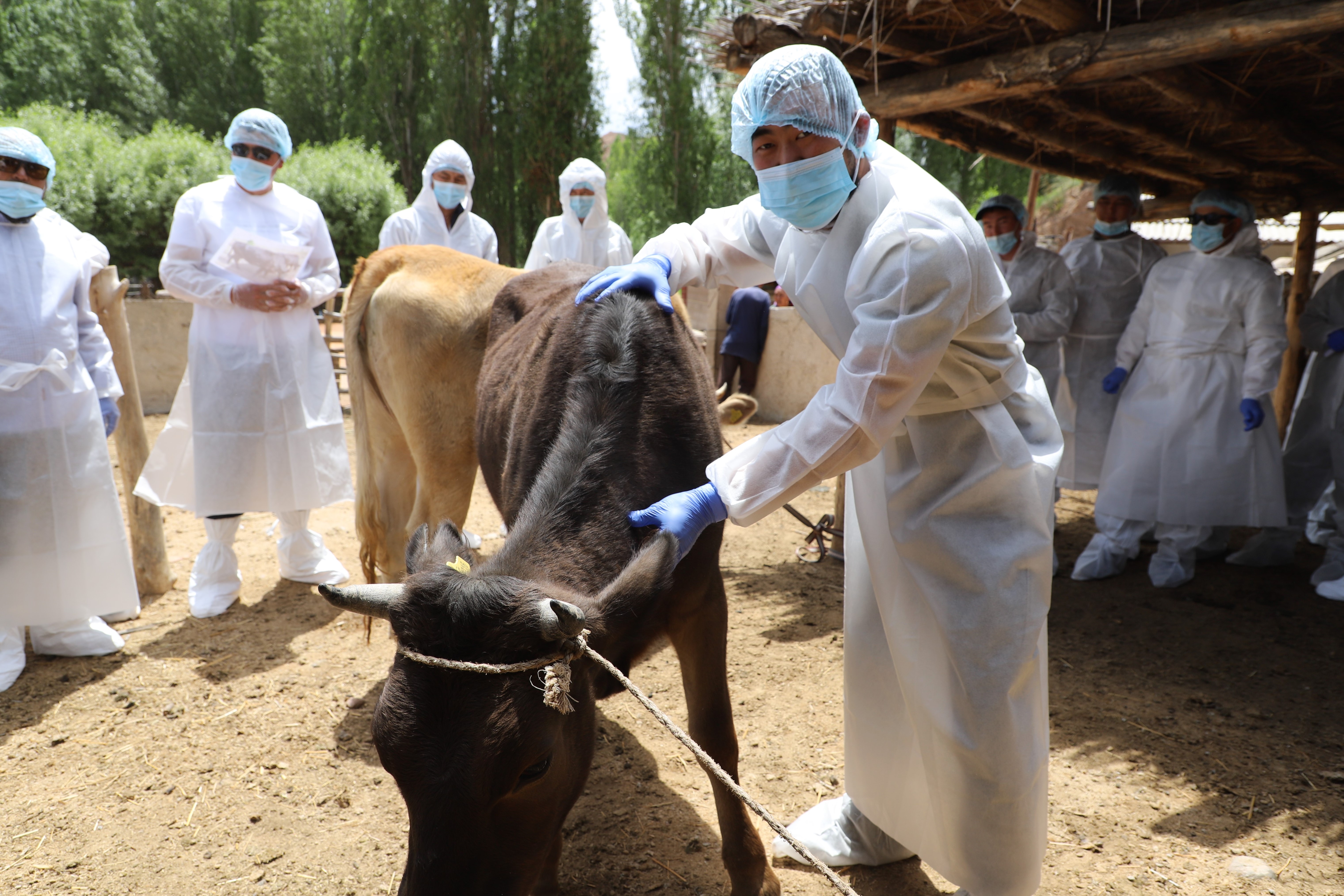
The cornerstone of LSD control is vaccination. In India, both heterologous (goat pox–based) vaccines and new live-attenuated LSDV vaccines developed from local field strains have shown safety, immunogenicity, and protective efficacy in cattle. These vaccines reduce clinical severity and help prevent disease spread in the susceptible population4.
Comprehensive LSD control also includes5:
- Vector control through insecticide application in sheds and animal housing.
- Biosecurity measures, such as disinfection of equipment and isolation of new or suspected animals.
- Movement restrictions in and out of affected zones.
- Herd surveillance, including testing by PCR or serology.
- Rapid reporting and documentation of cases to state or national animal health authorities.
Therapeutics and Supportive Care
There is no specific antiviral therapy for LSD; treatment is mainly supportive and may include anti‑inflammatory drugs, broad‑spectrum antibiotics to guard against secondary bacterial infections, and fluid therapy as needed. Pain and inflammation management are critical to improve animal welfare and recovery.
Conclusion
For veterinary professionals, understanding LSD’s clinical features, diagnostic methods, and prevention strategies is essential for effective disease management. Early detection combined with high vaccination coverage and integrated control measures can substantially reduce economic losses and improve herd health. Continued research on vaccine efficacy and field protocols will strengthen veterinary capacity to mitigate LSD’s impact in India.
References
- Mahadik AV, Nagargoje PG, Jadhav AS, Pawar BS. Lumpy Skin Disease Spread in India: A Review. The Bioscan. 2025;20(1):547–57. doi:10.63001/tbs.2025.v20.i01.pp547-557.
- Ahmed AM, Ahmed C. Review on Epidemiology of Lumpy Skin Disease. Journal of Veterinary Medicine and Animal Sciences. 2024;7(1):2640-1223.
- Korde AV, Hiwe KA, Bakal RL, Hatwar PR, Sune PR. Lumpy skin disease: A comprehensive review.
- Kumar N, Barua S, Kumar R, Khandelwal N, Kumar A, Verma A, Singh L, Godara B, Chander Y, Kumar G, Riyesh T. Evaluation of the safety, immunogenicity and efficacy of a new live-attenuated lumpy skin disease vaccine in India. Virulence. 2023 Dec 31;14(1):2190647.
- Rai A, Rawat SS, Chopra H, Singh I, Emran TB. Lumpy skin disease: the underestimated epidemic for cattle in India. IJS Global Health. 2023 Sep 1;6(5):e0282.
Related Contents
.jpg)
Video
Transjugular Removal of Canine Heartworms: A Clinical and Surgical Overview
Transjugular removal of canine heartworms is a specialized intervention used in selected dogs with s...

Article
Feline Pregnancy Endocrinology: Hormonal Changes and Placental Function
Pregnancy in cats involves a distinctive endocrine pattern in which ovarian and placental hormones w...

Article
Hormonal Control of Pregnancy Termination in Cats
Pregnancy maintenance in cats depends strongly on coordinated hormonal support, particularly progest...

Article
Feline Embryo Implantation and Early Placental Development
Pregnancy establishment in cats involves a sequence of precisely timed events between fertilization,...

Article
Ultrasonographic Monitoring of Pregnancy in Cats: A Gestational Timeline
Ultrasonography provides a practical way to follow the progression of feline pregnancy by identifyin...

Article
Feline Mismating: Pregnancy Diagnosis and Clinical Management
Mismating or unplanned mating is a common clinical problem in sexually mature queen cats because of...

Article
Medical Termination of Pregnancy in Queens: Drugs, Timing and Treatment Protocols
Medical termination of pregnancy (MTP) in queen cats should be approached according to the timing of...
Article
Safety and Aftercare Following Pregnancy Termination in Queen Cats
Pregnancy termination in queen cats requires more than selecting an appropriate abortifacient. Once...