Article
Neonatal Assessment and Stabilisation of Kittens at Birth
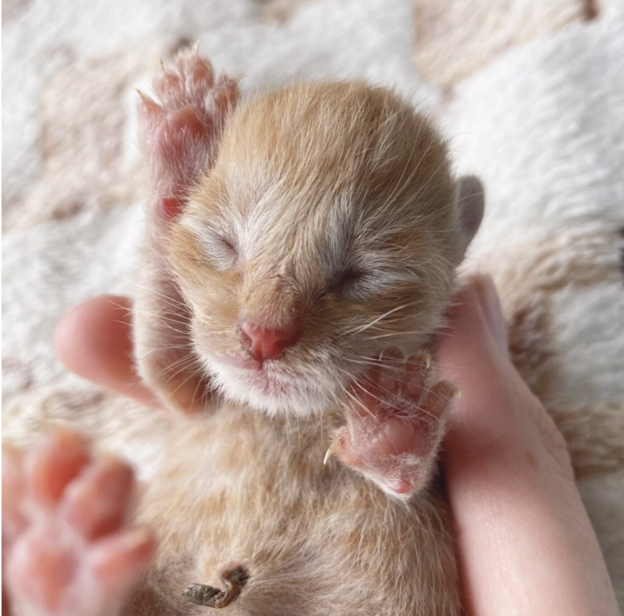
The first examination of a newborn kitten provides an important opportunity to identify problems that may compromise survival. Kittens undergo a major transition from fetal to neonatal life at birth, yet their physiological systems remain immature. Assessment should therefore focus not only on obvious abnormalities but also on maturity, viability, birth weight and the ability to initiate effective nursing.
A structured evaluation immediately after birth can help identify kittens requiring closer observation or additional support.
Assess the Newborn Immediately1
Every kitten should be examined as soon as possible after birth for malformations and physical defects. The normal physiological parameters expected at birth include:
- Birth weight: 100 g (75–120 g)
- Body temperature: 35.5°C (34.4–37.2°C)
- Heart rate: 230 beats/min (220–260)
- Respiratory rate: 15 breaths/min (10–18)
- Mucous membranes: dark reddish pink
- Sucking and swallowing reflexes: active
- Rooting and righting reflexes: active
- Movement: active
- Urination and defecation: involuntary
The righting reflex should include lifting of the head within a few seconds. These findings provide a practical baseline against which less viable kittens can be recognised.
Evaluate Maturity
Determining maturity in newborn kittens can be challenging. Prematurity may be suspected when the coat does not completely cover the tips of the ears, tail and paws, although breed-related coat differences must be considered.
A kitten born only a few days before term may appear externally mature while remaining physiologically premature. Organ systems such as the lungs and kidneys may still be immature, potentially affecting survival after birth2. Therefore, external appearance alone should not be considered sufficient to establish neonatal maturity.
Gestation length provides useful context when assessing a potentially premature kitten. Reported feline gestation ranges from 52–76 days, with an average of 65.3 days1.
Assess Viability and Reflexes1
Viability assessment is particularly important when deciding which kittens require closer assistance. A modified Apgar approach has been proposed for feline neonates, while reflex assessment can provide additional information about vitality.
Pay particular attention to:
- Righting reflex
- Rooting reflex
- Sucking reflex
- Swallowing reflex
- Active movements
- Vocalisation
These reflexes allow the kitten to locate the nipple, assume an appropriate nursing position and feed effectively. Active movement and vocalisation also support assessment of viability.
However, neonatal kitten reflexes and vocalisations may be less robust than those observed in puppies. Clinical experience is therefore important when distinguishing a normally viable kitten from one with moderately reduced vitality.
Birth Weight as a Survival Indicator
Birth weight is one of the most useful indicators when identifying kittens at increased risk. A birth weight below the first quartile for the breed has been associated with mortality during the first 2 days and later, between 2 and 42 days after birth3.
Mean birth weight varies considerably. Reported values include 104 g, with a range of 65–165 g, and 98 g, with a range of 35–167 g. Importantly, birth weight below 45 g has been significantly associated with stillbirth1.
Breed-specific thresholds have also been identified, ranging from 77 g in Oriental breeds to 120 g in Maine Coons3. Therefore, interpretation should consider breed rather than relying on a single universal cut-off.
Identify Kittens Requiring Early Support
Low-birth-weight kittens require particularly careful monitoring. They should be observed to ensure adequate colostrum intake during the first hours of life and regular milk intake thereafter1. Thermal and nutritional support should be provided when necessary.
Early nursing is especially important after caesarean section because the queen may be unable to care for the litter until recovery from anaesthesia. Once appropriate, kittens should be placed near the nipples and encouraged to suckle.
Practical Clinical Insights
At birth, the veterinarian should establish a clear baseline for each kitten rather than assessing the litter only as a group. Recording birth weight, examining reflexes, checking for abnormalities and observing the ability to nurse can help identify kittens needing closer surveillance.
A kitten that appears externally mature should not automatically be considered physiologically mature. Similarly, a low birth weight should prompt increased monitoring even when the kitten initially appears active.
The combination of physical examination, maturity assessment, viability evaluation and individual birth-weight recording provides a practical framework for recognising high-risk kittens and directing early neonatal support.
References
- Veronesi MC, Fusi J. Feline neonatology: From birth to commencement of weaning–what to know for successful management. Journal of feline medicine and surgery. 2022 Mar;24(3):232-42. https://journals.sagepub.com/doi/full/10.1177/1098612X221079709
- Bonte T, Del Carro A, Paquette J, Charlot Valdieu A, Buff S, Rosset E. Foetal pulmonary maturity in dogs: Estimated from bubble tests in amniotic fluid obtained via amniocentesis. Reproduction in Domestic Animals. 2017 Dec;52(6):1025-9. https://www.academia.edu/download/108681913/rda.1301820231210-1-gbpcah.pdf
- Mugnier A, Mila H, Guiraud F, Brevaux J, Lecarpentier M, Martinez C, Mariani C, Adib-Lesaux A, Chastant-Maillard S, Saegerman C, Grellet A. Birth weight as a risk factor for neonatal mortality: Breed-specific approach to identify at-risk puppies. Preventive veterinary medicine. 2019 Nov 1;171:104746. https://www.sciencedirect.com/science/article/am/pii/S0167587719301060
Related Contents
.jpg)
Upcoming Event
World Animal Day
World Animal Day highlights the importance of protecting animal health and welfare through responsib...
.jpg)
Video
Transjugular Removal of Canine Heartworms: A Clinical and Surgical Overview
Transjugular removal of canine heartworms is a specialized intervention used in selected dogs with s...

Article
Feline Pregnancy Endocrinology: Hormonal Changes and Placental Function
Pregnancy in cats involves a distinctive endocrine pattern in which ovarian and placental hormones w...

Article
Hormonal Control of Pregnancy Termination in Cats
Pregnancy maintenance in cats depends strongly on coordinated hormonal support, particularly progest...

Article
Feline Embryo Implantation and Early Placental Development
Pregnancy establishment in cats involves a sequence of precisely timed events between fertilization,...

Article
Ultrasonographic Monitoring of Pregnancy in Cats: A Gestational Timeline
Ultrasonography provides a practical way to follow the progression of feline pregnancy by identifyin...

Article
Feline Mismating: Pregnancy Diagnosis and Clinical Management
Mismating or unplanned mating is a common clinical problem in sexually mature queen cats because of...

Article
Medical Termination of Pregnancy in Queens: Drugs, Timing and Treatment Protocols
Medical termination of pregnancy (MTP) in queen cats should be approached according to the timing of...